AI for Ads: A User Acquisition Manager's Guide
Let's be clear: AI for ads isn't about sending marketers packing and letting robots take over. It’s about giving your team superpowers.Think of it as having a...
Jump to a section
Let's be clear: AI for ads isn't about sending marketers packing and letting robots take over. It’s about giving your team superpowers.
Think of it as having a tireless co-pilot, an army of analysts, and a 24/7 creative studio all rolled into one. It’s designed to find those tiny, winning patterns in your campaigns that are practically invisible to the human eye.
What Is AI for Ads and Why It Matters Now
At its heart, AI for advertising is all about automating the grunt work, digging up deep audience insights, and helping you predict what will work before you blow your entire budget. It's the engine that runs modern user acquisition, turning chaotic mountains of campaign data into smart, actionable decisions.
In essence, AI for ads is the ultimate form of PPC intelligence, taking raw data and refining it into the strategic insights that drive top-tier campaign performance.
Imagine trying to manually test 50 different ad variations for a single campaign on Meta. You'd be stuck editing videos, writing unique copy, defining targeting parameters, and then losing days just monitoring the results. An AI-powered system can run that entire process in minutes, freeing up your team to think about big-picture strategy and creative ideas.
The New Urgency for AI Adoption
This isn't some futuristic idea anymore. The need for AI in advertising is here, and it's urgent. A few key shifts are forcing user acquisition managers to adapt or get left behind.
The ad landscape, especially on platforms like Meta and TikTok, has become wildly complex. Audiences are splintered, creative gets stale faster than ever, and trying to manage it all by hand just doesn't cut it anymore.
Here’s why AI is so critical right now:
Rising Platform Complexity: Ad platforms are constantly rolling out new formats, placements, and algorithm updates. Trying to keep up and optimize manually is a losing battle.
Audience Fragmentation: Your ideal customers are scattered across countless apps and content feeds. AI excels at finding and reaching those valuable niche pockets that manual targeting completely misses.
Creative Burnout: The ad that crushed it last week might be a total dud tomorrow. AI allows you to iterate on creative at lightning speed, keeping your campaigns fresh and effective.
AI is a force multiplier. It lets smaller teams punch way above their weight class, making smarter, data-backed decisions at a scale and speed that's simply not humanly possible. It handles the tedious stuff so you can focus on the strategic stuff.
This shift isn't just about being more efficient; it's about survival. The teams that bake AI for ads into their workflow can test more ideas, learn from their data faster, and consistently find profitable winners.
Let's break down exactly how this changes the game for a typical UA team.
Traditional vs AI-Powered Ad Management
The table below paints a clear picture of the fundamental differences between the old way of doing things and the new, AI-driven approach.
Aspect | Traditional Approach | AI-Powered Approach |
|---|---|---|
Creative Testing | Manually create and test a few variations at a time. | Automatically generate and test hundreds of creative variations simultaneously. |
Audience Targeting | Relies on broad interest groups and manual audience segmentation. | Discovers hidden micro-audiences based on real-time performance data. |
Budget Allocation | Manual budget adjustments based on delayed reporting and gut feelings. | Dynamically allocates budget to top-performing ads and audiences in real-time. |
Pacing & Bidding | Manual bid adjustments; often slow to react to market changes. | Predictive bidding algorithms that adjust automatically to maximize ROAS. |
Reporting | Static dashboards that show what happened. | Actionable insights that recommend what to do next. |
As you can see, the AI-powered approach doesn't just do the same tasks faster—it fundamentally changes what's possible.
Ultimately, this transforms the role of a UA manager. You stop being a "button pusher" and become a true growth strategist, using your human creativity and market intuition to guide the AI toward the next big win.
The Four Pillars of AI in Modern Advertising
So, what exactly is AI for ads? It’s not some single, mysterious black box. It’s easier to think of it as a set of four distinct capabilities that work together to seriously upgrade your user acquisition game.
These are the pillars that support any modern, data-driven ad strategy. Each one tackles a specific headache that UA managers deal with every day, from the creative bottleneck to budget uncertainty. AI turns these challenges into genuine growth opportunities.
Pillar 1: Creative Automation
The first and most obvious win from AI is its power to automate creative production on a scale that's flat-out impossible for a human team. This isn't just about moving faster; it’s about unlocking a whole new level of testing velocity so you can find winning ads way sooner.
Let's say your UA team has one fantastic user-generated content (UGC) video. Manually creating 50 different versions—tweaking the hooks, CTAs, music, and text overlays—could tie up your design team for days in editing software. An AI platform can spit out all those variants in minutes.
This is all powered by generative AI, which has completely changed the game for advertisers. The numbers are staggering: an estimated 34 million AI-generated images are created daily, with over 15 billion produced since 2022. Tools like Stable Diffusion and Adobe Firefly are now essential for quick concept testing, letting brands produce custom imagery without the expense of a traditional photoshoot. You can get more stats on this boom from Exploding Topics.
For you, this means you can test hypotheses at an insane pace. Want to see if a question-based hook beats a statement? AI can generate 20 versions of each and launch them. This pillar turns the creative process from a slow, manual assembly line into an automated idea factory. Dive deeper into how this works for video in our guide to automated video editing software and AI tools.
Pillar 2: Predictive Optimization
The second pillar takes us beyond simple automation and into forecasting. Predictive optimization uses machine learning to analyze early performance data and predict which ad variations are most likely to be long-term winners.
Think of it as an early warning system against wasted ad spend. Instead of waiting days for statistically significant data to roll in from Meta or TikTok, the AI can spot promising trends after just a few hours.
It answers the one question that keeps every UA manager up at night: "If I let this ad run for a week, what will its ROAS be?" By forecasting performance, AI lets you double down on the winners and kill the losers before they burn through your budget.
This infographic breaks down how AI’s core functions—automation, insights, and prediction—all work together.
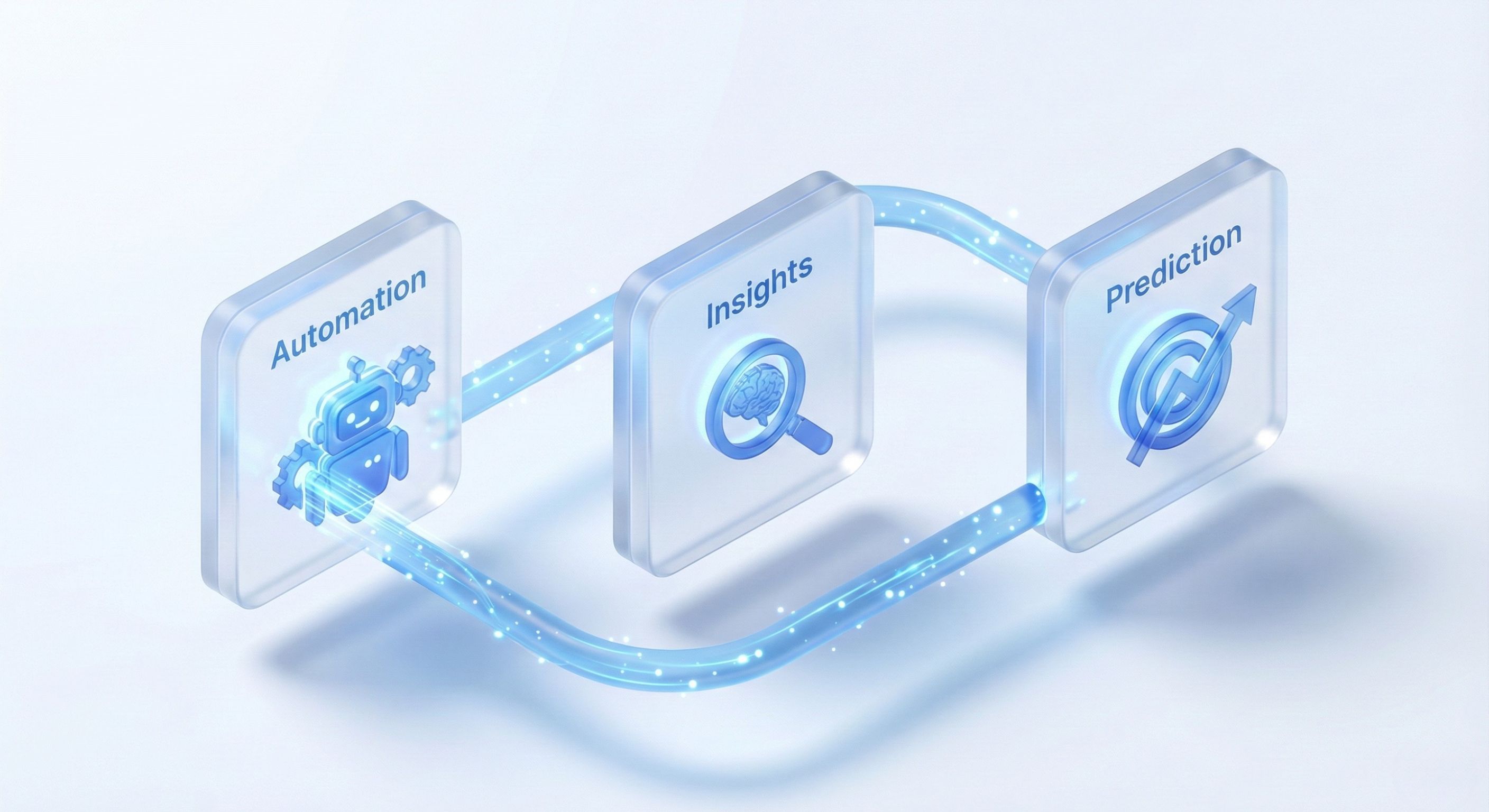
As you can see, automation feeds the data needed for insights, which in turn powers the AI's ability to make accurate predictions.
Pillar 3: Hyper-Personalization
This is all about getting the perfect message to the right person at the right time. While ad platforms offer basic targeting, AI takes it down to a granular level, matching specific creative elements to micro-segments of your audience.
Imagine your app helps people learn a new language. AI can analyze performance data and figure out that younger folks on TikTok love your fast-paced, meme-style ads, while older users on Facebook prefer testimonial videos that talk about the app's ease of use.
Then it takes the next step, automatically serving each segment the creative that resonates most. This ensures your message always lands with maximum impact, boosting relevance and driving way higher conversion rates. This isn't just audience targeting; it's creative-to-audience matching.
Pillar 4: Intelligent Asset Management
The final pillar tackles the operational chaos that comes with scaling creative production. When you’re pumping out hundreds of ad variations, your asset library can turn into a disorganized nightmare real fast.
Intelligent asset management uses AI to automatically tag, categorize, and organize every creative asset you own—videos, images, headlines, audio clips, you name it.
The result is a searchable, structured library where you can find exactly what you need with a simple, natural language search. For example, you could type "show me all videos featuring a dog that had a CTR above 2% last month" and get instant results.
This closes the loop. It makes your top-performing creative components easy to find, reuse, and iterate on for future campaigns. It turns creative chaos into a strategic advantage, ensuring every ad you build stands on the shoulders of proven, data-backed assets.
Putting AI into Practice on Meta and TikTok
Alright, let's move from theory to what actually gets results. For any user acquisition manager, the real test of AI for ads happens on the ground, inside platforms like Meta and TikTok. An AI-powered workflow isn't some magic button you press. It’s a structured process that blends machine intelligence with human strategy to consistently churn out winning ad creative.
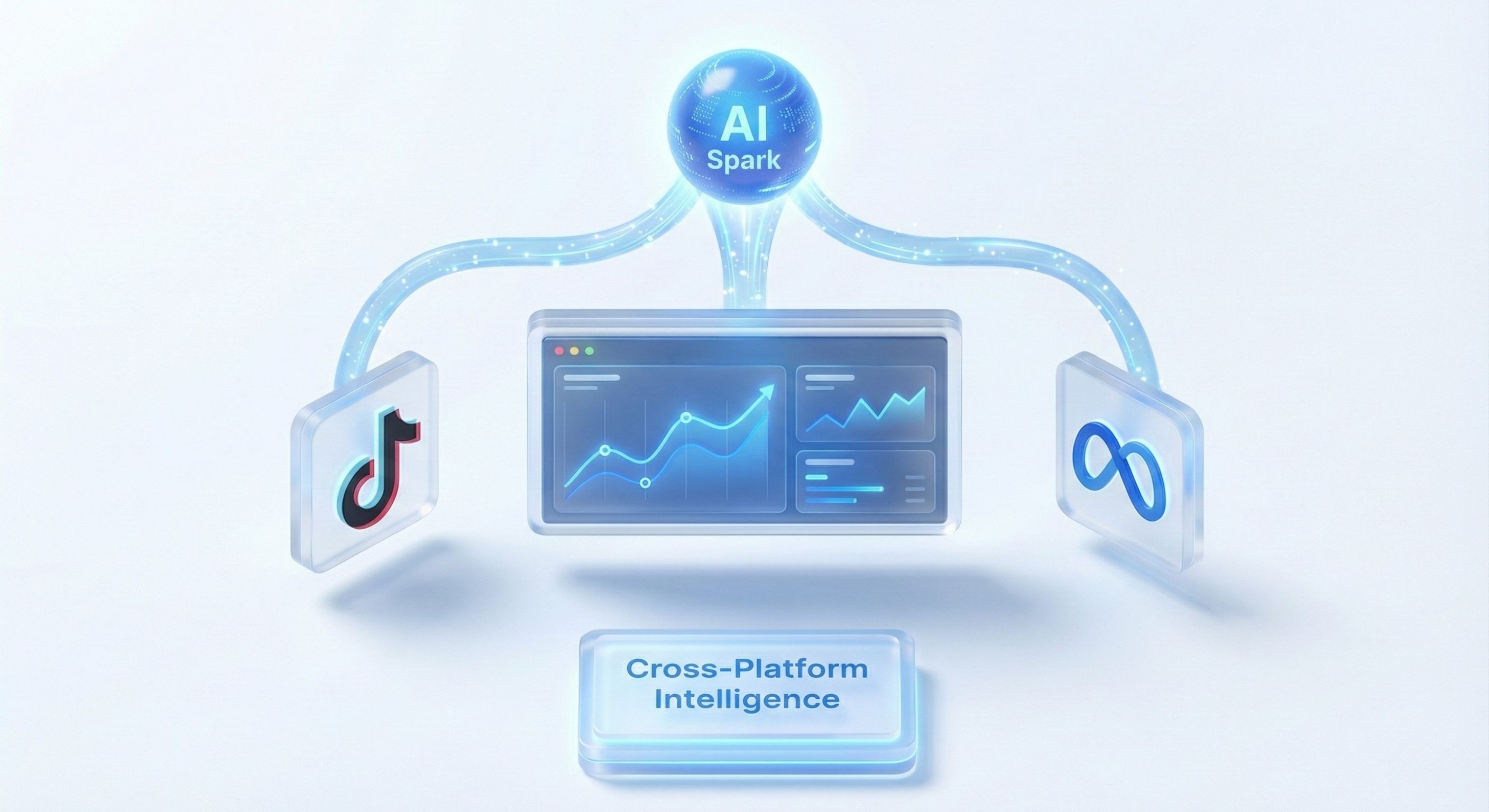
This TikTok For Business interface is the starting line for countless campaigns. It's here where the right creative can make or break your performance. So, let's build the AI-driven workflow that fills this funnel with ads that actually work.
Step 1: Analyze Competitor Ads to Find Trends
The first step in any solid AI workflow is feeding the machine good data. Instead of just guessing what might resonate with your audience, AI tools can sift through thousands of competitor ads in your niche, spotting the hidden patterns in top-performing creative. This isn't your standard competitive research; it's like a deep-dive into the DNA of successful ads.
AI can systematically break down rival ads into their core parts:
Winning Hooks: What's happening in the first three seconds of the best ads? Is it a question? A shocking statement? A problem everyone relates to?
Pacing and Edits: How fast are the scenes changing? AI can clock the average shot length and editing style that grabs attention on platforms where every second counts.
Visual Elements: Are raw, UGC-style videos crushing polished studio ads? What colors, text overlays, and on-screen elements keep popping up?
Call-to-Action Language: Which phrases are actually driving clicks and conversions?
This analysis gives you a data-backed foundation, so you’re building your own creative on proven concepts from day one.
Step 2: Generate and Remix Creative Variations
Once you have a clear picture of market trends, the next step is to generate your own creative—at scale. This is where AI automation becomes a massive time-saver. You can upload your existing video clips, product shots, and brand assets into a platform like Sovran, and the AI acts like a creative assistant, remixing these pieces into hundreds of ad variations you can test.
The trick is to think modularly. Instead of editing one long video, you treat each part—the hook, the body, and the CTA—as a swappable building block. The AI can then assemble these blocks in countless combinations, letting you test dozens of ideas at the same time. If you want to see exactly how this works, you can check out our guide on automating video ad variations which walks you through the process step-by-step: https://sovran.ai/blog/how-to-automate-hook-body-cta-video-ad-variations-a-sovran-ai-walkthrough.
By automating the creation of ad assets, teams can finally stop wasting time on tedious manual editing and start focusing on high-level strategy. This speeds up the entire testing cycle, helping marketers find what resonates with their audience up to 10x faster than the old way.
To really get this going, UA managers can use tools like AI TikTok video generators to produce native-looking content that fits right in with platform trends.
Step 3: Structure AI-Powered Campaign Setups
Launching hundreds of ad variations won't do you any good without the right campaign structure. You need a setup designed for rapid learning, one that gives the platform's algorithm (and your own AI tools) enough clean data to quickly tell you what's working and what's not.
A common and highly effective structure is the Creative Testing Campaign.
Isolate Variables: Each ad group should test only one thing at a time. For instance, one ad group tests five different hooks while the body and CTA stay the same. Another ad group tests different CTAs with the same hook and body.
Use Broad Audiences: When you're testing, resist the urge to layer on complex targeting. Go with a broad audience and let the platform's AI find the right pockets of users for your creative.
Set Clear Budgets: Use Campaign Budget Optimization (CBO) on Meta or a similar feature on TikTok. This lets the platform automatically push spend toward the ad groups and specific ads that show early signs of success.
This structured approach makes sure the data you get back is clean and reliable, which makes the AI's job of spotting performance trends a whole lot easier.
Step 4: Leverage Real-Time Optimization
The final step is closing the feedback loop. As performance data starts rolling in, AI analyzes it in real time to make smart optimization decisions. This is way more advanced than just turning off bad ads.
Artificial intelligence has completely changed the game for ad campaign efficiency, especially with programmatic buying and real-time tweaks. Industry reports have shown companies using AI for ad buying have seen click-through rates jump by as much as 450% compared to old-school methods. JPMorgan Chase, for example, reported this exact improvement after using machine learning to fine-tune its ad messaging and targeting. You can dive deeper into these results and see how they apply across industries.
For UA managers, this means the AI can:
Predict Creative Fatigue: It can spot when an ad's performance is about to drop off and automatically swap in fresh creative to keep the momentum going.
Reallocate Budget: It can shift spend not just between campaigns, but to the specific creative components—like a winning hook—that are proving to be the real drivers of performance.
Inform the Next Iteration: It provides insights on which hooks, visuals, and copy elements are performing best, feeding that data right back into Step 1 for the next round of creative development.
This four-step workflow transforms ad creation from a slow, manual process into a continuous, data-driven cycle of learning and optimization.
Measuring Success in an AI-Driven World
When you start weaving AI into your advertising workflow, your old definition of "success" needs a serious upgrade. Sure, metrics like Return on Ad Spend (ROAS) and Cost Per Acquisition (CPA) are still the lifeblood of any campaign. But they only tell you half the story.
Think of it this way: relying only on ROAS is like judging a chef solely on the final dish. You're completely ignoring how much faster, more efficiently, and more consistently they can now produce incredible meals. AI doesn't just tweak the final numbers; it overhauls the entire creative and operational engine.
To really grasp the value AI brings to the table, you need a measurement framework that looks at both campaign outcomes and operational process. It's time to look beyond the standard ad platform dashboards and start tracking the KPIs that show how AI is making your user acquisition engine faster, smarter, and more resilient.
Beyond ROAS: New Metrics for AI-Powered Ads
To get the full picture, you need to track metrics that play to AI’s core strengths—speed, scale, and intelligence. These new KPIs help you put a number on the efficiency gains that ultimately drive better, more sustainable performance.
Here are three essential metrics to start tracking immediately:
Creative Iteration Speed: How fast can your team get a new idea from concept to a live ad test? A high iteration speed means you're learning faster, finding winners before the competition, and staying ahead of creative fatigue. If it once took you a week to produce ten ad variations and an AI tool now does it in an hour, that's a massive, quantifiable win.
Performance Prediction Accuracy: How good is your AI at calling its shots? You need to track how often its predictions—"this ad will be a winner"—actually come true. High accuracy means you can trust the AI to allocate budget wisely, confidently killing losers early and pouring fuel on the winners.
Creative Fatigue Rate: This is all about how quickly your ads burn out. One of the biggest perks of using AI is its ability to automatically refresh creative, breathing new life into your top performers. By measuring this, you can prove that AI is keeping your campaigns profitable for way longer.
Tracking these numbers shifts your focus from just reacting to past performance to proactively measuring your team's creative velocity and strategic agility. It's the data you need to justify the investment in AI tools and build a real growth strategy.
Building a Simple AI Performance Dashboard
You don’t need a fancy business intelligence tool to get started. A simple spreadsheet is more than enough to start visualizing how your AI systems are impacting the business. This dashboard becomes your single source of truth for showing everyone how AI is improving more than just the bottom line.
The goal is to connect operational speed with financial results. When you can show that a 50% increase in Creative Iteration Speed led to a 15% lift in ROAS, you're not just running ads—you're building a scalable growth machine.
Here’s a simple way to structure your dashboard:
KPI | Traditional Baseline (Monthly) | AI-Powered Results (Monthly) | % Change |
|---|---|---|---|
Creative Iteration Speed | 20 New Ads Tested | 200 New Ads Tested | +900% |
Time to Statistical Significance | 5 Days | 2 Days | -60% |
Creative Fatigue Rate | 14 Days | 25 Days | +78% |
ROAS (Blended) | 2.1x | 2.5x | +19% |
This table immediately connects the dots. It shows the process improvements driven by AI and ties them directly to the financial outcomes that leadership actually cares about.
By adopting a modern measurement framework like this, you move beyond surface-level reporting. For a deeper dive into the nitty-gritty, you can learn more about how to measure your creative tests in Facebook Ads reporting. This approach lets you prove the full value of AI and make smarter decisions that fuel long-term, sustainable growth.
Common Pitfalls and How to Avoid Them
Jumping into any new tech has a learning curve, and rolling out AI for ads is no different. The potential is huge, but a few common stumbles can quickly derail your efforts and leave you wondering if the whole thing was worth it.
Successfully weaving AI into your workflow isn’t about flipping a switch; it's about building a whole new operational mindset. By knowing what trips most teams up, you can sidestep these issues from the get-go and make the transition a lot smoother—and more profitable.
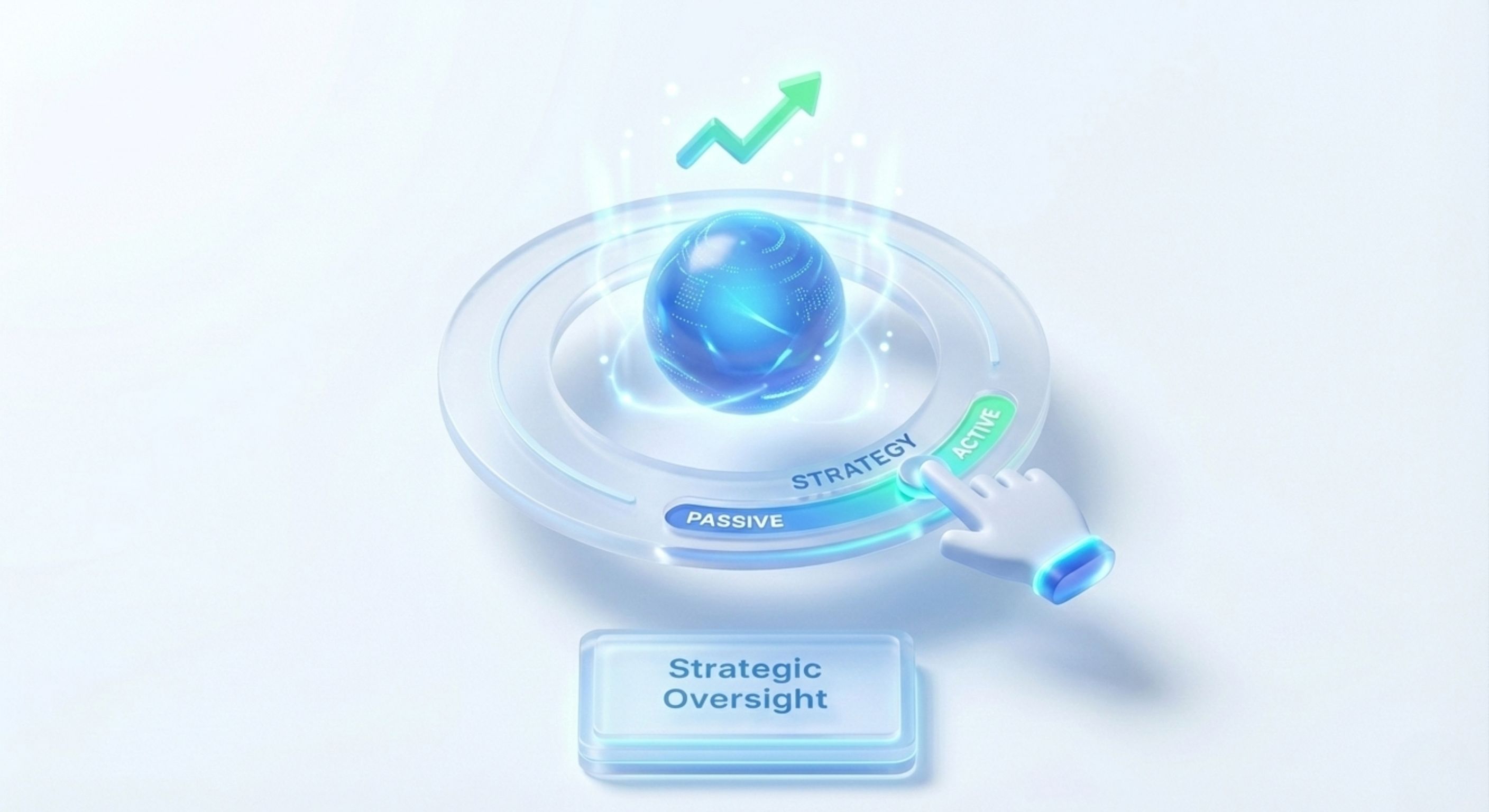
Let's break down the most common traps user acquisition teams fall into and give you some clear, practical advice to avoid them from day one.
Pitfall 1: The "Set It and Forget It" Trap
One of the biggest myths about AI is that it's a magic box you can just turn on and walk away from. This "set it and forget it" mentality is a straight-up recipe for wasted ad spend and missed opportunities.
Sure, AI tools are powerful, but they aren't strategic thinkers. They just do what you tell them to do based on the data you feed them. Without a human eye on things, an AI might start optimizing for a short-term metric that kills your long-term business goals, or it might keep pushing a creative trend long after it's gone stale.
The fix is to embrace a "human-in-the-loop" approach. Your team's strategic brain is still the most important part of the equation.
Review Performance Religiously: Set up weekly check-ins. Look at the AI's decisions, analyze performance, and make sure its optimizations still line up with your campaign goals.
Give It Strategic Direction: Use your market knowledge to guide the machine. Got a holiday coming up? A competitor launching a new feature? Feed that context into the system so it can make smarter creative and bidding choices.
You're the Final Check: Your team always has the final say. Think of the AI as your co-pilot, not the captain of the ship.
Pitfall 2: Feeding the AI Bad Data
You’ve heard the saying "garbage in, garbage out," and it has never been more true than with AI. An AI model is only as smart as the data it learns from. If you dump a messy, disorganized library of creative assets into it, you're going to get messy, disorganized ad variations back.
Too many teams make the mistake of just pointing the AI at their entire creative history without any prep work. This teaches the AI to learn from failed ads, use old branding, or Frankenstein together visual elements that make zero sense. The result? A ton of low-quality creative that performs terribly and makes your brand look bad.
An AI needs a clean, well-structured foundation to build upon. Think of your asset library not as a storage folder, but as a strategic playbook that teaches the AI what "good" looks like for your brand.
To dodge this bullet, you need to build a structured asset library before you let the AI run wild.
Tag and Categorize Everything: Go through your existing assets and tag them up. Label your winning hooks, best-performing CTAs, approved UGC clips, and on-brand visuals.
Create a "Greatest Hits" Collection: Pull together a curated dataset of your all-time top-performing ad components. This gives the AI a clean, reliable source of truth to learn from.
Archive the Losers: Be ruthless. Remove or archive assets from campaigns that flopped. You don't want the AI learning from your past mistakes.
Pitfall 3: Going Off-Brand with Creative
The last major pitfall is losing your brand identity in the process. Generative AI is built to create new combinations, but without clear rules, it can easily spit out ads that look and sound nothing like your company. This is a huge risk, especially if you have a specific tone, visual style, or messaging framework to maintain.
An AI that cranks out an ad with the wrong logo, an off-brand color scheme, or copy that misrepresents your product can do more harm than good. It chips away at brand trust and creates a weird, disjointed experience for your audience.
The solution here is to set up clear creative guardrails. These are basically rules and guidelines that fence in the AI's creativity, making sure everything it produces stays on-brand. In a platform like Sovran, this is handled through a "Context Vault" where you store brand guidelines, customer personas, and approved messaging.
Define Brand Elements: Upload your official logos, fonts, color codes, and product shots.
Set Tonal Guidelines: Give it examples of on-brand copy and specify the tone of voice (e.g., "playful and witty" or "professional and reassuring").
Lock Down Key Components: If certain things—like a legal disclaimer or a specific CTA—have to be in every ad, lock them in place so the AI knows not to touch them.
By setting these boundaries, you give the AI a safe, brand-approved sandbox to play in, letting it get creative without going rogue.
A Few Common Questions About AI for Ads
Jumping into AI for ads usually sparks a mix of excitement and a whole lot of practical questions. User acquisition managers are always wondering how these tools will actually slot into their day-to-day, what kind of impact they'll really see, and if their team is even ready for the change.
Let's tackle those questions head-on. We'll give you clear, straight-up answers to get you from curious to confident, hitting all the practical concerns that pop up when you're about to adopt a powerful new piece of tech.
Will AI Replace My User Acquisition Team?
This is always the first question, and the answer is a hard no. AI for ads isn't here to replace skilled marketers; it's here to supercharge them. Think of it as a force multiplier that takes on the repetitive, data-crunching tasks that eat up so much time and mental energy.
Your AI is the tireless analyst sifting through millions of data points, while your team remains the strategist—the ones who interpret the findings and steer the creative ship.
AI handles the "what" and "how" of running campaigns—what creative is hitting the mark, how to shift the budget—which frees up your team to zero in on the "why." This lets UA managers level up, focusing on big-picture strategy, market insights, and brainstorming the next breakthrough creative concept.
The whole point is to empower your people, not make them obsolete. By automating the grunt work, you’re giving your experts more runway to do what they do best: think critically and creatively.
How Much Technical Skill Do I Need to Use AI for Ads?
You absolutely do not need to be a data scientist or a machine learning engineer. Modern AI advertising platforms, like Sovran, are built from the ground up for marketers. They come with intuitive, user-friendly interfaces that turn complex AI operations into simple, actionable workflows.
Honestly, if you can navigate Meta Ads Manager or TikTok For Business, you already have the core skills you need. The platform is designed to run on your strategic input, not your coding ability.
Uploading Assets: You’ll drop in your raw video clips, images, and brand style guides.
Setting Parameters: You’ll tell the AI what you want to achieve, like testing different hooks or generating variations of a top-performing ad.
Reviewing and Launching: You’ll look over the AI-generated creative, make any strategic tweaks you see fit, and push the campaigns live with a couple of clicks.
All the heavy lifting—the data processing and pattern recognition—is happening behind the scenes. Your job is to be the expert marketer guiding the process.
Is AI Only for Large Companies with Big Budgets?
That's a common myth. While big-name enterprises were the first ones through the door, AI tools are now way more accessible and affordable, making them a game-changer for teams of any size. In a lot of ways, AI for ads is even more impactful for smaller teams and startups.
For a lean team, AI can completely level the playing field. It gives you the analytical and creative horsepower of a much bigger department without the massive overhead. A solo app developer or a small agency can suddenly test creative at a speed that used to be reserved for companies with huge in-house creative armies.
And because AI helps you find winning ads faster and stop burning cash on creative that's going nowhere, it actually makes your budget work much harder, maximizing your ROAS no matter how big or small it is.
How Can I Make Sure AI-Generated Ads Stay On-Brand?
Keeping your brand identity consistent is non-negotiable, and it's a totally valid concern when you bring generative AI into the mix. The trick is to use platforms that let you build creative guardrails, basically creating a brand-safe sandbox for the AI to play in.
Platforms like Sovran solve this with a feature we call a "Context Vault." This is where you feed the AI all your essential brand info, effectively teaching it the do's and don'ts.
Here’s how it works:
You Provide the Rules: You upload official logos, color palettes, fonts, and key product messaging.
You Define the Tone: You give it examples of on-brand copy and define the voice you're after (e.g., witty, professional, empathetic).
You Lock Key Elements: You can lock in mandatory elements like legal disclaimers or specific CTAs to make sure they show up in every relevant ad variation.
By setting these boundaries upfront, you give the AI the freedom to generate tons of creative variations while ensuring every single one looks and sounds like it came straight from your brand team.
Ready to see how an AI-powered workflow can transform your creative testing and fast-track your campaign performance? Sovran automates the entire process, from asset remixing to campaign launching, helping you find winning ads up to 10x faster. Start your 7-day free trial today.

Manson Chen
Founder, Sovran
Related Articles
A Modern Playbook for AI for Advertisers
For advertisers, AI isn't some far-off, futuristic idea. It's a toolkit you can use right now to automate creative production, deliver personalization that...
Master AI Video Ad Production Workflow
Imagine whipping up a video ad in minutes, without sacrificing quality. That’s the promise of AI video ads—they draft scripts, select visuals, handle...
How to Create Ads with AI That Actually Convert
Creating ads with AI is all about combining your brand's unique creative assets with an intelligent platform to generate, test, and scale winning ad...