Your Guide to a Winning User Generated Content Strategy
Build a user generated content strategy that drives real results. Learn from proven tactics to source, manage, and scale UGC for ads that convert.

Jump to a section
So, what exactly is a user-generated content strategy? Think of it as your game plan for getting customers to create content for you, then using that authentic content to build trust and crush your ad performance.
It’s all about turning real photos, videos, and reviews from actual customers into a scalable pipeline of creative assets for platforms like Meta and TikTok. This approach is your secret weapon against ad fatigue, replacing polished corporate ads with genuine social proof that actually connects with people. You’re letting real voices do the marketing, which makes everything feel way more relatable and, ultimately, more effective.
Why a UGC Strategy Is Essential for Modern Ads
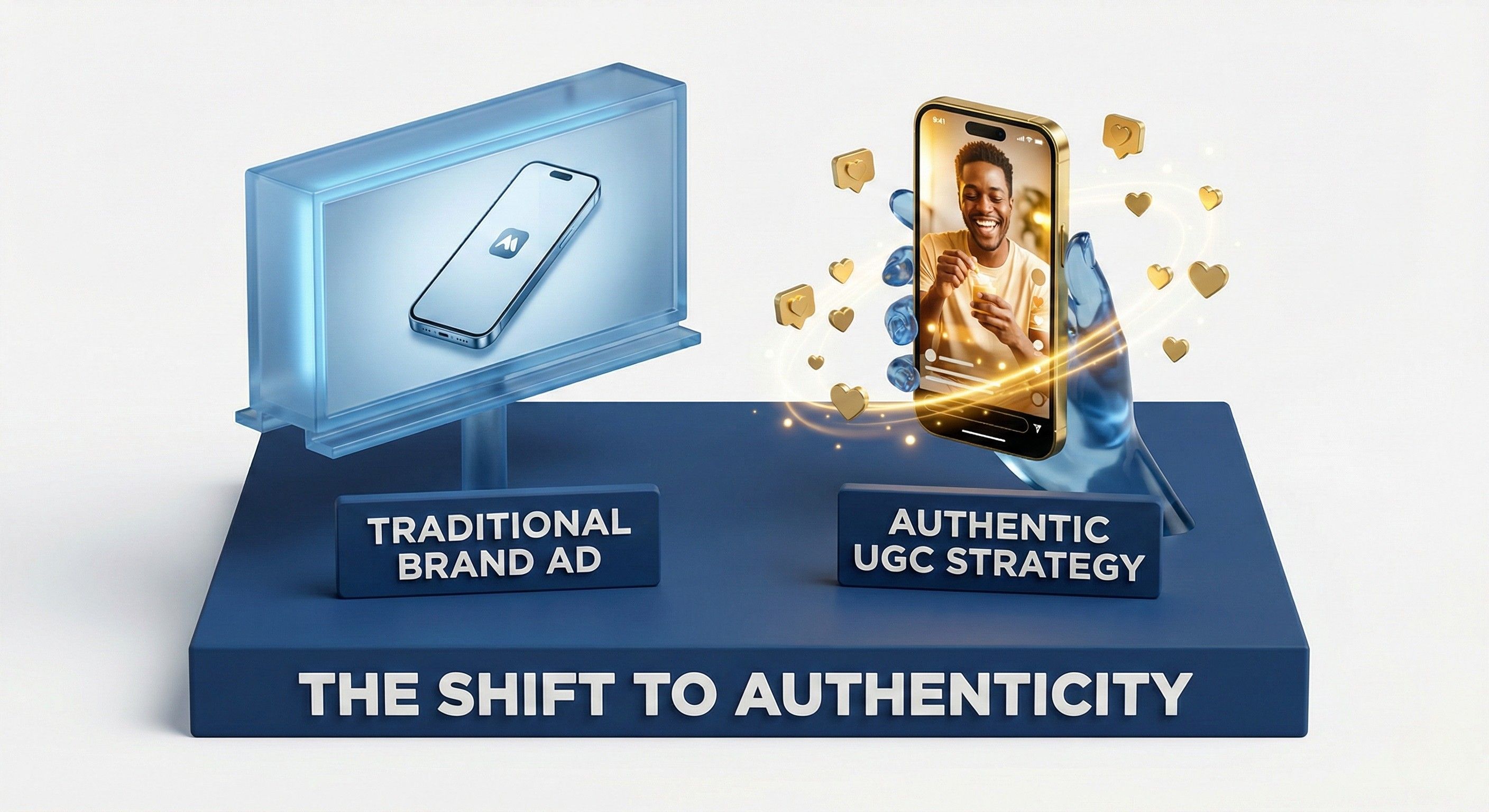
Let’s be honest: your customers are tired of slick, predictable brand ads. They're scrolling through TikTok and Meta feeds at lightning speed, and their tolerance for overly polished commercials is at an all-time low. This is exactly why a dedicated user-generated content strategy isn't just a nice-to-have anymore—it's a critical part of modern performance marketing.
Instead of pouring all your resources into in-house creative, UGC allows you to tap into the most credible marketing engine you have: your own customers. It’s the digital version of word-of-mouth, and the numbers don't lie. Research shows that a whopping 79% of consumers say UGC heavily influences their buying decisions, which is miles ahead of what traditional ads can achieve.
Combatting Ad Fatigue with Authenticity
The real magic of UGC is its raw, unfiltered authenticity. When a potential customer sees a real person—not a hired actor—genuinely excited about your product, it cuts through the noise and skepticism instantly. It doesn't feel like an ad; it feels like a recommendation from a friend.
This unscripted, genuine vibe is your best defense against creative burnout. A high-production brand video might perform well for a week or two, but it gets stale fast. A steady stream of customer content, on the other hand, gives you an almost endless supply of fresh, relatable creative to keep your campaigns engaging and profitable for much longer.
Tapping into the Creator Economy
The creator economy has turned everyday customers into skilled content creators. People are already comfortable filming unboxings, tutorials, and reviews on their phones. All you need is a streamlined process to source and manage this goldmine of content.
By building a system around UGC, you can:
Scale Creative Output: Forget producing just a handful of ads. Start thinking in terms of hundreds of variations for constant testing and optimization.
Build Social Proof: Feature a diverse range of real customers, making your brand feel more inclusive, trustworthy, and real.
Increase Engagement: UGC ads naturally blend into social feeds, which is why they often get much higher click-through rates and lower CPAs.
A smart user-generated content strategy isn’t just about collecting customer photos. It's about building a scalable advertising engine fueled by authentic voices. It creates a powerful feedback loop that drives trust, engagement, and—most importantly—conversions.
Simply put, integrating UGC into your ad strategy is no longer optional. It’s a fundamental shift required to connect with audiences in today's crowded ad space. By prioritizing genuine customer experiences over pixel-perfect production, you build a more resilient and profitable advertising machine.
Building Your UGC Sourcing and Acquisition Engine
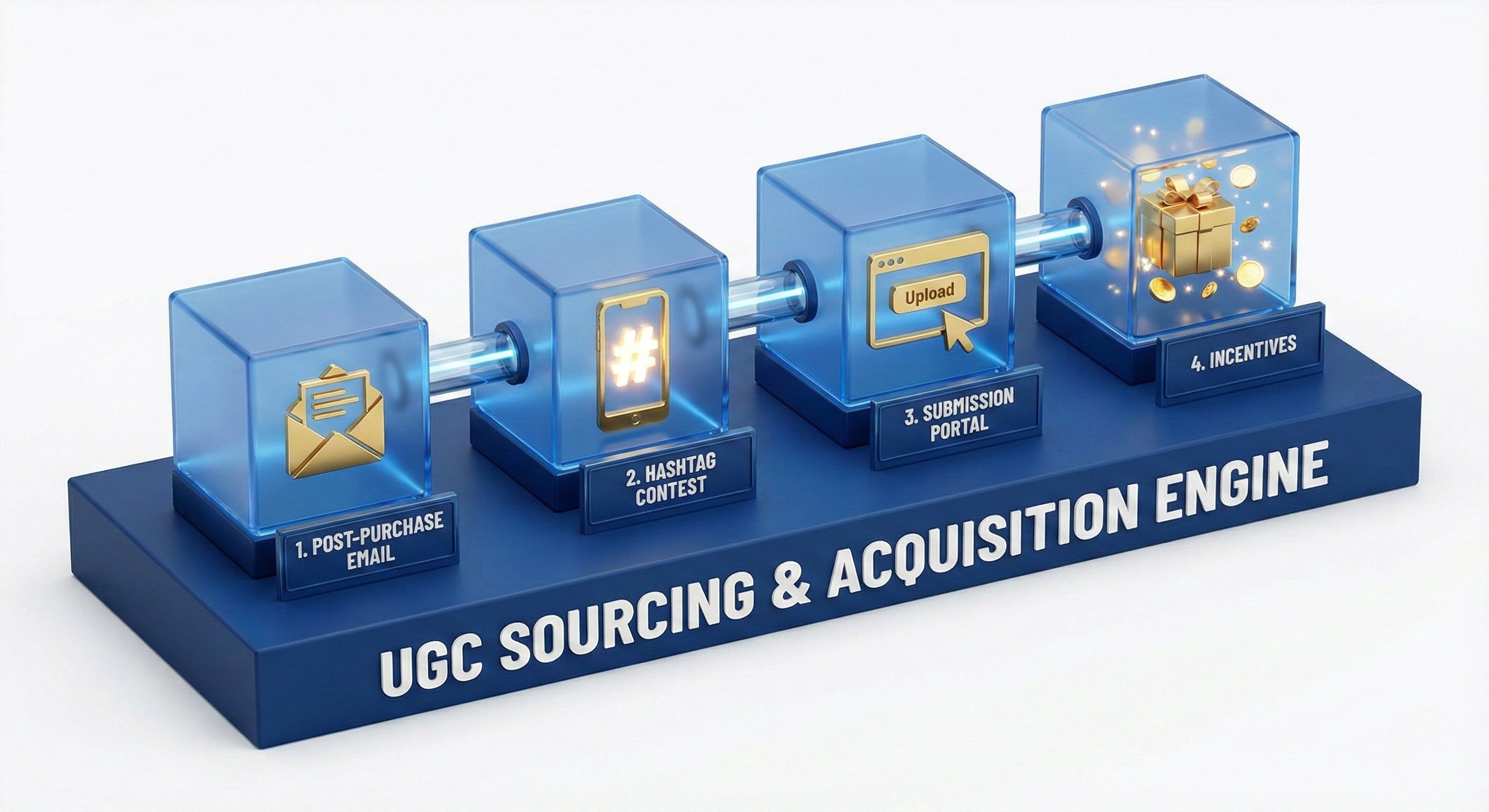
A killer user generated content strategy isn't about getting lucky. It’s about building a reliable system for sourcing authentic assets. Just hoping customers will post about your brand is a recipe for an empty content calendar. What you really need is a proactive, multi-channel engine that consistently feeds your ad creative pipeline.
This means you stop passively waiting and start actively creating pathways for customers and creators to share their experiences. The whole point is to make it ridiculously easy—and rewarding—for them to create the exact kind of content that fuels winning ads.
Automating Post-Purchase Requests
Your most passionate creators are often your newest customers. That post-purchase excitement is pure gold, making it the perfect moment to ask for a video. Don’t leave this to chance. Automate it.
Set up an email or SMS flow that goes out about a week after a customer gets their order. The timing here is key. It gives them enough time to actually use the product but keeps the initial buzz alive. Keep your ask simple and direct, and always answer the "what's in it for me?" question—whether it's a discount, a feature on your social channels, or a bit of cash.
Sparking Creativity with Contests and Challenges
Need a lot of UGC in a hurry? Hashtag contests are your best friend. They absolutely crush it on platforms like TikTok and Instagram, where trends and community challenges are the native language. Just make sure the contest is fun and the prize is something people actually want.
Ditch the generic "#[YourBrandName]" tag. Get creative with a unique and memorable campaign hashtag, like the legendary challenges GoPro runs. This not only makes your content easier to track but also gives the whole campaign its own identity. And please, make the rules crystal clear and the prize valuable enough to motivate people to create something great.
Your creative brief is the single most important tool for getting performance-ready UGC. A vague request leads to unusable content. A specific, guiding brief empowers creators to produce exactly what your ad campaigns need to succeed.
To make sure you get assets you can actually use in your ads, give creators a clear brief. If you need a hand crafting effective briefs and getting started, our guide on how to make UGC lays out the exact steps and gives you templates to work from.
Structuring Your Incentive Models
Look, some people will post about you for free, and that's great. But to build a scalable sourcing engine, you need a structured incentive program. The goal is to find a model that fits your budget while offering enough value to attract a steady stream of high-quality submissions.
Here's a breakdown of the most common incentive structures we see working right now.
Comparing UGC Sourcing Channels and Incentives
Choosing the right channel and incentive is crucial for balancing your budget with content quality. This table breaks down the most common approaches to help you decide where to focus your efforts.
Sourcing Channel | Best For | Primary Incentive Type | Pros | Cons |
|---|---|---|---|---|
Existing Customers | Authentic testimonials, unboxings, and real-world use cases. | Discounts, Free Product, Gift Cards | Highly authentic, low cost, builds brand loyalty. | Unpredictable volume, less control over creative output. |
Creator Marketplaces | Specific ad concepts, high-quality production, quick turnaround. | Cash Payments, Free Product | Scalable, access to experienced creators, predictable results. | Can feel less authentic, higher cost, requires careful briefing. |
Social Media Contests | Generating high volume of content quickly, brand awareness. | Large Prize (cash or product bundle) | Massive reach, engaging, cost-effective for volume. | Variable quality, rights management can be complex. |
Brand Ambassador Programs | Consistent, long-term content from brand loyalists. | Free Product, Commissions, Exclusive Access | Deep brand knowledge, sustained content flow, strong community. | Requires management overhead, less variety in creators. |
Each channel serves a different purpose. The sweet spot is usually a blended strategy—using your happy customers for raw authenticity and tapping into marketplaces for those high-polish, concept-driven ads you need to test.
Here’s a closer look at the incentive types themselves:
Free Product: This is where almost everyone starts. It’s cost-effective and a great way to source content from genuine fans and up-and-coming creators.
Discount Codes: Offering a solid discount on a future purchase is another low-cost method that works wonders with your existing customer base.
Cash Payments: When you have a specific, demanding brief, you’ll need to pay for it. Rates can swing from $50 to $500+ per video, depending on what you’re asking for, the creator's experience, and the usage rights you need.
Gift Cards: These are a great, flexible alternative to cash. A gift card to a popular spot can be just as motivating for a wide range of creators.
Our advice? Start by testing a mix of these models. Track what gives you the best bang for your buck. You might find that free products deliver the most believable content, while small cash payments are perfect for getting specific testimonial or problem-solution videos. Your strategy should—and will—change as you figure out what works for your brand.
Mastering UGC Rights Management and Moderation
Finding that perfect customer video feels like you've struck gold. But a truly scalable user generated content strategy is built on more than just finding great clips—it’s built on a solid governance framework. This is the unglamorous but absolutely essential part of the process that protects your brand legally and makes sure every piece of content you run is safe and effective.
Let's cut to the chase: navigating content rights can feel like a legal minefield, but it really boils down to one simple rule: always get permission.
Just because someone used your product in a video and tagged you doesn't give you a free pass to use it in a paid ad. Treating a tag as "implicit permission" is a dangerous game that can land you in some serious legal hot water. You need explicit, documented consent every single time.
This is where a simple usage rights agreement becomes your best friend. Don't overthink it; this doesn't need to be a 20-page legal document written in Latin. A straightforward, plain-language agreement that a creator can digitally sign is usually all you need.
Securing Clear Usage Rights
Your agreement needs to be crystal clear about how and where you plan to use their content. Ambiguity is your enemy here. Be totally transparent—it builds trust with your creators and protects you down the line.
Make sure your agreement always covers these key points:
Scope of Use: Be specific about the channels. Will it be on paid social media ads (Meta, TikTok), your website, organic social posts, or all of the above? Spell it out.
Duration: How long do you want the rights for? For ad assets, getting rights "in perpetuity" (forever) is the gold standard. You never know when you might want to fire up a winning creative a few months from now.
Exclusivity: Clearly state if you have exclusive rights. This means the creator can't turn around and license that same video to one of your competitors.
Compensation: Detail the exchange. Whether it's cash, free product, or another incentive, make sure it’s clearly documented in return for the rights.
Securing explicit rights isn’t just about ticking a legal box. It’s the move that transforms a fleeting social media post into a scalable, long-term creative asset for your performance marketing engine.
Building Your Moderation Checklist
Once you’ve got the rights locked down, the next hurdle is moderation. Let’s be real: not every piece of UGC is ready for prime time. A strong moderation process is your quality control, ensuring every asset is brand-safe, high-quality, and compliant with ad platform policies. Your creative team needs a simple checklist to vet incoming content without any guesswork.
If you want to go deeper on this, check out this excellent guide to User Generated Content Moderation. It’s an invaluable resource.
A solid moderation checklist should cover a few critical areas:
Brand Safety: Is there any sketchy language, controversial imagery, or a competitor’s logo accidentally showing in the background?
Technical Quality: Is the video grainy? Is the audio clear, or is there a dog barking and copyrighted music playing? High resolution and clean audio are non-negotiable.
Platform Compliance: Does the content play by the rules of platforms like Meta and TikTok? You don’t want your ad account flagged over something avoidable.
After a piece of UGC passes both rights and moderation, there's one final step: getting it organized. Don't let your approved content die in a chaotic Google Drive folder. This is where proper tagging and organization become critical. For teams managing hundreds of clips, investing in a dedicated video asset management system can be a total game-changer, making it dead simple to find the perfect clip exactly when you need it.
Turning Raw UGC Into High-Performing Ad Creatives
So you've got a steady stream of approved, rights-cleared UGC coming in. Great. Now the real work begins. Raw customer videos are the ingredients, not the final meal. An effective user generated content strategy is all about turning this library of authentic clips into a high-volume ad testing machine. It's about moving past tedious manual edits and building a scalable system for pumping out winning creative.
The trick is to stop seeing each video as a single, standalone ad. Instead, think of each clip as a collection of modular parts—hooks, body sections, and calls to action (CTAs). This modular approach lets you assemble and reassemble countless ad variations to find out what really resonates with your audience.
Assembling Modular Ad Frameworks
Think of your ad creative like building with LEGOs. You have a pile of different bricks (your UGC clips), and you can snap them together in different combinations to create entirely new structures (your ads). This is an incredibly powerful way to systematically test which creative elements are actually driving performance.
Here’s how you can apply this to common ad frameworks using different pieces of UGC:
Hook-Body-CTA: This is the most fundamental structure. You can mix and match different clips for each part. For example, grab a dramatic unboxing clip for the hook, a product-in-use video for the body, and a glowing video testimonial for the CTA.
Problem-Agitate-Solution (PAS): Start with a creator describing a common pain point (Problem). Follow it with a clip showing their frustration with that problem (Agitate). Then, finish with a video of them using your product as the ultimate fix (Solution).
Testimonial Mashups: This one's a killer for social proof. Stitch together short, impactful soundbites from several different customer testimonials. Hearing multiple, distinct voices praise your product one after another builds a wall of trust and credibility that a single review just can't match.
The goal isn't just to make one good ad. It's to build a system that can generate hundreds of ad variations from your existing UGC library, allowing you to test and learn at a speed your competitors can't match.
This modular mindset is the foundation for scaling your creative output without burning out your team or your budget.
Automating the Creative Production Workflow
Manually editing hundreds of ad variations in tools like CapCut is a one-way ticket to burnout. The real leverage in a modern user generated content strategy comes from automation. Platforms built for this purpose can turn your modular assets into a high-velocity testing engine. For instance, tools like Sovran can automatically edit videos by programmatically combining your tagged hooks, bodies, and CTAs, generating dozens or even hundreds of ad variations in minutes, not days.
The data is clear on this. User-generated content consistently crushes branded posts in engagement. Projections show Instagram UGC posts could grab 70% more likes and comments in 2025. On TikTok, UGC outperforms brand content by 22%, and YouTube UGC videos snag nearly 10x the views. For creative strategists and media buyers, these numbers scream opportunity.

This streamlined process—securing rights, moderating for quality, and organizing for easy access—is what enables rapid, scalable creative production down the line.
Real-World Examples of High-Performing UGC Ads
Theory is great, but let's get practical. Moving beyond basic frameworks, here are some specific, battle-tested ad concepts you can build with your UGC library. These formats are designed to grab attention and pile on the social proof.
Especially for platforms like TikTok, mastering key TikTok video editing tips is crucial to make your raw footage feel native and perform well.
Here are a few proven concepts to get you started:
The Listicle Ad: Create a "Top 3 Reasons I Love [Product]" video by splicing together clips from different creators. Each creator can represent one reason, making the ad fast-paced, engaging, and super persuasive. This structure feels completely native on TikTok and Instagram Reels.
The "Before and After" Mashup: It's a classic for a reason—it just works. Combine clips of customers describing their problem "before" with footage of their success "after" using your product. The key is using authentic, unscripted reactions to make the transformation feel genuine and powerful.
The Objection-Handler Ad: Make a list of the top 3-4 sales objections you always hear. Then, dig through your UGC to find clips where real customers address those exact concerns. For example, if price is a common hurdle, use a testimonial where a customer says, "I was hesitant about the price, but it's been worth every penny because..." This proactively builds trust and smashes friction points before they even come up.
By adopting a modular, automated, and concept-driven approach, you transform your UGC from a simple collection of customer videos into the fuel for a sophisticated and highly effective performance advertising program.
Measuring Performance and Scaling What Works
A winning user generated content strategy runs on data, not guesswork. Once your UGC ads are live, the real work begins. We're not talking about chasing vanity metrics like likes or views; this is about digging into the hard numbers that directly impact your bottom line.
To build a powerful feedback loop, you have to be ruthless. Focus only on the metrics that tell you if your creative is actually moving the needle.
Tracking the Right Performance Metrics
Your ad platform's dashboard is a goldmine of data, but it's dangerously easy to get lost in the weeds. For performance-focused UGC, I always tell my team to zero in on a few critical KPIs that paint the clearest picture of campaign health.
These are the metrics to watch like a hawk:
Click-Through Rate (CTR): This tells you flat-out how compelling your creative is. A high CTR means your UGC is grabbing attention and making people want to learn more.
Cost Per Acquisition (CPA): This is your ultimate efficiency metric. It tells you exactly how much you're spending to land a new customer, tying your ad spend directly to real business results.
Return On Ad Spend (ROAS): This is your north star. A strong ROAS confirms your UGC isn't just getting clicks—it's driving profitable revenue.
Sticking to these three keeps you honest. You get a clear, unbiased view of which ads are winners and which ones need to be retired.
Pinpointing Winning Creative Elements
Data only becomes actionable when you can trace it back to specific creative elements. This is where a systematic approach to campaign structure and naming becomes your secret weapon. A disciplined naming convention lets you easily filter and analyze performance by creator, hook type, product angle, or format.
For instance, a name like UGC_CreatorJane_UnboxingHook_TestimonialBody_US-F-25-34 tells you everything you need to know at a glance. When you see that concepts using the "UnboxingHook" consistently deliver a lower CPA, you've just struck gold.
This is how you close the loop. You're turning raw performance data into a concrete creative brief for your next round of UGC, telling your team exactly what kind of content to source next.
You're no longer guessing. You have hard evidence showing that videos from a certain type of creator or those hitting a specific pain point are your top dogs. That insight is invaluable for your next creative request.
Scaling What Works Systematically
Once you've identified a winning ad or a killer creative angle, it's time to scale. But "scaling" isn't just about dumping more budget into a single ad. That’s a fast track to ad fatigue. A much smarter approach is to iterate on what's working to expand its reach and keep it fresh.
The global user-generated content platform market is absolutely exploding. It's projected to grow from $9.85 billion in 2025 to a staggering $35.44 billion by 2030, driven by a 29.20% compound annual growth rate. This isn't just a trend; it's a fundamental shift in how brands are approaching content for Meta and TikTok ads. You can discover more insights about the explosive growth of user-generated content to really grasp the scale of this opportunity.
Here are a few proven strategies we use for scaling our winners:
Iterate on the Concept: If a specific testimonial mashup is crushing it, create five new variations. Use different creator clips, swap the background music, or test new text overlays.
Expand to New Audiences: Take that winning creative and test it against new lookalike audiences or interest-based targeting groups. A concept that resonates with one demographic might be a hit with another.
Remix the Format: Turn a top-performing video ad into a static image or a carousel ad. Repurposing the core message into different formats can unlock entirely new pockets of performance.
This methodical process—track, analyze, scale, repeat—creates a sustainable system for success. It ensures your user generated content strategy is always evolving based on real-world data, keeping your ad performance strong and your creative pipeline full of proven concepts.
Answering Your Top UGC Strategy Questions
Even with a killer plan, diving into a user-generated content strategy always brings up a few tricky questions. I've heard them all from performance marketers over the years. Let's get them answered so you can move forward without any second-guessing.
How Much Should I Actually Pay for User-Generated Content?
Honestly, there's no magic number, and that's a good thing. The cost is all about how you source the content and what you’re asking for.
If you're getting organic content from die-hard fans, the "cost" might just be the product you send them. This is often the most authentic, powerful stuff you can get your hands on. But when you start doing direct outreach to creators, you'll see a range. We're talking anywhere from $50 for a handful of raw clips to $500+ for a more involved video that requires multiple shots or specific scenes.
The biggest factor is your creative brief. For performance ads, what you usually need are raw, unfiltered clips that look like they belong on a social feed. The good news is, these are almost always cheaper than highly polished, production-heavy videos.
My Two Cents: Kick off your UGC program by offering free products in exchange for content. Just make sure you get full, in-perpetuity usage rights. Once you start scaling, you can build out a tiered payment system based on a creator's experience, the scope of the content, and how their past videos have performed.
What’s the Secret to Getting High-Quality UGC for Ads?
Your most powerful tool isn't a fancy platform—it's a ridiculously detailed creative brief. If you just ask for "a video of you using our product," you're going to get a folder full of unusable clips. You have to be crystal clear to set creators up for success.
A brief that actually works includes:
A specific shot list: Don't be vague. Spell out the exact scenes you need (e.g., unboxing shot, first reaction, product in use on the couch).
Key talking points: Give them the benefits or features you want them to hit, but encourage them to say it in their own words.
Visual examples: Send them links to other ads or organic videos that have the exact vibe you're going for.
The tech specs: Remind them about vertical 9:16 aspect ratio, good lighting (no shadows!), and clear audio.
To get the most bang for your buck, always ask creators to film a few different hooks and calls to action. This gives your creative team a library of modular assets they can use to edit together dozens, or even hundreds, of ad variations without having to ask for reshoots.
How Do I Handle Usage Rights Without a Lawyer on Retainer?
Look, having a legal expert give your main template a once-over is a smart move. But you absolutely don't need a lawyer involved in every single creator agreement. The goal is to create a simple, plain-English digital agreement that clearly lays out what you can do with the content.
The most critical part? Your agreement must state that you have the right to use their content in paid advertising (think Meta, TikTok, etc.), on your organic social channels, and on your website—forever (in perpetuity). You have to be upfront about this. No gray areas.
You can use a simple e-signature tool or just add a checkbox to your submission form that says, "I agree to the content usage terms." This simple step protects your brand and turns that one-off video into a scalable ad asset you can run for months.
Ready to stop the manual grind and scale your ad creative? Sovran uses AI to turn your raw UGC clips into hundreds of high-performing ad variations in minutes, not days. Automate your production, accelerate your testing, and find winning ads 10x faster. Start your 7-day free trial on sovran.ai.

Manson Chen
Founder, Sovran
Related Articles
How to Turn Link Into Video: Ads That Convert in 2026
Learn how to turn link into video for Meta & TikTok ads. Leverage AI to scale creation, boost ROI, and succeed in 2026.
- ai-video-generation
- link-to-video-ads
- 6 more

Your Ultimate Guide to UGC Style Video Ads
Master UGC style video ads for Meta and TikTok. This guide reveals proven frameworks, scripts, and scaling tactics to boost your ROAS in 2026.
- ugc-video-ads
- social-media-advertising
- 4 more
8 High-Converting Static Ads Examples for 2026
Discover 8 high-performing static ads examples from top apps. Learn to create text-overlays, testimonials, and lifestyle ads that convert.
- static-ads
- performance-marketing
- 5 more