Your Guide to Ad Creative Experimentation Tool Mastery
Unlock campaign success with an ad creative experimentation tool. Learn the workflows, AI features, and strategies for Meta & TikTok to find winning ads faster.
Jump to a section
- What Is an Ad Creative Experimentation Tool
- Core Features That Power High-Velocity Testing
- The Modern Creative Experimentation Workflow
- How AI Is Changing the Creative Testing Game
- How to Choose the Right Ad Creative Experimentation Tool
- Putting It All Together to Find Winning Ads Faster
- Got Questions? We've Got Answers.
At its core, an ad creative experimentation tool is a platform built to automate the messy, time-consuming process of creating, launching, and analyzing tons of ad variations. Think of it as a professional test kitchen for your marketing team. It lets you rapidly mix and match creative 'ingredients'—like different hooks, visuals, and CTAs—to find the winning recipe without spending days in a video editor.
What Is an Ad Creative Experimentation Tool
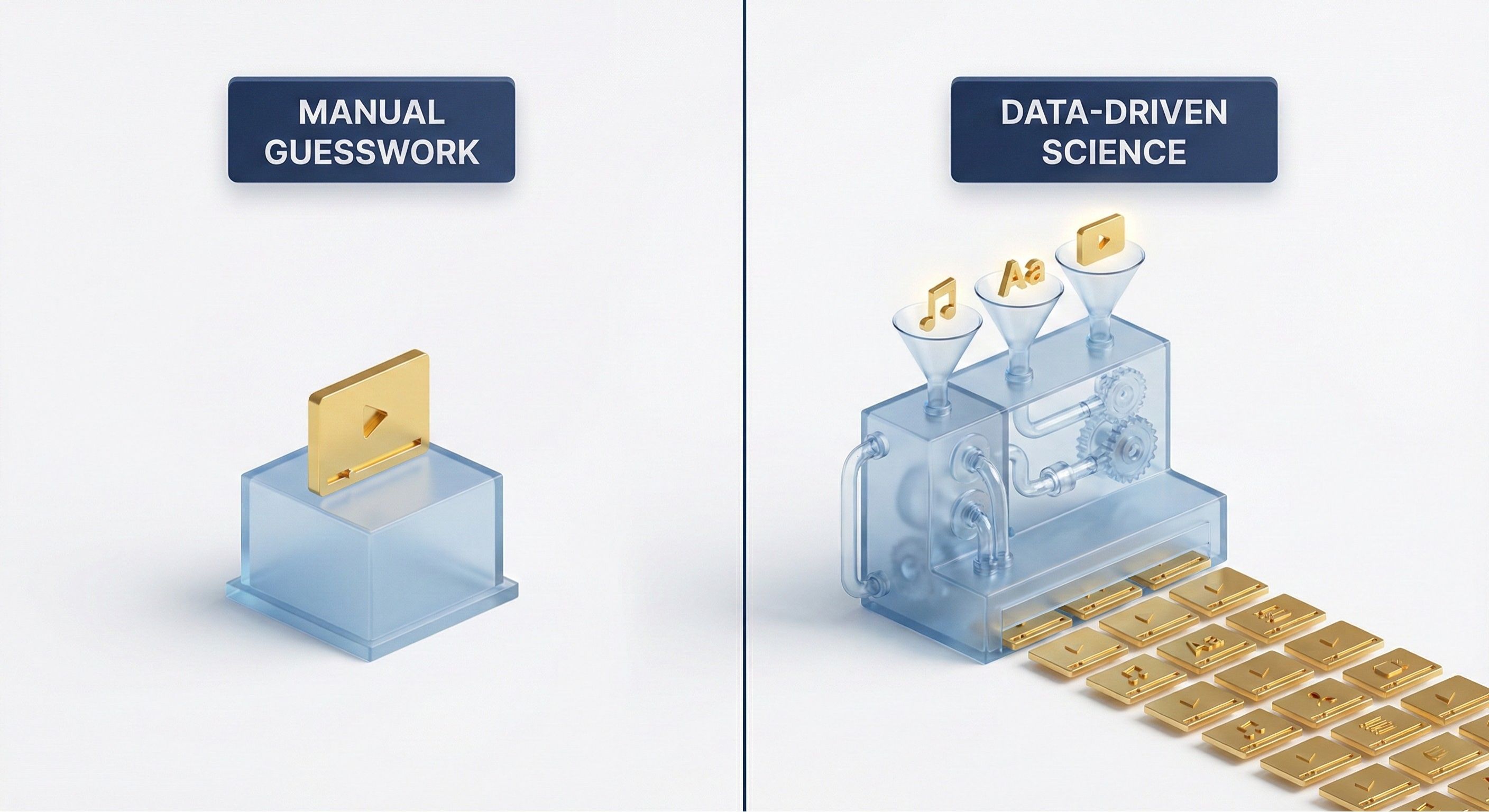
Imagine trying to discover the world's best cake recipe by baking just one cake at a time. It’s a slow, painful process that relies more on luck than skill. Now, what if you had a system that could bake and test hundreds of different ingredient combinations all at once? That’s exactly what these tools do for your ads.
They turn the creative process from a slow, manual art form into a fast-paced, data-driven science. Instead of a video editor spending an entire day just to get three slightly different ad versions out the door, a tool can spit out hundreds of unique variants in minutes. This speed is absolutely essential on platforms like Meta and TikTok, where ad fatigue can tank your performance seemingly overnight.
Moving Beyond Manual Guesswork
For years, testing ad creative was a clunky, labor-intensive ordeal. A creative strategist would come up with a hypothesis, a designer would build a couple of variations, and a media buyer would manually set up an A/B test. Getting just a handful of learnings from that cycle could easily take a week or more.
An ad creative experimentation tool completely flattens this timeline by systemizing the whole thing. It gives your team a central hub to:
Automate variant creation: Systematically mix and match assets like video hooks, product shots, text overlays, and calls-to-action to generate a massive library of testable ads.
Launch structured tests: Push all those creatives directly to the ad platforms with clean, consistent naming conventions so your data is actually usable.
Analyze performance efficiently: Quickly figure out which creative elements—not just which ads—are really moving the needle on metrics like CPA or ROAS.
This is about shifting your team's mindset from asking "Which ad won?" to "Which components made that ad a winner?" That's a much deeper level of insight. It allows you to build a library of proven creative ingredients to make every future campaign smarter from the start.
The table below breaks down just how much the workflow changes when you bring a dedicated tool into the mix.
Manual vs Tool-Driven Creative Experimentation
Here's a look at the operational shifts that happen when a team moves from the old way of doing things to a more modern, tool-driven workflow.
Process Stage | Manual Workflow (The Old Way) | Tool-Driven Workflow (The New Way) |
|---|---|---|
Ideation | Brainstorming a few "big ideas" for testing | Generating dozens of hypotheses around specific elements |
Creation | Designer manually creates 2-4 ad variations | Tool auto-generates 50+ variations from component assets |
Launch | Media buyer manually uploads ads and sets up tests | Creatives are pushed to ad platforms with automated naming |
Analysis | Comparing performance of 3-4 ads in a spreadsheet | AI-driven analysis identifies winning hooks, visuals, CTAs |
Learning | "Ad A beat Ad B." | "UGC hooks with benefit-driven headlines work best." |
The difference is night and day. One path is slow and delivers surface-level insights, while the other is built for speed and deep, actionable learning.
The explosion of these platforms is part of a much bigger trend. The global AdTech market hit around USD 719.6 billion in 2024 and is on track to reach roughly USD 1.58 trillion by 2030, according to research on the AdTech market. This growth is fueled by advertisers who are ditching guesswork for data-driven, test-and-learn approaches. By embracing these tools, you're ensuring your creative strategy becomes a scalable engine for growth, not a bottleneck holding you back.
Core Features That Power High-Velocity Testing
To really get what an ad creative experimentation tool does, you need to look under the hood. These platforms aren't just a random collection of features; they're an integrated engine built for one specific purpose: to help you test ideas and find winning ads, fast.
This engine is built on four core pillars that work together to completely change how you approach creative. Think of it like a car assembly line. Each station has a specific job, but they all feed into the next to crank out a finished car quickly and reliably. These tools do the same for ad creation, getting you from raw assets to live campaigns with stunning efficiency.
Modular Asset Management
It all starts with organizing your raw materials. Modular Asset Management is the foundation where you dump all your videos, images, and audio clips. Instead of languishing in a chaotic folder, these assets get analyzed and tagged by AI, turning them into reusable building blocks.
A five-second clip of someone unboxing a product is no longer just a random video file; it's now tagged as a "UGC unboxing hook." This kind of systematic organization lets you:
Find assets instantly: Just search with natural language like "show me all our product demos" instead of digging through endless folders.
Identify components: Quickly see which hooks, body segments, and calls-to-action you have ready for a remix.
Systematize your creativity: Build a library of proven components you can easily swap in and out of new ad concepts.
This structured library is the fuel for the entire experimentation process. It turns a messy pile of files into a strategic inventory of creative "parts."
AI-Powered Variant Generation
Once your assets are organized, the next pillar kicks in: AI-Powered Variant Generation. This is where the real magic of scale happens. Instead of a video editor manually stitching together a few ad versions in a tool like CapCut, the platform can do it for you in seconds.
You just set the rules, like, "Combine these five hooks with these three body sections and these two CTAs." The tool then gets to work, automatically assembling every possible combination and rendering dozens—or even hundreds—of unique video ads. This lets you test hypotheses at a scale that's flat-out impossible for a human.
Beyond basic A/B testing, some of the more advanced tools also bring in techniques like Dynamic Creative Optimization, where algorithms mix and match creative components in real-time based on user data.
This feature completely flips the script on the creative bottleneck. The question is no longer "How many ads can we possibly make?" but "How many ideas can we actually test this week?"
Automated Ad Launching
Making hundreds of ad variations is great, but only if you can actually test them. That brings us to the third pillar: Automated Ad Launching. Manually uploading 50 ads to Meta Ads Manager is not just a soul-crushing task; it's also a breeding ground for human error. One simple mistake in a naming convention can poison your test data, making all your hard work useless.
A good ad creative experimentation tool plugs directly into platforms like Meta and TikTok. With just a few clicks, it can:
Push all the creatives you just generated directly into a new or existing campaign.
Apply a perfectly structured and consistent naming convention to every single ad.
Ensure your A/B test is set up correctly right from the start for clean, reliable data.
This automation gets rid of that final manual hurdle, ensuring the massive volume of creatives you just made can be launched into a structured test without any costly mistakes.
Centralized Creative Learning Hub
The final pillar closes the loop. A Centralized Creative Learning Hub is basically the brain of your whole operation. This is where you store brand guidelines, winning scripts, customer reviews, and performance insights. It makes sure every ad—whether it was put together by a human or generated by AI—is built on a foundation of what you already know works.
This hub ensures that the lessons from one test aren't lost in some forgotten spreadsheet. Instead, they get fed right back into the system, making every future creative iteration smarter and more data-informed than the last.
The Modern Creative Experimentation Workflow
Knowing the features of an ad creative tool is one thing, but seeing how they all click together in a real-world process is where the lightbulb really goes on. A modern workflow isn't some rigid, linear checklist. It's a high-speed, cyclical system built to pump out insights and continuously juice performance.
Let's walk through a hypothetical campaign, from a messy folder of raw footage to a clean set of data-backed learnings. This shows how structure and speed can deliver faster, more reliable wins.
Step 1: Ingest and Tag
It all starts with your raw assets. You dump a collection of video clips, images, and audio files into the tool’s asset management system. But instead of just sitting there, these assets are immediately scanned by AI, which automatically identifies and tags key elements.
A 5-second user-generated clip becomes a "UGC unboxing hook."
A 10-second screen recording is tagged as a "product demo."
A 3-second clip of a logo animation is identified as a "branded outro."
This first step is huge. It transforms a pile of unstructured files into a searchable, modular library. Getting your creative assets organized is the bedrock of scaling production. For a deeper look at building this foundation, check out our guide on a modern video asset management system.
Step 2: Assemble and Remix
With your assets neatly tagged and organized, you can shift from organizing to creating. Using a modular editor, you can whip up dozens of ad concepts in minutes without ever opening a traditional video editing timeline. This is less about editing and more about strategic composition.
You might define a simple structure like "Hook-Body-CTA," then pick and choose the parts. Maybe you select five different hooks, three body segments, and two calls-to-action. The tool then gets ready to combine all these pieces, turning a handful of assets into dozens of ad variations ready for testing.
This flow chart visualizes how these high-velocity steps connect to create a seamless workflow.
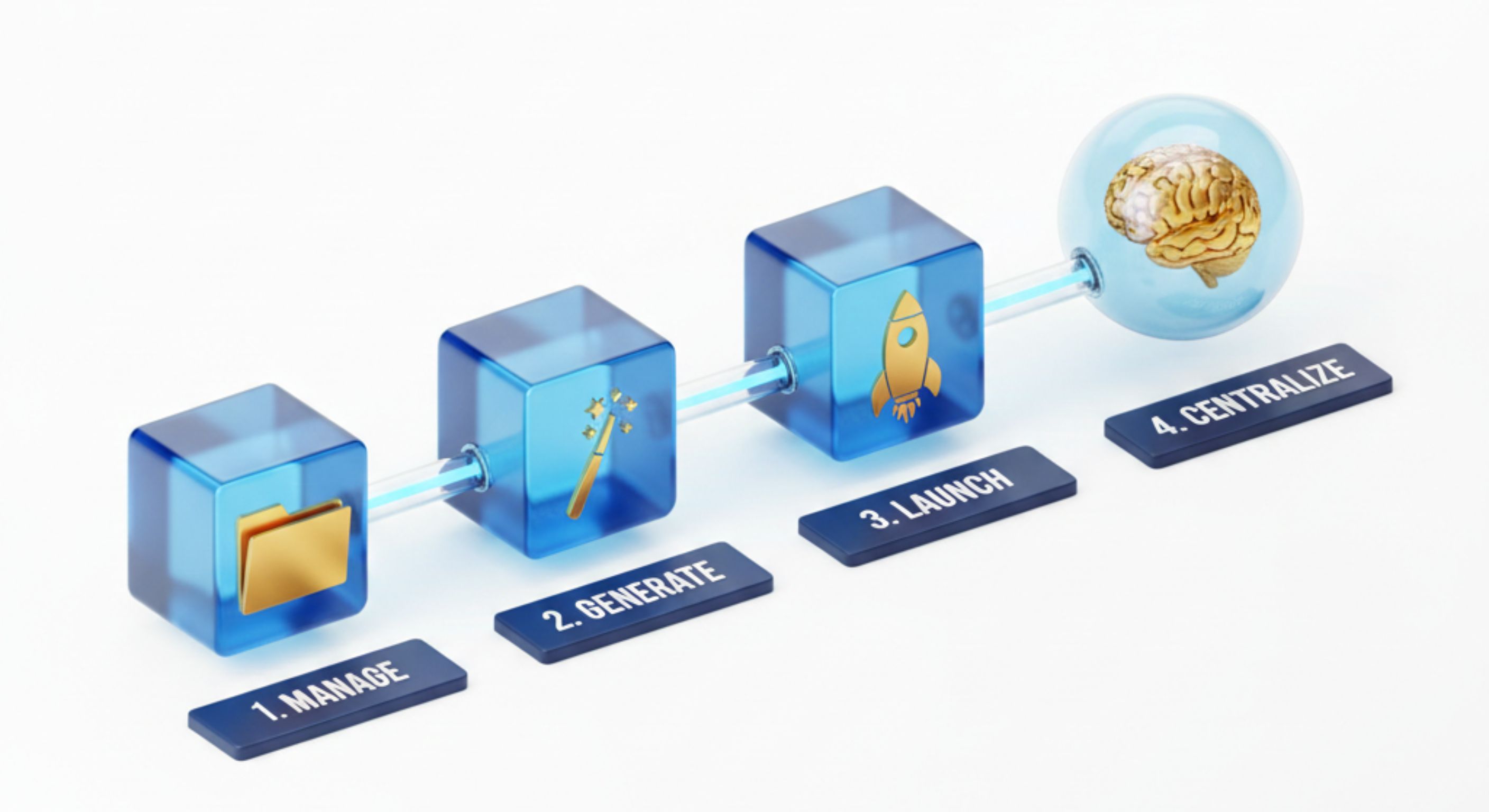
As you can see, it's a structured process that moves logically from managing assets to generating variants, launching tests, and finally, centralizing all those juicy insights.
Step 3: Scale with Bulk Rendering
Here's where the old, manual way of doing things gets completely obliterated. Instead of a designer slogging away for hours rendering each ad one by one, the ad creative experimentation tool does it all in minutes. You just confirm the combinations from the previous step, and the platform’s bulk rendering engine cranks out every single variant automatically.
This is the step that completely changes your testing capacity. What used to be a full day's work for a creative team to produce maybe five or six ad versions now takes less time than it does to make a cup of coffee.
Step 4: Launch and Learn
Once rendered, the ad variants are ready to go live. The tool can push them directly to your ad platform—like Meta Ads Manager—with perfectly structured naming conventions already applied. This direct integration gets rid of the risk of human error during campaign setup, making sure your test data is clean and reliable from the get-go.
The ads are launched, and performance data starts flowing back into the system. This sets the stage for the final, and most important, step. Adopting solid creative workflow management practices here is essential to keeping the whole process smooth.
Step 5: Analyze and Iterate
Finally, the platform pulls all the performance data together, letting you see way beyond just the "winning ad." Now you can analyze which specific components—the hooks, the value props, the CTAs—are actually driving results. You might discover that UGC-style hooks crush polished studio footage, or that one specific call-to-action consistently drops your CPA.
These learnings are then fed right back into your asset library and creative strategy, making the next round of experiments even smarter. This closes the loop. It ensures every dollar you spend helps you learn something valuable. This iterative approach is becoming the standard; the global AdTech market is projected to hit USD 2.55 trillion by 2032, and the ad analytics market is forecast to reach USD 20.33 billion by 2035. This massive growth just highlights the industry-wide shift toward platforms that reward exactly this kind of rapid, iterative testing.
How AI Is Changing the Creative Testing Game
Artificial intelligence isn't some far-off concept in marketing anymore. It’s a real, practical tool that’s completely changing how we test ad creative—making the whole process faster and way smarter.
The goal here isn't to replace human strategists. It's to give them superpowers. AI takes over the soul-crushing, repetitive tasks that used to eat up most of their day, freeing them up to focus on what actually matters: strategy, insights, and big-picture decisions.
Think about a media buyer who used to spend half their week manually trimming video clips and building out campaigns one by one. By plugging AI into an ad creative experimentation tool, that same person can now manage a system that tests hundreds of ad variations on its own. It shrinks the learning cycle from weeks down to just a couple of days.
Predictive Analysis and Forecasting
One of the biggest wins with AI is its ability to predict what will work. For years, deciding which creative to test was a mix of gut instinct and looking at old campaigns. While that experience is valuable, let’s be honest—it’s not always reliable.
AI algorithms, on the other hand, can crunch thousands of data points to forecast creative performance with spooky accuracy. It’s not magic. These models are trained on massive datasets of past ad performance, learning to spot the tiny, almost invisible patterns in visuals, copy, and timing that lead to conversions. This means teams can put their money behind concepts with a much higher statistical chance of success right from the get-go.
And the data backs this up. AI-driven tools can predict a creative's success with over 90% accuracy. Compare that to the roughly 52% accuracy of human judgment alone. That’s a massive jump, and it’s a game-changer for cutting down on wasted ad spend. For more stats on this, check out the findings on AI-generated ad creative performance.
Generative AI for Asset Creation
The other huge shift is in actually creating the assets. Creative teams are constantly hitting roadblocks. They need more B-roll, a different style of music, or a new voiceover for a video hook. In the past, this meant expensive photoshoots, studio time, and a lot of waiting around.
Now, generative AI tools can spin up high-quality, brand-new assets whenever you need them. This includes stuff like:
Video B-Roll: Generate realistic video clips that fit a specific script or vibe.
Voiceovers: Create natural-sounding voiceovers in different languages, accents, and tones.
Images: Produce custom ad images without needing to brief a graphic designer.
This is huge because it lets teams test completely new creative angles without the massive upfront cost of production. It opens up experimentation for everyone, not just teams with huge budgets, and makes it possible to pump out a high volume of diverse ad assets.
Intelligent Asset Management and Assembly
Finally, AI is the engine behind what we call modular creative. When you upload assets into a modern platform, the AI doesn't just store them—it analyzes them. It sees the objects, understands the actions, and gets the overall theme, automatically tagging everything.
This process turns your messy asset folder into a structured, searchable library of creative "building blocks." From there, your team can assemble new ads in minutes. For example, you could tell the system to combine all your "UGC unboxing hooks" with every "benefit-focused product demo" you have. The AI understands the tags and spits out dozens of variations in seconds. You can learn more about how we do this in our guide to AI for advertisers.
This kind of intelligent system automates the grunt work of creative production. By handling the tedious mechanics of editing and campaign setup, AI lets strategists focus their brainpower on interpreting data and steering the creative direction.
How to Choose the Right Ad Creative Experimentation Tool
With so many platforms popping up, picking the right ad creative experimentation tool can feel like a chore. The real goal isn’t to find the single "best" tool out there, but to find the one that actually fits your team's needs, budget, and day-to-day workflow. Pick the wrong one, and you’ll end up with a pricey subscription gathering digital dust and a team of frustrated media buyers.
Think of it like buying a vehicle. A professional race car driver, a construction crew, and a family of five all need to get from point A to B, but they’re going to need vastly different rides to do it right. Your choice of tool has to match your team's reality and performance goals just as closely.
This section will give you a straightforward framework to guide your decision. By asking the right questions upfront, you can find a platform that genuinely makes your team better and faster.
Platform and Workflow Integration
First things first: compatibility. A platform can have all the bells and whistles, but if it doesn't plug into the ad networks where you spend your money or fit your team's existing habits, it's dead on arrival.
Before you even look at features, nail down these basics:
Does it connect directly to your key ad platforms? For most performance teams, native API integration with Meta and TikTok is an absolute must-have. This is what lets you push creatives and pull data without getting bogged down in manual uploads and exports.
Does it match your team's current skills? If your media buyers spend all day in Ads Manager, a tool that demands complex coding or a painful setup process will be met with resistance. You'll struggle with adoption from day one.
Can you import your existing assets easily? Your team has a goldmine of past winners and raw footage. The right tool should make it simple to bring in and organize that library, not force you to start over from scratch.
A tool should be a friction-reducer, not a friction-creator. If you have to completely gut your team's process just to get started, you're probably looking at the wrong fit.
Scalability and Performance
Your creative needs are only going to grow. The right tool needs to handle your testing volume today, and six months from now when you've doubled your ad spend.
Scalability isn't just about handling more ads; it's about staying fast and efficient as that volume ramps up. You need to be sure the platform can grow with you.
Can the tool scale from launching 10 ad variations a week to over 100 without breaking a sweat? If rendering times crawl or the interface gets sluggish at higher volumes, it will quickly become a bottleneck rather than an accelerator.
A great way to test this is to think about the entire creative lifecycle. The best platforms offer features beyond simple A/B testing, giving you room to grow into more advanced methods. You can dive deeper into some of these in our guide to dynamic creative optimization tools.
AI and Automation Capabilities
Let's be real—the main reason you're looking at these tools is to save time and automate the grunt work. Good automation handles the repetitive, low-impact tasks so your team can focus on big-picture strategy and analyzing results.
When you're looking at AI features, ignore the buzzwords and look for practical, real-world applications:
Automated Asset Tagging: Does the AI actually understand your video assets, intelligently tagging them so they become reusable components for future ads?
Bulk Variant Generation: Can you set up a few rules and let the system automatically pump out dozens or hundreds of ad variations for you?
Intelligent Naming Conventions: Does it automatically apply a clean, structured naming system to every creative it launches? This is crucial for keeping your test data from becoming a chaotic mess.
If the "automation" still needs a ton of manual hand-holding, it's not delivering on its promise. You're looking for a tool that genuinely takes work off your team's plate, freeing them up to think and strategize.
To help you put all this into practice, we've put together a checklist to guide your conversations with vendors and your internal team.
Evaluation Checklist for Ad Creative Experimentation Tools
Use this checklist to systematically compare platforms and ensure you’re asking the right questions to find the perfect fit for your performance team.
Evaluation Criteria | Key Questions to Ask | Why It Matters for Performance Teams |
|---|---|---|
Integration | Does it have native API integrations with Meta, TikTok, etc.? Does it fit our existing MarTech stack (e.g., project management, analytics tools)? | Prevents manual uploads/downloads, ensures smooth data flow, and avoids creating new workflow silos. |
Workflow Fit | Can our media buyers and designers use it with minimal training? Can we import our existing creative asset library easily? | High adoption rates are critical for ROI. If the tool is too complex, it won't get used, no matter how powerful it is. |
Scalability | How quickly can it generate 100+ ad variations? What do rendering and export times look like at high volume? | A tool that slows down under pressure becomes a bottleneck, defeating the purpose of speeding up your testing cycle. |
Automation | Does it automate naming conventions? Can it auto-tag assets? Does it offer rule-based ad creation? | True automation removes manual grunt work, freeing up your team for high-level strategy and creative thinking. |
Analytics | Can we see performance data directly in the platform? Does it help identify winning creative elements (hooks, CTAs, etc.)? | Data-driven decisions are key. The tool should provide clear insights, not just a dashboard of vanity metrics. |
Support & Onboarding | What does the onboarding process look like? Is there a dedicated success manager? What are the typical support response times? | A great tool with poor support is a recipe for frustration. Ensure you'll have a partner to help you succeed. |
Choosing the right tool is a strategic decision that directly impacts your team's efficiency and your campaign performance. By taking a structured approach and focusing on integration, scalability, and practical automation, you can select a platform that becomes a true force multiplier for your creative testing efforts.
Putting It All Together to Find Winning Ads Faster
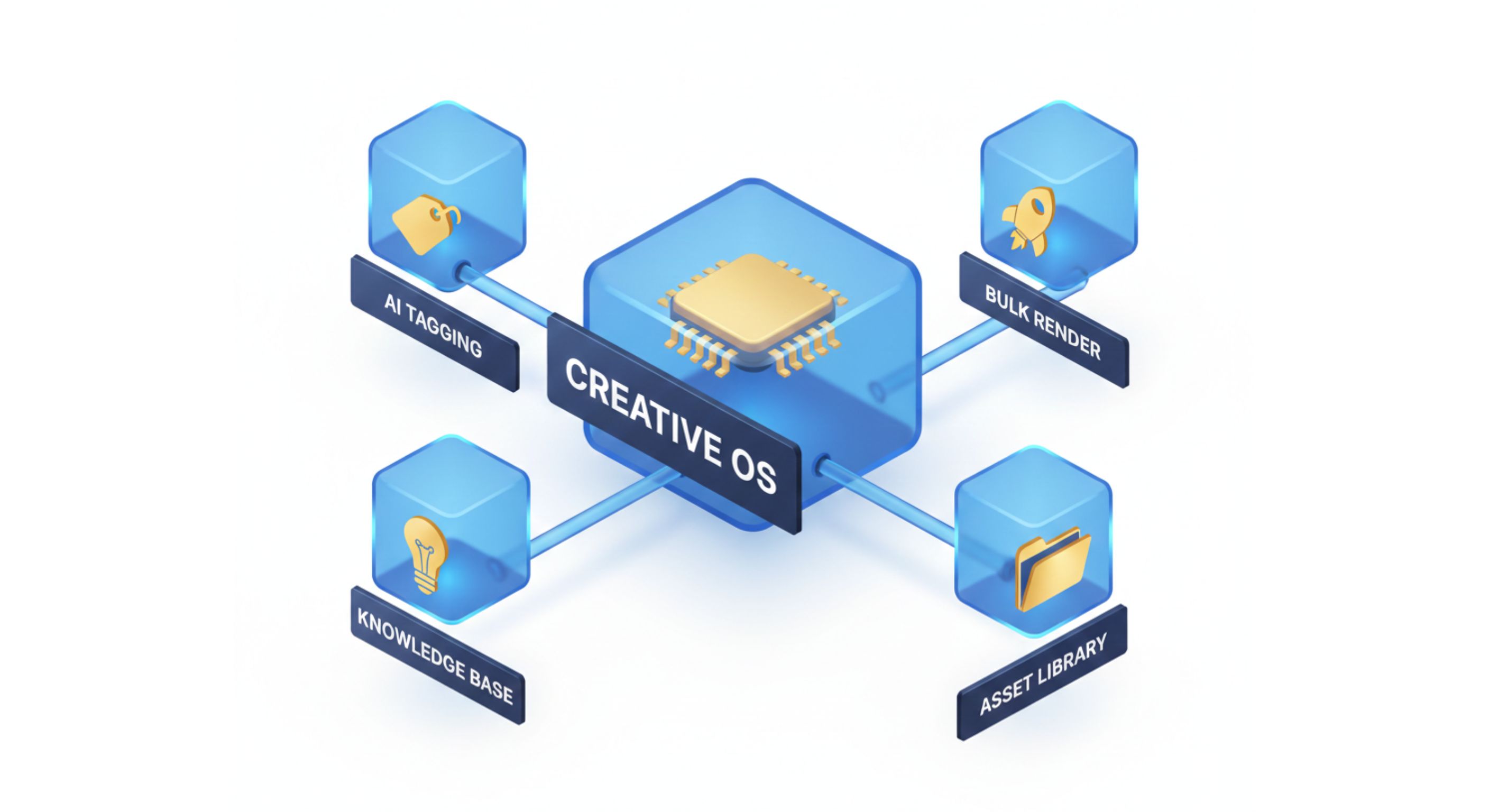
We’ve walked through the features, workflows, and AI smarts behind modern creative testing. Now, let’s tie it all together and see how this actually solves the real-world headaches that growth marketers deal with every single day. A purpose-built platform isn't just a random assortment of tools; it’s a full-blown operating system for your creative performance.
This system is built from the ground up to eliminate the friction that grinds teams to a halt. Just think about the hours your team sinks into manually splicing videos in CapCut, the sheer frustration of hunting through messy folders for the right asset, or the anxiety of launching a big test with inconsistent naming conventions. The right ad creative experimentation tool is engineered to make those problems disappear.
Moving from theory to practice, you can see how each piece of the puzzle works together to drastically shorten the time it takes to find your next winning ad. This isn't about just churning out more creative; it's about getting smarter and learning faster with every dollar you spend.
From Manual Labor to an Automated Ecosystem
The big shift here is moving away from a linear, hands-on process to a cyclical, automated one. This whole transformation rests on a few key pillars that turn a chaotic library of assets into a well-oiled production line for high-performing ads.
It all starts with AI-driven asset tagging. The system takes your raw video clips and instantly breaks them down into foundational 'building blocks,' automatically tagging them as hooks, user-generated content, or product demos. What you get is a modular library where every single piece of creative is neatly organized and ready to be remixed.
This structured foundation is what makes the next leap in efficiency possible.
The ultimate goal is to create a system where your team spends 90% of its time on strategy and insights, and only 10% on the manual mechanics of ad creation and campaign setup. An integrated tool makes this shift possible.
Next up is bulk video rendering, which takes these building blocks and assembles them at a massive scale. A task that would take a video editor an entire day—manually creating and exporting dozens of variations—gets crunched down into just a few minutes of automated work. This frees up your creative team to dream up new concepts instead of getting bogged down in repetitive production tasks.
A Centralized Brain for Smarter Creative
Finally, a centralized knowledge base, or what we call a ‘Context Vault,’ acts as the brain of the entire operation. It holds all your brand guidelines, top-performing scripts, and key customer insights, ensuring that every single ad—even those generated by AI—stays on-brand and laser-focused on conversion. This completely sidesteps the common issue of AI-generated ideas drifting into generic or off-brand territory.
This integrated approach pulls everything into a powerful feedback loop. The system helps you:
Generate hundreds of ad variants from your modular assets.
Launch structured tests directly to Meta or TikTok with perfect naming.
Analyze performance to pinpoint which specific components are driving results.
Centralize those learnings to make the next batch of creatives even smarter.
At the end of the day, the right ad creative experimentation tool is much more than a video editor or an analytics dashboard. It's an end-to-end operating system designed to dramatically ramp up your testing velocity, fight creative fatigue, and consistently uncover the winning ads that will scale your business.
Got Questions? We've Got Answers.
Switching up your creative process is a big move, and it's natural to have questions. Here are some of the most common things we hear from teams who are getting started with a real ad creative experimentation tool.
How Much Budget Do I Really Need for Testing?
This is a big one. The budget isn't for the tool itself, but for the ad spend you'll need to run conclusive tests on platforms like Meta. A solid rule of thumb is to set aside enough money to get at least 50-100 conversions for each ad variation.
Think of it this way: if your target Cost Per Action (CPA) is $20, you'll need between $1,000 and $2,000 per ad variant to collect enough data. This keeps you from making huge budget decisions based on what might just be a random spike or dip in performance.
How Long Should a Creative Test Run?
Patience is key here. A typical creative test should run for 4 to 7 days. This gives your ads enough time to get past the initial learning phase and find a stable performance trend, all without wasting money on the ones that just aren't cutting it.
It's tempting to call a winner after just a day or two, but don't. Ad performance can be all over the place initially. Letting the test run its course is crucial for getting insights you can actually trust.
The real point of creative testing isn't just about finding one superstar ad. It’s about learning what resonates while your budget is spread out evenly. What worked? What bombed? Those are the lessons that will make your next round of ads even better.
Can We Test Ads That Are Already Live?
This trips a lot of people up. If you're using the built-in tools on a platform like Meta, the answer is usually no. You have to create brand new ads (often by duplicating existing ones) to put them into a formal A/B test. You can't just grab five live ads and toss them into a controlled experiment.
This is where a dedicated ad creative experimentation tool really changes the game. Many of them are built to analyze performance across all your ads—live or new—giving you insights without needing the rigid setup of a classic A/B test.
How Do I Convince My Team to Invest in a Tool Like This?
Frame it as a way to reduce risk and boost efficiency. You can ask your team a pretty simple question: "Would we rather bet our entire monthly budget on a few ads that are basically our best guess, or should we invest a small slice of that budget to prove what works and then scale the winners with confidence?"
An ad creative experimentation tool takes the gamble out of your ad spend. It transforms creative from a guessing game with a high price tag into a data-backed system that drives consistent, profitable growth. It’s not just a cost; it's an investment in learning faster and wasting less money.
Ready to stop guessing and start scaling what works? With Sovran, you can automate your creative production, launch structured tests in minutes, and get insights 10x faster. Start your 7-day free trial today and see how our AI-powered platform can change the game for your ad performance.

Manson Chen
Founder, Sovran
Related Articles
How to Turn Link Into Video: Ads That Convert in 2026
Learn how to turn link into video for Meta & TikTok ads. Leverage AI to scale creation, boost ROI, and succeed in 2026.
Your Guide to a Social Media Ad Generator in 2026
Discover how a social media ad generator revolutionizes creative production. Learn to automate video ads, scale testing on Meta & TikTok, and drive performance.
8 High-Converting Static Ads Examples for 2026
Discover 8 high-performing static ads examples from top apps. Learn to create text-overlays, testimonials, and lifestyle ads that convert.