A Guide to Dynamic Creative Optimization Tools
Dynamic Creative Optimization tools are the software platforms that automatically personalize your digital ads in real time. The best way to think about them...
Jump to a section
Dynamic Creative Optimization tools are the software platforms that automatically personalize your digital ads in real time. The best way to think about them is as an automated creative team that uses data to build and serve thousands of unique ad variations, making sure the right message hits the right person at exactly the right moment.
What Are Dynamic Creative Optimization Tools
Picture a digital billboard that changes its message for every single car that drives past. A family minivan might see a promo for a local theme park. A sports car? It gets an ad for high-performance tires. That's the big idea behind Dynamic Creative Optimization (DCO).
DCO tools tackle one of the oldest problems in advertising: ad fatigue and irrelevance. Instead of creating one static ad and blasting it out to everyone, these platforms build ads on the fly from a library of modular parts.
Building Ads Like LEGOs
At its core, DCO technology works like a set of digital LEGOs. As a marketer, you upload all your creative assets, which become the building blocks:
Headlines: Several versions of ad copy, each with a different vibe or angle.
Images/Videos: A whole collection of visuals showing off different products or features.
Calls-to-Action (CTAs): Buttons like "Shop Now," "Learn More," or "Get Offer."
Promotional Offers: Different discounts or deals you want to test out.
The DCO tool then acts like a master builder. It uses a ton of data signals—like a user's location, browsing history, device, or even the local weather—to assemble the best combination of these blocks in milliseconds. What you get is a highly personalized ad that feels uniquely relevant to the person seeing it. To really get it, you need to understand the fundamentals of programmatic advertising, which is the world where DCO platforms truly shine.
DCO transforms advertising from a one-way monologue into a dynamic, two-way conversation. It stops shouting one message at everyone and starts whispering the right message to each individual.
The Growing Demand for Personalization
This push toward hyper-personalization isn't just a passing trend; it's what the market demands. The global DCO market is on track to hit USD 2.19 billion as more and more marketers look for efficient ways to cut through all the digital noise. This growth is a direct reflection of the need for smarter, more effective advertising in a super crowded online space.
By automating the creation and testing of ad variations, DCO tools let teams scale their efforts in a massive way. This is especially powerful for video, where AI-powered video creation can generate countless personalized video ads from a single set of assets. It saves an incredible amount of time and seriously boosts campaign performance.
How DCO Platforms Actually Work
So, how do these DCO platforms take a single ad concept and spin it into thousands of hyper-relevant messages? Let's pop the hood and see what's really going on.
It helps to think of a DCO platform less like a single tool and more like a high-tech assembly line. It has five key stations, each handling a critical step to build the perfect ad for the right person at the right moment.
This diagram gives you a bird's-eye view of how a static ad idea gets transformed into a dynamic, personalized powerhouse.
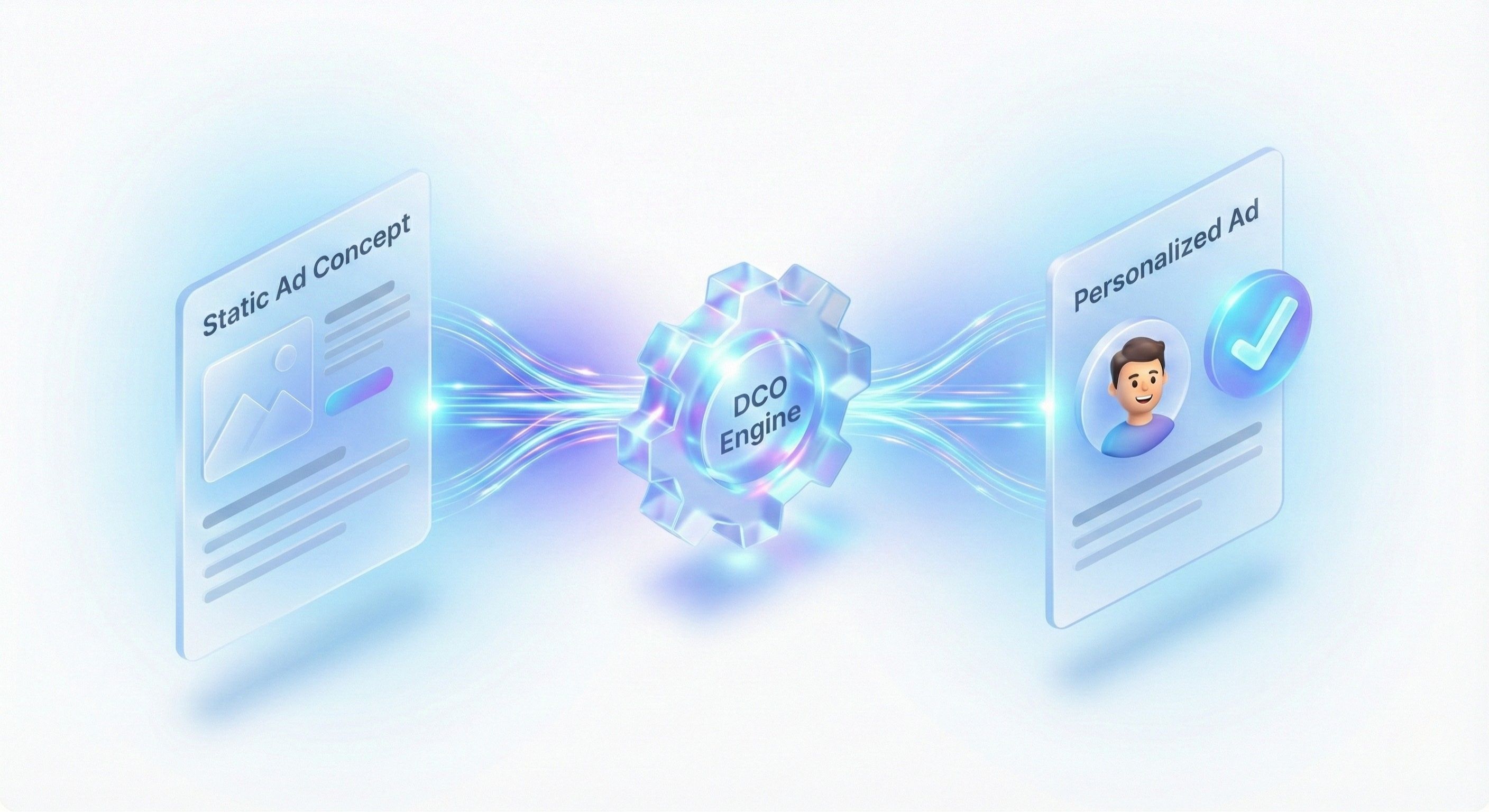
You can see how the technology amplifies one creative concept, shifting from a generic "one-to-many" broadcast to a truly "one-to-one" conversation.
The 5 Core Capabilities of DCO Tools
Let's walk through the five core capabilities that make Dynamic Creative Optimization possible. Each step builds on the last, turning raw assets into intelligent, performance-driven ads.
This table breaks down the key functions and the primary benefit each brings to the table.
Core Capabilities of DCO Tools Explained
Capability | What It Does | Primary Benefit |
|---|---|---|
Creative Asset Management | Acts as a digital library for all ad components (images, videos, text), each tagged with descriptive metadata. | Enables the system to quickly find and select the perfect asset for any scenario. |
Modular Ad Assembly | Uses flexible templates with dynamic placeholders to build ads on the fly from the asset library. | Allows for the creation of virtually limitless ad variations without manual effort. |
Data Decisioning Engine | Analyzes dozens of real-time data signals about the user and their context to select creative components. | Ensures the final ad is as relevant as possible by making data-backed creative choices. |
Automated Optimization | Continuously learns from ad performance, tracking which combinations drive the most engagement and conversions. | Automatically improves campaign performance over time by shifting budget to winning variations. |
Granular Performance Reporting | Provides deep analytical dashboards showing the performance of individual creative components, not just whole ads. | Delivers actionable creative intelligence that can inform future campaigns and strategy. |
By mastering these five areas, DCO platforms give marketers the power to personalize at a scale that was previously unimaginable. Now, let's dig into what each capability looks like in practice.
1. Creative Asset Management
Everything starts here, at the first station. Think of this as your digital warehouse where you store all the raw materials. Instead of uploading finished ads, you upload all the individual pieces—every headline, product shot, video clip, jingle, text overlay, and call-to-action button you’ve got.
Each asset gets tagged with metadata that describes it. An image might be tagged "urban," "female model," or "summer vibe." This meticulous organization is the bedrock of the whole system, letting the platform instantly find the right ingredient for any recipe.
2. Modular Ad Assembly
Next up, your tagged assets head to the assembly station. Here, you define a flexible ad template, which is basically a blueprint for your ad. This template lays out the ad's structure but leaves key spots as dynamic placeholders. It’s like creating a game of "Mad Libs" for your advertisement.
The DCO platform then uses this blueprint to piece together ads in real-time. It grabs a headline from the library, matches it with a fitting image, slaps on the right CTA, and maybe adds a specific background. This modular construction is what unlocks the ability to generate endless ad variations automatically.
3. The Data Decisioning Engine
This is where the real magic happens. The decisioning engine is the brain of the operation, using real-time data to decide which creative components to pull for each ad impression. It’s a smart algorithm that chews through dozens of signals about the viewer and their current context.
These signals can include just about anything:
Demographic Data: Age, gender, language.
Geographic Data: Country, city, or even a specific neighborhood.
Behavioral Data: Products they’ve viewed, items left in their cart, or past site visits.
Contextual Data: The local weather, time of day, or the type of device they're using.
Third-Party Data: Broader audience interests and buying habits.
For example, the engine could see a user is in a rainy city and instantly select a video ad showcasing a waterproof jacket. It’s this ability to connect data from sources like your website analytics or CRM that makes the personalization so powerful.
The decisioning engine acts like a master creative director, making thousands of split-second choices to ensure the final ad is as relevant as possible. It doesn't just guess; it makes data-backed decisions to connect with the viewer.
4. Automated Optimization
Once the ads are assembled and out in the wild, they enter the optimization phase. A DCO platform doesn't just "set it and forget it." It’s constantly learning from what works and what doesn't. Think of it as running a massive, never-ending A/B test on every single creative element.
If one headline consistently crushes it with a certain audience, the system automatically starts showing it more often. This machine learning layer means your campaign gets smarter and more effective over time, all without you having to manually tweak things. Our guide on using AI for ads dives deeper into how this learning cycle creates killer campaigns.
5. Granular Performance Reporting
The final stop is reporting. DCO tools offer analytics dashboards that go way beyond standard metrics. You can see not only which ad performed best, but which individual components—the specific headlines, images, or CTAs—were the most effective drivers.
This level of detail is a goldmine for your creative strategy. You learn exactly what clicks with different audience segments, giving you hard data that can inform everything from your next campaign to your product development. It closes the loop, turning raw performance data back into smart creative insights.
Okay, let's get into the real-world impact of all this tech. It's one thing to talk about cool features, but what do dynamic creative optimization tools actually do for your business? The answer is simple: they translate technical wizardry into real dollars and cents. This isn't just about making a bunch of ad variations; it's about fundamentally changing how you talk to your customers and grow your brand.
The biggest win here is achieving personalization on a massive scale. Forget creating a handful of ads for broad audiences. With DCO, you can have a unique, one-on-one conversation with millions of people at the same time. You're shifting from a megaphone approach (one-to-many) to a personal chat (one-to-one), which is exactly what today's consumers want.
This kind of personalization has a direct, measurable effect on how relevant your ads feel. When an ad speaks to a person's specific situation—their location, what they just browsed, or even the weather outside—it grabs their attention. That relevance is the engine that drives way higher engagement and click-through rates (CTR).
Driving Tangible Business Outcomes
The benefits of DCO create a ripple effect right down your marketing funnel. When your ads are more relevant, they don't just get more clicks. They attract better-qualified people, which leads to higher conversion rates and a much healthier customer acquisition cost (CAC).
Here’s a breakdown of how DCO moves the needle on key business goals:
Sky-High Ad Relevance: By tailoring creative on the fly, DCO makes sure your message hits home. We're talking 30-50% higher CTRs compared to old-school static ads.
Massive Workflow Wins: It automates the soul-crushing manual work of creating and testing endless ad variations. This frees up your creative team to think about big-picture strategy instead of grinding out production tasks.
Supercharged Learning: DCO platforms give you granular data on which creative components are actually working. You get real insights fast, which helps you make smarter decisions and stop wasting ad spend.
We've seen the adoption of dynamic creative optimization tools explode, especially with enterprises and SMEs trying to get more from their digital marketing. The retail and e-commerce worlds are all over this, using DCO to swap out product images, pricing, and CTAs in real-time to drive sales. You can dig into more stats on the DCO market growth on verifiedmarketresearch.com.
Maximizing Return on Ad Spend
At the end of the day, the most important impact of DCO is on your Return on Ad Spend (ROAS). By constantly optimizing creative based on what’s actually happening in the real world, these tools automatically put your budget behind the winning ad combinations. This data-first approach turns your ad budget into a much more efficient growth machine.
Think of DCO as a performance multiplier. It takes your existing ad spend and makes every dollar work harder by killing the guesswork and focusing on what’s proven to convert.
This isn't just a one-and-done improvement for a single campaign. It builds a foundation for long-term growth. The lessons you learn from one campaign make the next one smarter, creating a virtuous cycle of getting better and better. For teams trying to scale up paid acquisition, figuring out https://sovran.ai/blog/how-to-scale-paid-growth-with-modular-video-ads is the natural next step.
By connecting creative performance directly to business metrics, DCO finally closes the gap between the "art" of advertising and the "science" of data-driven marketing. It turns creative from a subjective gut feeling into a measurable driver of revenue, ensuring your marketing efforts aren't just seen—they're actually moving the needle.
How to Choose the Right DCO Platform
Picking the right dynamic creative optimization tool can feel like a chore. With a ton of options out there, all promising the moon, it's easy to drown in feature lists and tech jargon. The real secret is to look past the sales pitch and figure out how a platform will actually slot into your daily workflow.
Think of it like hiring a new team member. You wouldn't just glance at a resume; you'd want to see their skills in action, check if they get along with your current team, and make sure they’re on board with your company's mission. The same logic applies here. You're looking for a tool that not only packs a punch with features but also fits your team’s skills, budget, and overall goals.
Start With Your Existing Martech Stack
Your DCO platform isn't an island. It has to play nicely with all the other tools you rely on every day. Bad integrations are a classic rookie mistake, leading to data headaches and manual grunt work that completely defeats the purpose of DCO.
First things first, map out your current marketing tech stack. You'll want to pay special attention to a few key players:
Demand-Side Platforms (DSPs): Your DCO tool needs a rock-solid, native connection to the DSPs you use for media buying. This is non-negotiable for serving and optimizing dynamic ads within your programmatic campaigns.
Data Management Platforms (DMPs) & Customer Data Platforms (CDPs): The real magic of personalization comes from your audience data. The platform must be able to pull in first-party and third-party segments from your DMP or CDP.
Analytics and Reporting Tools: Make sure you can either plug the platform into your main analytics suite or easily export data. You need to see the whole performance picture, not just a sliver of it.
A platform with pre-built, one-click integrations is always a better bet than one that needs a developer to get things working. Always ask vendors for a full list of their integration partners before you even think about signing.
Evaluate the Creative Studio and Workflow
The slickest algorithm on the planet is worthless if your team hates using the platform. The user-friendliness of the creative studio—the interface where you actually build and manage your dynamic ads—is a massive deal. A clunky, confusing workflow will just slow everyone down and kill your team's morale.
When you're checking out a DCO platform, always push for a live demo or a free trial. The only way to know if a tool is right for you is to get your hands dirty and try building a real campaign from start to finish.
Be honest about your team’s technical chops. Some platforms are built for marketers with simple drag-and-drop tools, while others are geared toward creative technologists who want more advanced control. Pick a tool that matches your team's current skill set to avoid a painful and expensive learning curve.
Channel Support and Ad Format Flexibility
Don't assume all DCO platforms are the same. They vary wildly in the channels and ad formats they can handle. Most can do standard display ads, but your campaigns are probably much bigger than that.
Before you commit, get confirmation that the tool supports every channel you need. This should include:
Social Media: Can it pump out dynamic ads for Meta (Facebook and Instagram), TikTok, and LinkedIn?
Video: Does it support dynamic video? Can you swap out things like text overlays, end cards, and product shots on the fly?
Connected TV (CTV): Can you serve personalized video ads to people streaming their favorite shows?
Native Advertising: Does it support the ad formats that blend right into a publisher's content?
Flexibility is the name of the game. The best dynamic creative optimization tools let you work with everything from interactive HTML5 ads to modular video templates. This means you can create awesome experiences for your audience on every channel without being held back by your tech. As you look at DCO solutions, it's smart to also check out the wider world of leading AI marketing software options to see how different tools are tackling automation and personalization.
Choosing the right DCO platform requires a careful look at its features, integration capabilities, and how well it fits with your team's workflow. This table provides a checklist to guide you through the evaluation process, ensuring you select a tool that truly meets your business needs.
DCO Tool Evaluation Checklist
Evaluation Criteria | What to Look For | Why It Matters |
|---|---|---|
Martech Integration | Pre-built, native integrations with your DSPs, DMP/CDP, and analytics tools. | Avoids data silos and manual work, ensuring seamless data flow and campaign execution. |
Creative Studio UX | An intuitive, user-friendly interface that matches your team's technical skills. Request a live demo or trial. | A good user experience speeds up production, reduces frustration, and empowers your creative team. |
Channel & Format Support | Support for all your key channels (Social, Video, CTV, Native) and a wide range of ad formats (HTML5, modular video). | Ensures you can deliver consistent, personalized experiences across every customer touchpoint without limitations. |
Personalization Engine | The ability to use diverse data signals (audience, contextual, geo) and an algorithm that supports robust testing. | The core of DCO. A powerful engine is needed to deliver relevant messages at scale and optimize performance. |
Analytics & Reporting | Granular, real-time reporting dashboards with easy data export capabilities and creative-level insights. | You need to understand what’s working (and what isn't) to make smart optimization decisions and prove ROI. |
Support & Onboarding | A clear onboarding process, accessible technical support, and comprehensive training resources. | Good support minimizes downtime and helps your team get the most value out of the platform quickly. |
Pricing Model | Transparent pricing (CPM, subscription, or % of spend) with no hidden fees for onboarding, support, or integrations. | A clear understanding of the total cost of ownership prevents budget surprises and ensures the tool is cost-effective as you scale. |
By using this checklist, you can systematically compare different DCO platforms. It helps you move beyond flashy features and focus on the practical capabilities that will have the biggest impact on your marketing performance and operational efficiency.
Pricing Model and Total Cost of Ownership
Finally, you have to talk money. DCO pricing models can be all over the place, and the advertised price rarely tells the full story. You need to ask about all potential costs to figure out the true total cost of ownership.
Here are the usual suspects for pricing:
CPM-Based: You pay a fee for every thousand impressions you serve.
Subscription Fee: A flat monthly or annual fee, often with different tiers for features or usage limits.
Percentage of Ad Spend: The vendor takes a small slice of the media budget that runs through their platform.
But don't stop there. Dig deeper and ask about any hidden fees for things like onboarding, training, dedicated support, or premium integrations. A vendor with a transparent, easy-to-understand pricing model is usually a good sign. Make sure the model you choose aligns with how much you plan to use it, so it stays affordable as your campaigns grow.
Common DCO Implementation Mistakes to Avoid
Jumping into dynamic creative optimization is a massive step forward, but it’s not a magic button you just press for better results. Think of it like being handed the keys to a high-performance race car—you still need to know how to drive it, or you'll end up in a ditch. Many teams get tripped up right out of the gate, leading to frustration and wasted ad spend.
But if you know where the common traps are, you can sidestep them and build a DCO program that actually delivers from day one. Let's walk through the most frequent mistakes that can completely derail your success.
Relying on Poor Quality Data
This is the single biggest, most catastrophic mistake you can make. Your DCO's personalization is only as smart as the information you feed it. If your product feed is missing images, your audience segments are a mess, or your conversion tracking is off, the algorithm is just guessing. And it will guess wrong.
It’s like giving a world-class chef rotten ingredients. No matter how talented they are, the final dish is going to be a disaster. The same principle applies here: garbage in, garbage out.
Before you do anything else, prioritize your data hygiene:
Audit Your Product Feed: Is every price, description, and image complete and accurate? Fix it now.
Verify Audience Segments: Get into your DMP or CDP and clean up those audience lists. Remove irrelevant users and make sure your segments are fresh.
Confirm Tracking Pixels: Double and triple-check that your conversion tracking is firing correctly across the entire customer journey.
Creating Overly Complex Rules
When you first get your hands on a DCO tool, it's incredibly tempting to build these elaborate, multi-layered decision trees for every possible scenario. While it feels powerful, you quickly end up with a tangled mess that’s impossible to manage, let alone troubleshoot. You'll have campaigns so complex you have no idea which variables are actually moving the needle.
Start simple. Seriously. Pick two or three key dynamic elements, like a headline and a hero image. Personalize them based on just one strong data signal, like a user's location or recent browsing history.
A winning DCO strategy isn’t about using every single feature at once. It’s about mastering a few high-impact personalization tactics, proving they work, and then building on that success methodically.
This incremental approach gives you clean, actionable insights and lets you scale based on what’s actually working, not just what you think might work.
Forgetting the Human Element
Another classic blunder is setting up the tool, hitting "go," and expecting the automation to just take over. DCO platforms are brilliant at machine-speed optimization, but they have zero human intuition. They can’t grasp brand nuance, read the room on market trends, or come up with the big creative idea that fuels the whole campaign in the first place.
The best results always come from a partnership: human strategy paired with machine optimization. Your team’s job is to dream up brilliant creative concepts and set the strategic goals. The DCO’s job is to test those concepts at a massive scale and find the winning combinations.
This means your creative team is actually more important than ever. Their role just shifts from tedious, manual production work to high-level strategic thinking. They’re the guardians of the brand, ensuring that all the automated outputs are compelling, on-brand, and actually driving your business forward. Don't let the shiny new tool sideline your most valuable creative thinkers.
Putting DCO Into Action
Alright, so you've seen the power of DCO in theory. Now, how do you actually make it happen? This is where the rubber meets the road. Let's walk through a simple, practical roadmap to get you from understanding DCO to actually using it for your business.
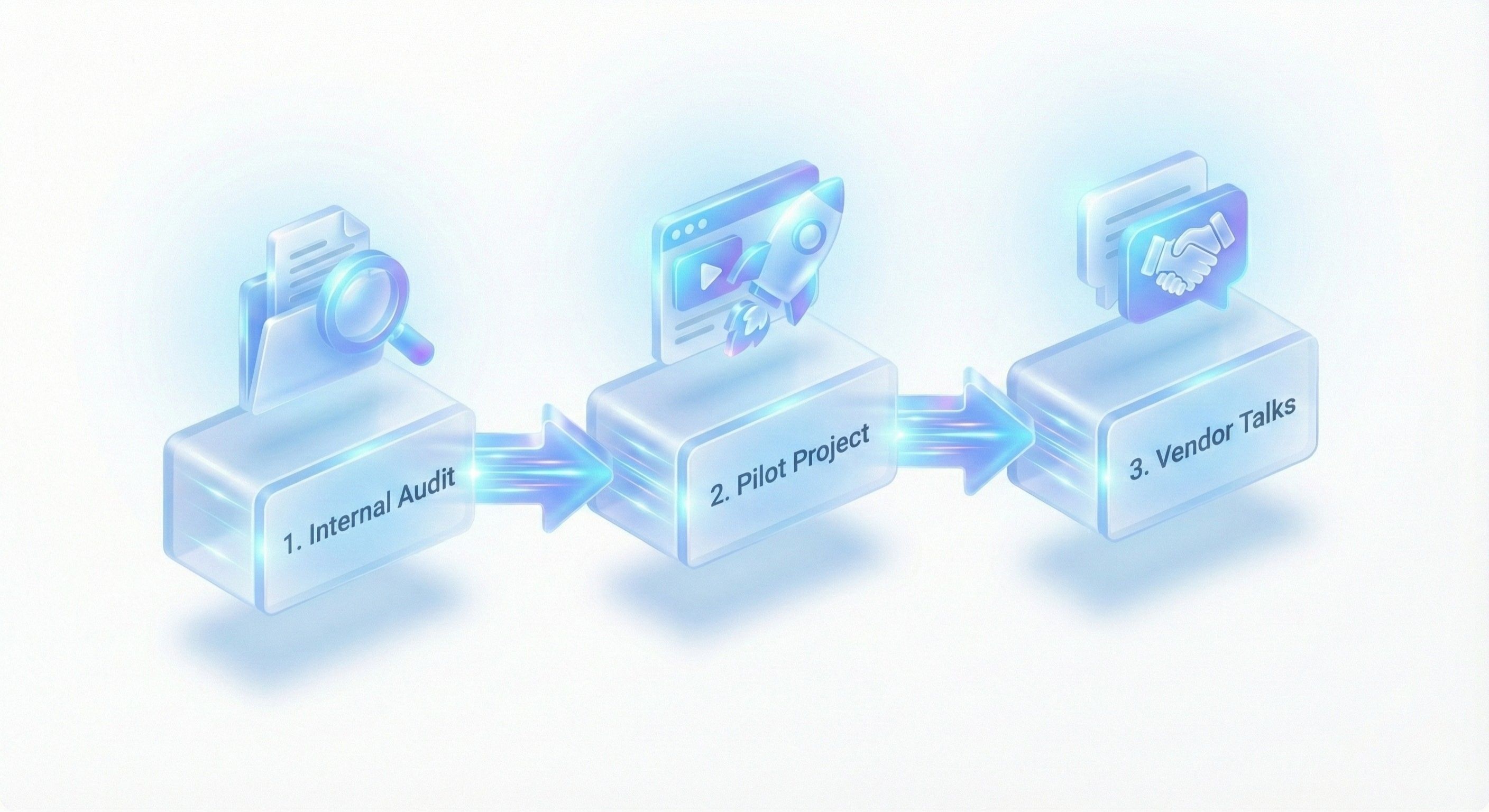
We're going to break this down into three straightforward steps. Following this process helps you avoid common pitfalls, build momentum with some quick wins, and make sure you're truly ready before you sign any contracts.
Step 1: Conduct an Internal Readiness Audit
Before you even think about looking at DCO platforms, you need to look in the mirror. Seriously. A successful DCO strategy is built on two things: great creative assets and clean data. This first audit is non-negotiable.
Start with your creative library. Do you have a good mix of modular assets? Think different headlines, various product shots, a few video clips, and clear calls-to-action that can all be mixed and matched. At the same time, take a hard look at your data. Are your product feeds up-to-date and accurate? Are your audience segments actually well-defined? Is your website tracking firing like it should be? Get your house in order first.
Step 2: Define a Small-Scale Pilot Project
You don't need to flip a switch and change your entire ad strategy overnight. In fact, that's a recipe for disaster. The smartest move is to start small with a focused pilot project. The goal here is simple: prove the concept works and get some real results you can show off internally.
Pick one product line or a single campaign goal to be your guinea pig. A great place to start is often retargeting. For instance, you could aim to boost performance for a top-selling product by showing personalized offers based on what a user was looking at on your site.
A solid pilot project does two crucial things. First, it gives you a low-risk sandbox to learn the tech and the new workflow. Second, those early wins are exactly what you need to get buy-in from the rest of the team and secure a bigger budget for a full rollout.
Step 3: Initiate Informed Vendor Conversations
Okay, your audit is done and you have a pilot project scoped out. Now you’re ready to talk to vendors of dynamic creative optimization tools. Because you’ve done your homework, these won't be generic sales calls. You can have real, strategic conversations about how a specific platform solves your specific problems.
Pull out that evaluation checklist we talked about earlier and use it to drive the discussion. Ask for case studies from your industry and, more importantly, ones that mirror the goals of your pilot project. This targeted approach ensures you find a partner whose tech is a good fit and who actually gets your business. That's how you set yourself up for success from day one.
Common Questions About DCO Tools
Even when you get the benefits, jumping into the world of dynamic creative optimization tools can bring up a few practical questions. Let's tackle some of the most common ones so you can move forward with confidence.
DCO vs. Dynamic Retargeting
This one comes up all the time, and it's an important distinction. What's the real difference between DCO and dynamic retargeting?
While they're related, they aren't the same. Dynamic retargeting is a specific play you run—it’s all about showing people ads for products they’ve already looked at on your website. It’s a super effective tactic for re-engaging people who are already interested, but it’s just one piece of the puzzle.
DCO is the bigger technology behind it all. Think of DCO as the engine. It can definitely power your dynamic retargeting campaigns, but its real magic is personalizing ads for brand new audiences. It can use signals like location, weather, or what someone is currently browsing to build the perfect ad on the fly, not just relying on past website visits.
Technical Skill Requirements
So, how tech-savvy does my team need to be to use DCO tools? The honest answer is: it really depends on the platform.
Some DCO tools are built for marketers, not developers. They have incredibly simple drag-and-drop editors and straightforward rule-setting menus. If you can build a PowerPoint slide, you can get started with these platforms with minimal technical hand-holding.
On the other end of the spectrum, you have powerhouse platforms that offer endless customization but require some real technical chops. For complex data integrations or totally custom ad formats, you’ll likely need to work with creative technologists or your dev team. The key is to be realistic and match a platform's learning curve with your team's current skills.
Supported Channels and Formats
Can I actually use DCO for my video and social ads? Absolutely. In fact, this is where the technology is making the biggest waves right now.
Modern DCO has moved way beyond the simple banner ads of the past. Today’s top platforms are built for dynamic video, letting you swap out elements like text overlays, end cards, product shots, and even background music in real-time. For social, DCO can automatically tailor ad copy, images, headlines, and calls-to-action for platforms like Facebook and Instagram, creating countless variations for all your different audience segments.
DCO isn’t just for banner ads anymore. Its principles are now at the heart of high-performance video and social campaigns, making it an essential tool for any marketer who lives and breathes engagement.
The Cost of Implementation
This all sounds great, but is DCO expensive? The cost of dynamic creative optimization tools can vary quite a bit.
Pricing models are all over the map. You can find accessible monthly subscriptions for simpler tools or make significant enterprise-level investments for the most advanced solutions. Costs are usually tied to things like your ad spend volume (CPM), the number of impressions you serve, or different feature packages.
Yes, there's an upfront investment. But the whole point of DCO is to drive a much stronger Return on Ad Spend (ROAS). By making your ads dramatically more effective and your workflow way more efficient, the right tool should more than pay for itself over time.
Sovran helps performance teams accelerate creative production and testing for Meta and TikTok. Automate video ad creation, find winning combinations faster, and combat creative fatigue with our AI-powered platform. Start your 7-day free trial today.

Manson Chen
Founder, Sovran
Related Articles
Automatic Video Editing for Performance Marketing A Complete Guide
Here's the simple truth: Automatic video editing is like having a production assembly line for your ad creatives. Instead of a designer building every single...
A Guide to Facebook Automated Ads That Drive Real Results
So, what exactly are Facebook's Automated Ads? Think of them as Meta's AI-powered system designed to take the guesswork out of running campaigns. It automates...
A Modern Guide to Automatically Edit Videos at Scale
Welcome to the new reality of advertising. The days of spending weeks perfecting a single video ad are long gone. To actually win on platforms like Meta and...