A Guide to Facebook Automated Ads That Drive Real Results
So, what exactly are Facebook's Automated Ads? Think of them as Meta's AI-powered system designed to take the guesswork out of running campaigns. It automates...
Jump to a section
So, what exactly are Facebook's Automated Ads? Think of them as Meta's AI-powered system designed to take the guesswork out of running campaigns. It automates tricky stuff like targeting, bidding, and ad placements, letting machine learning find customers who are ready to buy—often reaching people you'd completely miss with manual setups.
The whole point is to let the algorithm make the tough, data-driven calls to get you the best possible results.
How Facebook Automated Ads Actually Work
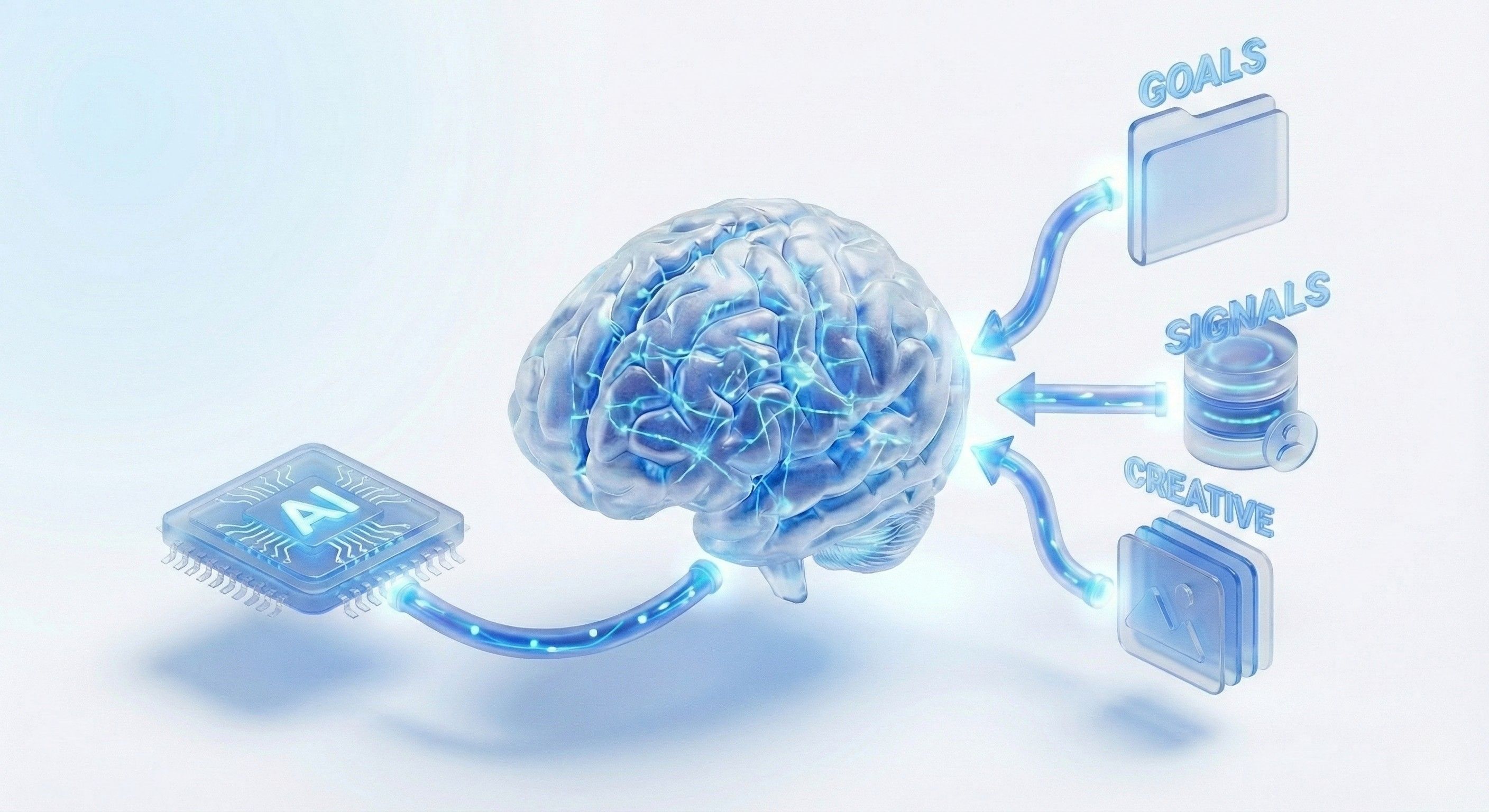
At its core, an automated campaign (especially Advantage+) is a seriously sophisticated matching engine. Instead of you meticulously building narrow interest groups or lookalike audiences, you give the system a few key inputs: your budget, your conversion goal, and a solid library of ad creatives.
From there, the AI takes the wheel.
It digs into signals from billions of user interactions across Meta's platforms—analyzing what people click on, watch, and purchase. By crunching this massive dataset in real-time, the algorithm spots behavioral patterns that scream "high purchase intent." It then serves your ads to those specific individuals, constantly learning and refining its choices based on who converts.
From Manual Guesswork to AI-Driven Discovery
This is a huge departure from the old way of managing ads. The system is built to explore Meta's entire user base, discovering pockets of customers far outside the audiences you might have defined yourself. This approach became a game-changer, especially after all the industry privacy shifts.
For instance, in the post-iOS 14.5 world, Meta's pivot to broad, automated targeting has been a lifesaver for many brands. Recent benchmarks show it can deliver a 49% higher ROAS and a 45% lower CPM compared to older methods like lookalikes. That's the direct result of AI learning from a much larger pool of data.
The core idea is to stop restricting the algorithm and start feeding it. Your job is no longer to be a master audience-picker but a curator of high-quality data and killer creative.
To give you a clearer picture, here’s a quick breakdown of how these new automated setups stack up against the campaigns we used to build manually.
Automated Ads vs Manual Campaigns At a Glance
Feature | Facebook Automated Ads (Advantage+) | Manual Campaigns |
|---|---|---|
Setup | Simple: You provide budget, goal, and creative assets. | Complex: Requires detailed setup of ad sets, targeting, and placements. |
Targeting | Broad & Dynamic: AI explores the entire user base to find converters. | Specific & Static: Relies on predefined interests, demographics, and lookalikes. |
Optimization | Algorithmic: The system automatically allocates budget to the best-performing audiences and placements. | Manual: You have to monitor performance and adjust bids and budgets yourself. |
Typical Outcome | Higher efficiency and ability to discover new customer segments. | More control but often at the cost of higher CPMs and limited reach. |
The move toward automation doesn't mean you can just "set it and forget it," but it absolutely changes where you should focus your energy.
If you want to go deeper into how AI is reshaping the industry, check out this great resource on AI for Marketing Automation. And for those who are more technically inclined, our guide on the API for Facebook Ads offers a look under the hood.
Preparing Your Account for Automated Success
Before you even think about launching your first campaign, you need to get your house in order. Meta's AI is incredibly powerful, but it's only as good as the data you feed it. Think of it like a world-class chef—they can’t cook a gourmet meal with rotten ingredients.
Your account setup is those ingredients. A clean, well-organized foundation is what allows the algorithm to learn correctly and make smart decisions with your budget right from the get-go.
The Non-Negotiable Technical Setup
Getting the technical pieces right isn't a friendly suggestion; it’s absolutely essential for accurate tracking and optimization in today's privacy-first world. Skipping these steps is like trying to drive with a blindfold on. You'll be burning cash with no real idea of what's working.
Here are the absolute must-haves:
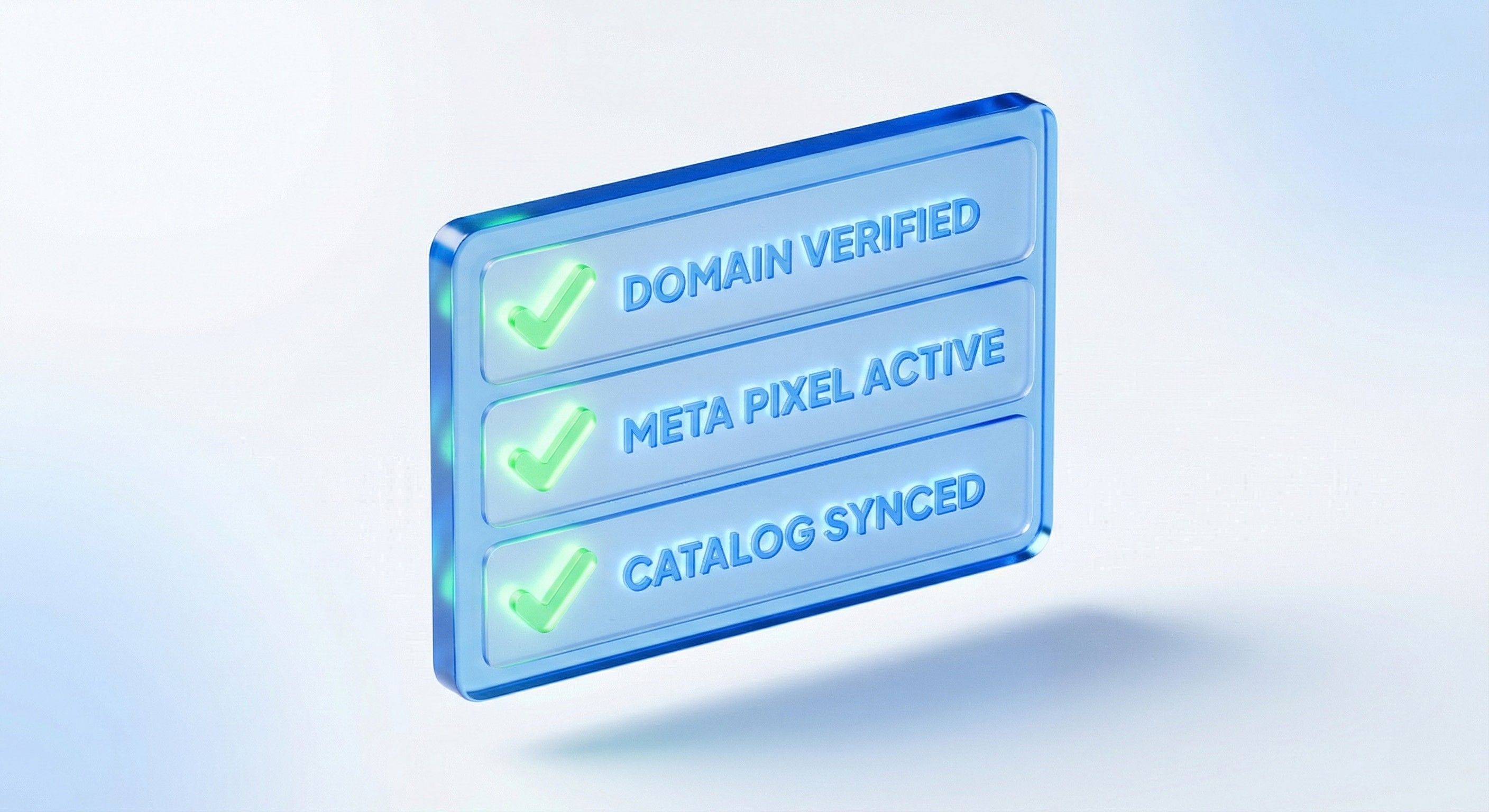
Domain Verification: This is step one. It proves to Meta that you own your website, which is critical for controlling your conversion events and enabling Aggregated Event Measurement. Don't skip it.
Meta Pixel and Conversions API (CAPI): Think of these as a tag team. The Pixel tracks what happens in a user's browser, while CAPI captures data directly from your server. Using both gives you a much more reliable data stream, filling in the gaps left by ad blockers and browser privacy settings.
Aggregated Event Measurement: Once your Pixel is firing, you have to configure your eight prioritized conversion events. This is Meta’s way of measuring actions from iOS 14.5+ users while respecting their privacy choices.
Pro Tip: When setting up your events, always put your most valuable conversion first. For an e-commerce store, that’s almost always "Purchase." For a lead-gen business, it might be "Lead" or "Complete Registration."
Perfecting Your Product Catalog
If you're running an e-commerce business, your product catalog is the lifeblood of your automated ads. An out-of-date or error-riddled catalog is a recipe for disaster. It leads to wasted ad spend and a terrible user experience—like showing ads for products that have been out of stock for weeks.
Run through this checklist before you go live:
Error-Free Sync: Dive into your Commerce Manager and look for product feed diagnostics. Fix common errors immediately, like missing images, invalid prices, or broken product links.
High-Quality Images: Your primary product images need to be crisp, compelling, and formatted correctly for Meta's various ad placements. No blurry or pixelated shots.
Accurate Data Fields: Double-check that key fields like
price,availability, andproduct_typeare mapped correctly and updating in real-time. This is crucial for dynamic ads.
A pristine catalog doesn't just power your Dynamic Ads; it gives the algorithm the rich, accurate data it needs to find the right buyers for every single product. This foundational work ensures your Facebook automated ads have the best possible chance to deliver killer results. Trust me, the time you spend building this solid base now will pay massive dividends in campaign performance later.
Building Your First Advantage+ Campaign
Alright, with your account prepped and polished, it's time to dive in and build your first Advantage+ campaign. This is where the magic happens. But forget what you know about complex audience layering and manual bid strategies. Success here is all about feeding the AI clear instructions and, most importantly, high-quality creative fuel.
The setup process is way simpler than a traditional campaign, but don't let that fool you. The decisions you make here are still absolutely critical.
To get started, head into Ads Manager and create a new campaign. You’ll want to select "Sales" as your objective and then choose the "Advantage+ shopping campaign" option. This campaign type is specifically built to automate targeting and placements, streamlining the entire path to purchase.
Setting Your Strategic Controls
Once you’re in the campaign setup, you'll immediately notice fewer levers to pull. That's by design. The goal is to give the AI the freedom it needs to find conversions, but Meta still gives you a few key settings to maintain strategic oversight. Think of them less as restrictions and more as guardrails.
Your first big decision is the budget. For any new Advantage+ campaign, I always recommend setting a daily budget that's high enough for the system to get at least 50 conversion events per week. That’s the magic number Meta’s algorithm needs to exit the learning phase quickly and really start hitting its stride.
Next, you'll hit a crucial setting: the existing customer budget cap. This is a powerful feature that lets you tell Meta exactly what percentage of your budget can be spent on people who’ve already bought from you.
A solid starting point for most brands is a 10-15% cap. This ensures the bulk of your spend is hunting for new customers, while still dedicating a small slice to winning back your loyal base.
This single control is your main lever for balancing customer acquisition with retention, all within one campaign. It’s also a good place to start thinking about more advanced strategies, like remarketing with Facebook to target users who've already shown interest.
Defining Your Audience Boundaries
If you're used to manual campaigns, this part will feel a little strange. You're not going to spend hours defining interests, behaviors, and lookalike percentages. Advantage+ is a different beast.
Instead of creating specific ad sets, the campaign targets a massive audience based on your country settings and pixel data. The whole point is to let the algorithm find pockets of high-intent users all on its own.
You can, however, provide what Meta calls "audience suggestions." This doesn't fence the AI in; it just gives it a nudge in the right direction. For instance, you could upload a Custom Audience of your past purchasers or a list of your highest-value customers. The system uses this as an initial signal but will quickly and aggressively expand far beyond it to find conversions wherever they pop up.
Another key piece of the puzzle is your account's "existing customer definition." This is where you upload and define your customer lists, which makes sure the budget cap you set earlier is applied correctly. By giving the AI a crystal-clear definition of who your existing customers are, you're empowering it to properly split the budget between prospecting and retargeting. This simple step is what makes your Facebook automated ads truly smart and strategic.
Your Creative Strategy in an Automated World
Once you let automation handle the targeting, your ad creative is no longer just one piece of the puzzle. It becomes the single most important lever you have left to pull. Meta's algorithm is ridiculously good at finding who to show your ads to, but it’s your creative that actually makes them stop scrolling and care.
Success here is all about volume and variety. A handful of static images just won't cut it anymore.
To really win with Facebook automated ads, you have to feed the machine a steady diet of diverse, high-quality content. This gives the AI the ingredients it needs to mix and match images, videos, headlines, and CTAs to find that perfect combination for different people across placements like Reels, Stories, and the main Feed.
Embracing High-Volume Creative Testing
Modern creative strategy is a numbers game—it's all about iteration and volume. Instead of pouring your entire budget into one "perfect" ad, the goal is to be testing dozens of variants at all times. And it doesn't have to be a massive undertaking. Sometimes, the smallest changes can lead to the biggest wins.
Start thinking about your ad in components and test each one individually:
Video Hooks: How does your ad start? Test the first 3 seconds with totally different angles. Pit a user-generated clip against a slick animated graphic and a simple product-focused shot to see what grabs attention.
Ad Copy: Experiment with your messaging. Try a headline that zeroes in on a customer's pain point and test it against one that screams about a key benefit.
Calls-to-Action (CTAs): Don't just stick with "Shop Now." Test something with more urgency like "Get Your 20% Off" or something that sparks curiosity, like "See What's New."
Visual Formats: Run single images against carousels and videos. The data doesn't lie—globally, automation has produced some wild results. Shopping ads have seen a 146% CTR surge in recent benchmarks, and carousel formats in automated campaigns delivered 4.2X ROAS compared to just 3.1X for single images.
Your goal is not to find one single winning ad. It’s to build a library of high-performing components that the algorithm can use to assemble winning ads on the fly.
This constant stream of testing is what gives Meta's AI the data it needs to work its magic.
The Power of Authentic and AI-Generated Content
User-generated content (UGC) is still one of the most powerful assets in any advertiser's toolkit. There's just something about authentic videos of real customers unboxing a product or sharing a testimonial that builds instant trust. It cuts right through the noise of polished, professional ads. Make it a priority to actively collect this content and get it into your campaigns.
But let's be real—producing enough creative to keep the algorithm happy is a huge bottleneck for most teams. This is where new technology can completely change the game.
AI-powered creative platforms can spit out dozens of on-brand ad variants from a single idea in just a few minutes. You can use these tools to remix hooks, swap backgrounds, or even generate entirely new video concepts, which slashes your manual production time. For anyone trying to scale their ads, understanding these systems is no longer optional. You can see how this works in practice in our guide on dynamic creative optimization tools.
By blending authentic UGC with fast, AI-generated variants, you create a powerful creative engine. This workflow lets you maintain a high testing velocity, constantly feeding the Facebook automated ads system fresh content and keeping you miles ahead of creative fatigue.
How to Measure Performance and Optimize Campaigns
So, your automated campaign is live. Great! But getting it set up is really only half the battle. The real trick to winning with Facebook automated ads is knowing how to read the results and make smart, data-driven tweaks without knocking the algorithm off course.
It's all about measuring what actually matters and acting with intention.
Once your campaign is up and running, Ads Manager becomes your mission control. It's tempting to get lost in a sea of metrics, but you need to resist. Instead, laser-focus on the two numbers that truly impact your bottom line: Return on Ad Spend (ROAS) and Cost Per Acquisition (CPA). Think of these as your north stars.
The biggest mistake I see advertisers make is reacting way too quickly. Messing with the budget or creative during the initial 'Learning Phase' is like pulling a plant out of the soil to check if its roots are growing. You just have to let it settle.
This crucial learning period usually wraps up after your campaign hits about 50 key events—like purchases—within a seven-day stretch. Before you reach that milestone, your performance data is going to be all over the place. Patience isn't just a virtue here; it's a requirement. Let the algorithm do its thing before you even think about making changes.
When to Intervene and What to Do
Once you’re safely out of the learning phase and have some stable data to look at, you can start making strategic moves. This isn't about constant tinkering. It’s about making decisive adjustments based on clear signals from your performance data.
Here’s a look at what to do in a few common scenarios:
High ROAS and Stable CPA: This is what we all hope for. Your ads are hitting the mark and they're profitable. The right move is to scale up, but gently. I recommend increasing your daily budget by 15-20% every few days. This avoids shocking the system and sending you right back into the learning phase.
Declining Performance (Fatigue): If you notice your ROAS dipping or CPA creeping up after a solid run, you're probably dealing with creative fatigue. Don't panic and kill the whole campaign. Just duplicate your best-performing ad set and swap in a fresh batch of creatives to test against your current winners.
Low Performance from the Start: Sometimes a campaign just never gets off the ground, even after the learning phase. In my experience, this almost always points to a problem with the creative or the offer itself. It’s time to head back to the drawing board. Test fundamentally different angles, hooks, and value propositions.
This decision-making process is all about having a clear plan for creative testing, whether you’re starting with a new hook or some user-generated content.
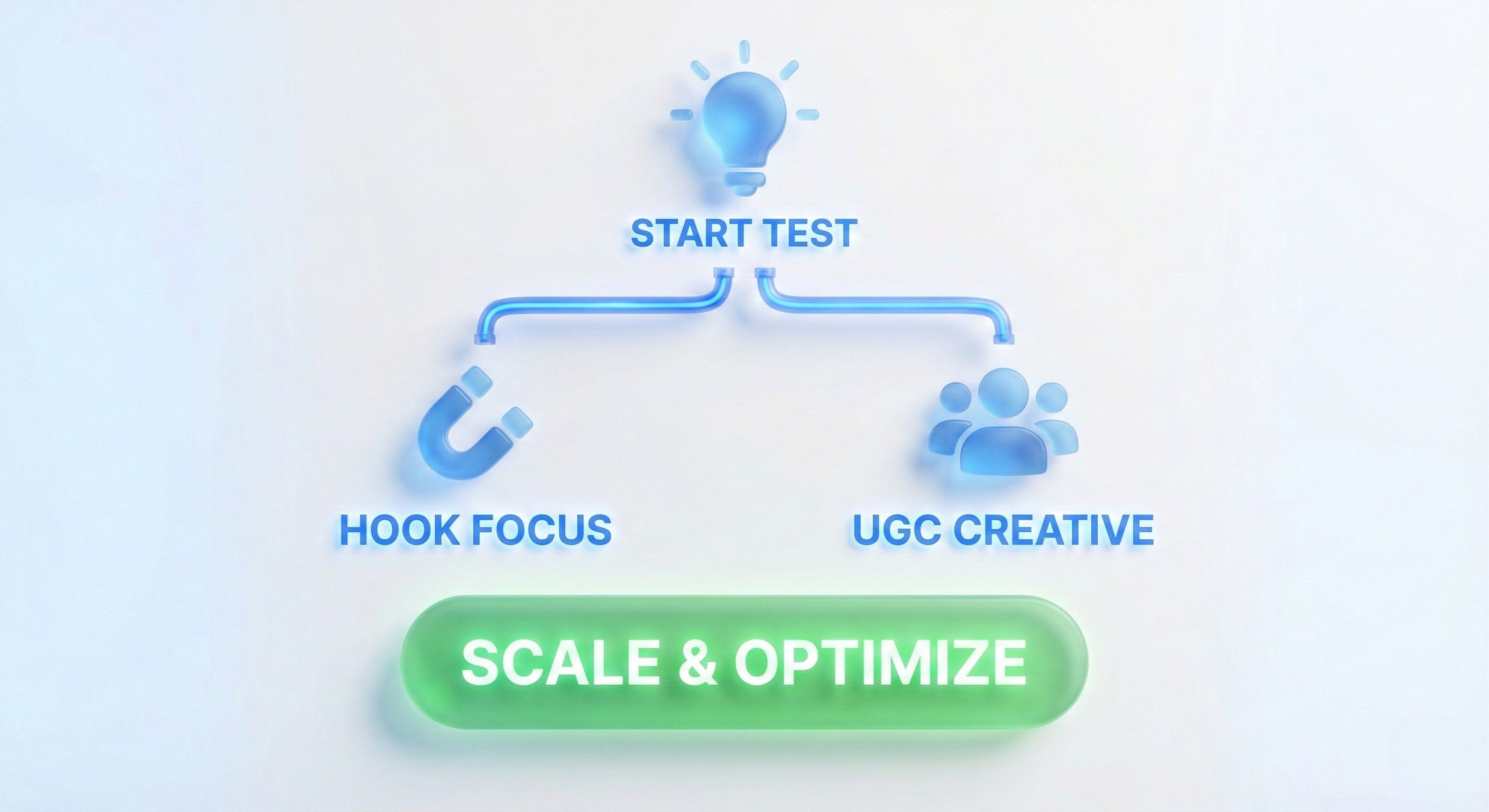
To make this even clearer, I've put together a quick diagnostic table. After your campaign exits the learning phase, use this to figure out what your metrics are telling you and what your next move should be.
Performance Scenarios and Actionable Next Steps
Scenario | Key Metrics | Recommended Action |
|---|---|---|
The Winner | ROAS is above target, CPA is stable and below target. | Scale slowly. Increase the budget by 15-20% every 2-3 days. Don't touch anything else. |
Creative Fatigue | ROAS/CPA were strong but have been declining for 3-5 consecutive days. | Refresh creative. Duplicate the ad set and introduce 3-5 new creative concepts. Keep the original running for now. |
Underperformer | Campaign exited learning, but ROAS/CPA never hit your targets. | Rethink your offer/angle. The core message isn't landing. Test a completely new hook or value prop. |
Volatile Performance | CPA and ROAS are swinging wildly day-to-day. | Wait and watch. Don't make any changes for another 3-4 days to see if performance stabilizes. You may need more data. |
Following a structured approach like this turns optimization from a guessing game into a repeatable process. It helps you move from initial tests to identifying winning elements, creating a cycle of continuous improvement.
For a deeper dive into growing your campaigns, check out our complete guide on how to scale Facebook ads. By sticking to a structured system, you can turn your automated campaigns into predictable, profit-driving machines.
Got Questions About Facebook Automated Ads?
Even with all the clear benefits, handing the reins over to an automated system can feel like you're giving up control. That's a normal feeling, and it naturally brings up a few questions. It's smart to be a little skeptical, and even smarter to get answers before you put real budget behind it.
Let’s walk through some of the most common hangups and concerns I see marketers run into when they first dip their toes into Facebook automated ads. Getting clear on these points will help you trust the process and let the algorithm do its thing.
How Long Should an Automated Campaign Run Before I Touch Anything?
Patience is probably your most valuable tool here. You absolutely have to let your campaign exit the "Learning Phase" before you start making any significant changes. This phase usually wraps up after your campaign secures about 50 key events—like purchases or leads—within a 7-day period.
If you jump in and make big changes to your budget, creative, or targeting while it's still learning, you essentially reset all its progress. The algorithm has to start from scratch. As a hard-and-fast rule, give it at least 7-10 days to collect enough data before you even think about making performance-based tweaks.
Can I Still Use My Custom Audiences with Advantage+ Campaigns?
Yep, you can, but your role shifts from being a micromanager to more of a strategic guide.
With Advantage+ Shopping campaigns, for example, you can set an "existing customer budget cap." This tells Meta how much of your budget you're willing to spend on retargeting people you already know. For other campaign types, you can provide "audience suggestions" to give the AI a helpful starting point.
But here's the thing: the algorithm is built to go way beyond those initial suggestions to find new customers. The modern best practice is really to trust broad targeting. You'd be surprised how often it uncovers these high-performing pockets of customers that you'd completely miss with a narrow, manually-built audience.
The real magic of automated ads is in discovery. By letting the AI explore, you're tapping into a much larger, more dynamic customer base than you could ever build on your own.
What Creative Actually Works Best for Automated Ads?
Diversity is the name of the game. The algorithm is going to test your ads across a ton of different placements—Feeds, Stories, Reels, you name it. That means you have to give it a rich library of assets to play with.
A strong creative mix is non-negotiable for success. You should aim to have a little bit of everything:
High-quality images that put your product or service front and center.
Short-form videos built for mobile, with captions and a strong hook in the first three seconds.
Carousels that let you show off multiple products, highlight different features, or walk through key benefits in one ad.
Authentic user-generated content (UGC) like customer testimonials or unboxing videos to build that crucial social proof.
Your goal is to arm the AI with plenty of options so it can figure out the winning combination for different people in your audience.
Why Is My Automated Campaign Not Spending Its Full Budget?
Underspending usually points back to one of a few common culprits.
First, your audience inputs might be too restrictive, even for an automated campaign. Second, your bid or cost cap could be set too low, which stops Facebook from even trying to enter auctions it thinks it can't win at your price.
Finally, your ads might just be getting stale. If you’re seeing underspend, start by removing any tight audience suggestions. If that doesn't kick things into gear, take a look at your cost controls. If the problem still persists, that’s a clear sign you need to refresh your campaign with a new batch of ad creative.
Ready to stop the manual grind and scale your creative output? Sovran is an AI platform designed to automate the production of high-performing video ads for Meta. Upload your assets once and generate hundreds of on-brand variants in minutes, letting you test faster, combat creative fatigue, and find profitable winners 10x quicker. Start your free trial today.

Manson Chen
Founder, Sovran
Related Articles
Guide to API Facebook Ads: Automate with Facebook Ads API
If you’ve ever used Meta's Ads Manager, you know it's the standard dashboard for running your campaigns. It has all the essential controls you need for...
Automatic Video Editing for Performance Marketing A Complete Guide
Here's the simple truth: Automatic video editing is like having a production assembly line for your ad creatives. Instead of a designer building every single...

A Modern Guide to Automatically Edit Videos at Scale
Welcome to the new reality of advertising. The days of spending weeks perfecting a single video ad are long gone. To actually win on platforms like Meta and...