10 Ad Copy Examples and Ad Scripts for Meta & TikTok Ads (2026)
See 10 ad copy examples and video ad script templates for Meta and TikTok. Learn hooks, body copy, CTAs, and 6s/15s/30s script formats.
Jump to a section
- Ad copy vs. ad scripts: what to write before you edit
- 1. Hook-Based Ad Copy with Pattern Interrupts
- 2. Problem-Agitate-Solution (PAS) Framework
- 3. UGC (User-Generated Content) Testimonial Mashups
- 4. FOMO (Fear of Missing Out) and Urgency-Driven Copy
- 5. Benefit-Focused vs. Feature-Focused Copy (The Transformation Angle)
- 6. Social Proof and Authority-Based Copy
- 7. Curiosity Gaps and Open Loops
- 8. Direct Response Copy with Clear CTAs
- 9. Emotional Storytelling and Narrative-Driven Copy
- 10. Data-Driven and Results-Focused Copy
- 10 Ad Copy Styles Compared
- From Examples to Execution: How to Systematize Your Creative Strategy
Ad copy examples are useful only if you can turn them into ads you can actually test. On Meta and TikTok, that means more than a clever headline. You need a hook that earns the first three seconds, body copy that gives people a reason to keep watching, and a CTA that makes the next step obvious. For visual references, pair this copy guide with our video ad examples breakdown.
This guide breaks down 10 ad copy examples and shows how to translate each one into a working ad script. Use the examples as starting points, then change one variable at a time - hook, proof point, offer, CTA - so your tests tell you something useful.
Ad copy vs. ad scripts: what to write before you edit
Ad copy is the persuasive language: hook, headline, value prop, proof, offer, and CTA. An ad script puts that language on a timeline. It tells the editor or creator what happens at 0-3 seconds, 4-12 seconds, and the final CTA.
A script for advertising should be boringly clear on purpose. If someone cannot see the hook, body, and CTA in one skim, it will be hard to shoot and even harder to test.
Quick script templates for 6s, 15s, and 30s ads
Length | Simple structure | Best use case |
|---|---|---|
6 seconds | 0-2s hook, 2-5s proof or payoff, 5-6s CTA. | Retargeting, offer reminders, simple product demos. |
15 seconds | 0-3s hook, 4-10s problem and proof, 11-15s CTA. | Meta and TikTok acquisition tests. |
30 seconds | 0-3s hook, 4-12s problem, 13-24s demo or proof, 25-30s CTA. | Founder ads, UGC explainers, higher-consideration offers. |
For example, direct-response copy like "Get 20 fresh ad variants from one video" becomes a 15-second script: open with a marketer staring at the same tired clip, show the variant workflow, then close with a CTA to launch the next test. The words matter, but the sequence is what makes the ad usable.
1. Hook-Based Ad Copy with Pattern Interrupts
Pattern interrupts work because people are not reading ads; they are escaping them. Your first line has to make the scroll feel unfinished. The best hooks are specific, slightly surprising, and easy to understand even with the sound off.
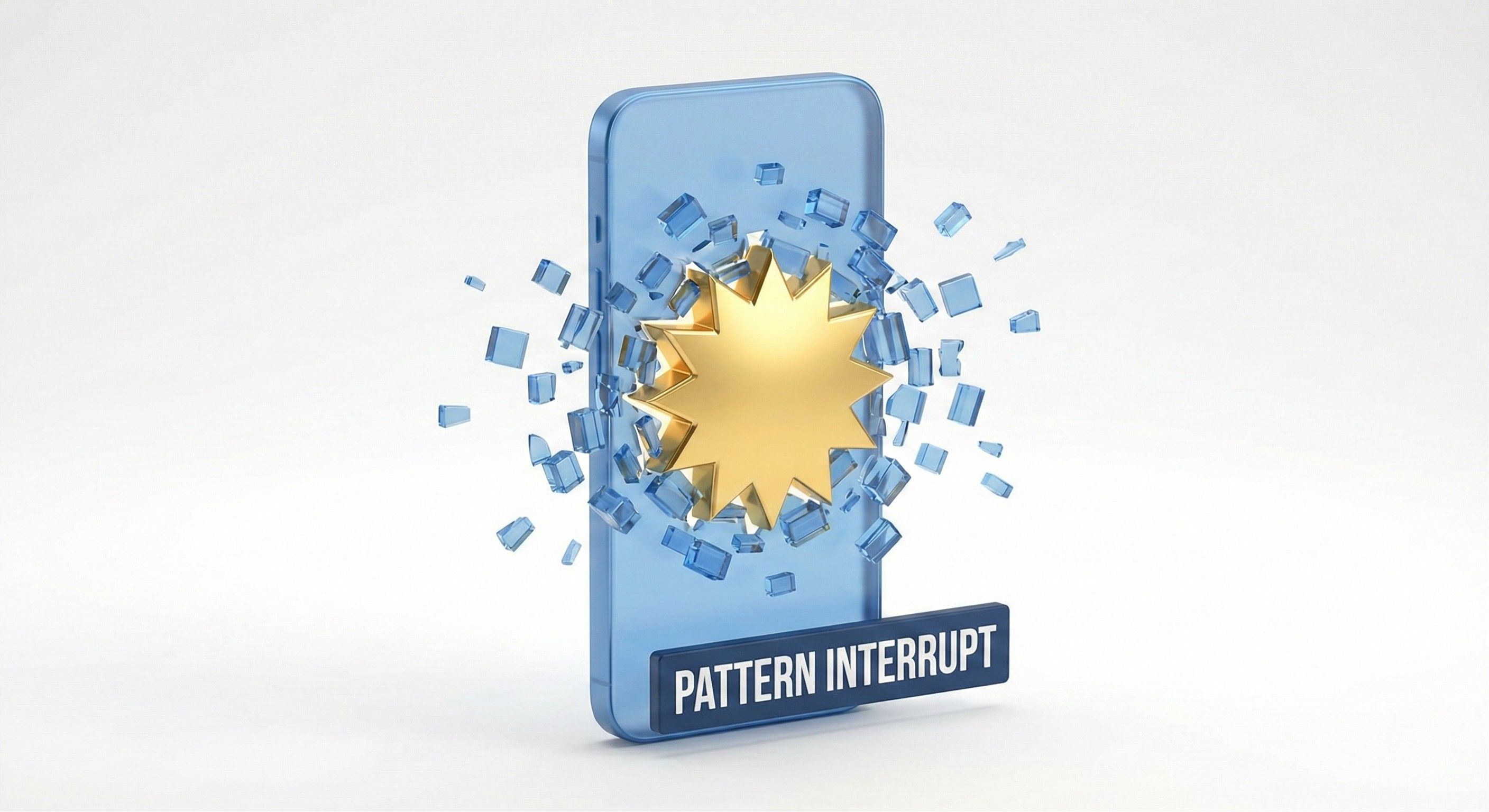
This method is one of the most effective ad copy examples because it directly addresses the challenge of short attention spans. Instead of leading with a feature, it leads with an emotion or a problem, grabbing attention before earning the right to explain the solution.
Why it works
Dollar Shave Club: Their legendary hook, "Our Blades Are F***ing Great," used profanity and directness to create an immediate pattern interrupt. It was unexpected, authentic, and memorable.
Grammarly: Using a hook like "You're using this word wrong" instantly makes the reader self-conscious and curious, directly tapping into a common user anxiety about professional communication.
Slack: The statistic-based hook, "You're spending 40% of your day in email," quantifies a major pain point, making the problem feel urgent and tangible for the target audience.
How to use it
To implement this strategy, focus on rapid iteration and testing. Your hook is the single most important variable for capturing initial attention.
Test Aggressively: Develop 5-10 different hooks for the same body copy and creative. Test questions, bold statements, negative framing ("Stop doing X"), and surprising statistics.
Focus on Pain Points: Your best hooks will come from deep customer understanding. Frame the problem your audience faces in a way they've never heard before.
Monitor Early Metrics: Pay close attention to 3-second video view rates and thumb-stop ratios. These metrics will tell you if your hook is successfully interrupting the scroll pattern.
2. Problem-Agitate-Solution (PAS) Framework
PAS works because it mirrors the way buyers explain pain to themselves. Name the problem in their words, show the cost of leaving it unsolved, then make the product feel like the obvious next step. Keep the agitation real; if it sounds inflated, the ad starts to feel like a pitch.
This approach is one of the most reliable ad copy examples for conversion-focused campaigns because it taps directly into the user's pain. Instead of leading with features, it validates the user's struggle first, making the eventual solution feel like a necessary and urgent resolution.
Why it works
Monday.com: Their ads often start with the problem of chaotic team communication (e.g., "Your team communicates in chaos"). They agitate by showing missed deadlines and frustrating email chains, then present their platform as the streamlined solution.
Notion: A classic Notion ad uses the PAS model: "You use 10 different tools to manage your work" (Problem). "Information gets lost, context is scattered, and nothing connects" (Agitate). "Consolidate everything into one workspace" (Solution).
Asana: Asana effectively agitates the pain of "projects falling through the cracks." They highlight the professional consequences of disorganization before introducing their project management tool as the way to restore control and clarity.
How to use it
To execute the PAS framework effectively, you must deeply understand the consequences of your customer's problems, not just the problems themselves.
Source Real Pain Points: Dig through support tickets, customer reviews, and sales call transcripts. Find the exact language customers use to describe their frustrations and use it in your copy.
Ground the Agitation: Keep the agitation phase realistic. Focus on real-world consequences like wasted time, lost revenue, or professional stress rather than unbelievable exaggerations.
Test Problem Angles: Your product likely solves multiple problems. Create PAS variations that target different pain points for different audience segments to see which one resonates most. For example, a project management tool could focus on a manager's pain (lack of visibility) or an employee's pain (overwhelming workload).
3. UGC (User-Generated Content) Testimonial Mashups
The UGC testimonial mashup is an ad format that weaves together multiple customer reviews and success stories into a single, compelling narrative. This technique creates social proof at scale by presenting a chorus of authentic voices instead of a single endorsement. It is highly effective on platforms like Meta and TikTok, where genuine, user-driven content outperforms polished corporate messaging and drives engagement.
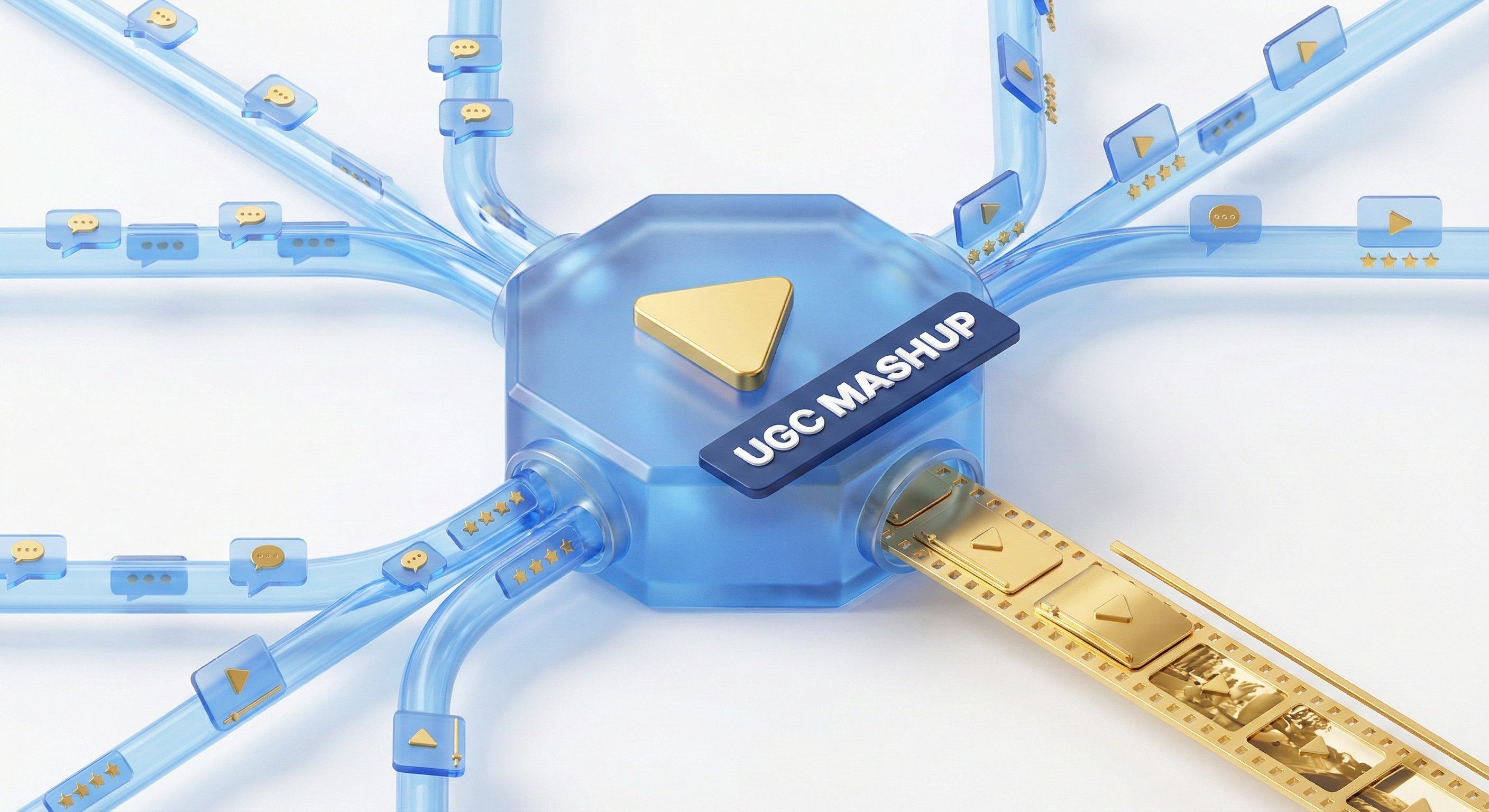
This approach is one of the most powerful ad copy examples because it builds trust and credibility rapidly. By combining different perspectives, it addresses multiple potential customer objections and highlights various benefits in a short amount of time, making the brand's value proposition feel universally validated.
Why it works
HelloFresh: The brand compiles clips of various customers showing off different recipes they've made. The ad copy focuses on the variety and ease, backed by the visual proof of real people enjoying their meals.
Shopify: Their merchant success story ads often blend multiple entrepreneurs sharing key results, such as "I got my first sale in a week" or "I scaled to six figures," creating a powerful montage of achievement.
Skillshare: Skillshare creates mashups of learners showcasing new skills they've acquired, from painting to video editing. The copy highlights the transformative journey, reinforced by diverse student examples.
How to use it
To use testimonial mashups well, build from customer language you can prove. Centralize reviews, UGC clips, and support-call quotes, then tag them by pain point, outcome, and objection. For examples of how this looks in finished creative, see our testimonial ads examples.
Build a Testimonial Library: Centralize all customer reviews and video testimonials. Tag them by use case, mentioned features, and specific results (e.g., "revenue growth," "time saved") for quick access.
Standardize for Seamless Edits: When requesting video testimonials, provide simple guidelines on length and speaking pace. This makes it easier to edit different clips together into a cohesive flow.
Test Narrative Structures: Create variations by changing the order of testimonials. Test a "problem-first" structure against a "results-first" mashup to see which narrative arc resonates most with your audience. For a deeper dive, explore how to create compelling UGC ads.
4. FOMO (Fear of Missing Out) and Urgency-Driven Copy
Urgency-driven ad copy leverages the psychological principle of FOMO (Fear of Missing Out) to compel immediate action. It creates a sense of scarcity or time-sensitivity, making the user feel they must act now to avoid losing a valuable opportunity, exclusive deal, or popular item. This is accomplished through limited-time offers, low stock alerts, and countdowns that short-circuit the user's consideration phase and drive them directly toward conversion.
This tactic is one of the most powerful ad copy examples for e-commerce, digital products, and event sign-ups because it transforms passive interest into active engagement. By framing the offer as fleeting, it increases its perceived value and encourages users who might otherwise "save it for later" to make a decision on the spot.
Why it works
AppSumo: A master of this technique, AppSumo uses explicit deadlines like "Deal expires in 12 hours" and combines it with a visible countdown timer. This creates a constant, tangible reminder of the offer's scarcity.
Airbnb: Their platform cleverly integrates urgency with social proof by showing "Only 2 left at this price for your dates" alongside how many others are viewing the property. This signals high demand and low supply simultaneously.
Gumroad Creators: Many course creators use launch-specific pricing like a "48-hour founding member price" to drive a massive influx of initial sales, creating momentum and social proof that encourages others to join before the price increases.
How to use it
To use urgency effectively without sounding manipulative, your scarcity must be genuine and tied to a clear value proposition.
Be Authentic: Never use fake countdowns or false scarcity. Audiences will see through it, damaging brand trust. If a deal ends, it must actually end.
Combine with Value and Proof: Urgency alone is weak. Pair it with your core benefit and social proof. For example: "Join 10,000+ happy customers and claim your 50% discount before it ends tonight."
Test Deadline Durations: A 24-hour flash sale creates intense urgency, while a 7-day offer allows more consideration. Test different windows to find what works best for your audience and price point without causing decision fatigue.
5. Benefit-Focused vs. Feature-Focused Copy (The Transformation Angle)
Benefit-focused copy sells the destination, not the vehicle. Instead of listing product specifications (features), it paints a vivid picture of the user's life after the product has solved their problem (benefits). This approach taps into emotion and desire, showing the "after" state and highlighting a tangible transformation, which is far more persuasive than a technical breakdown.
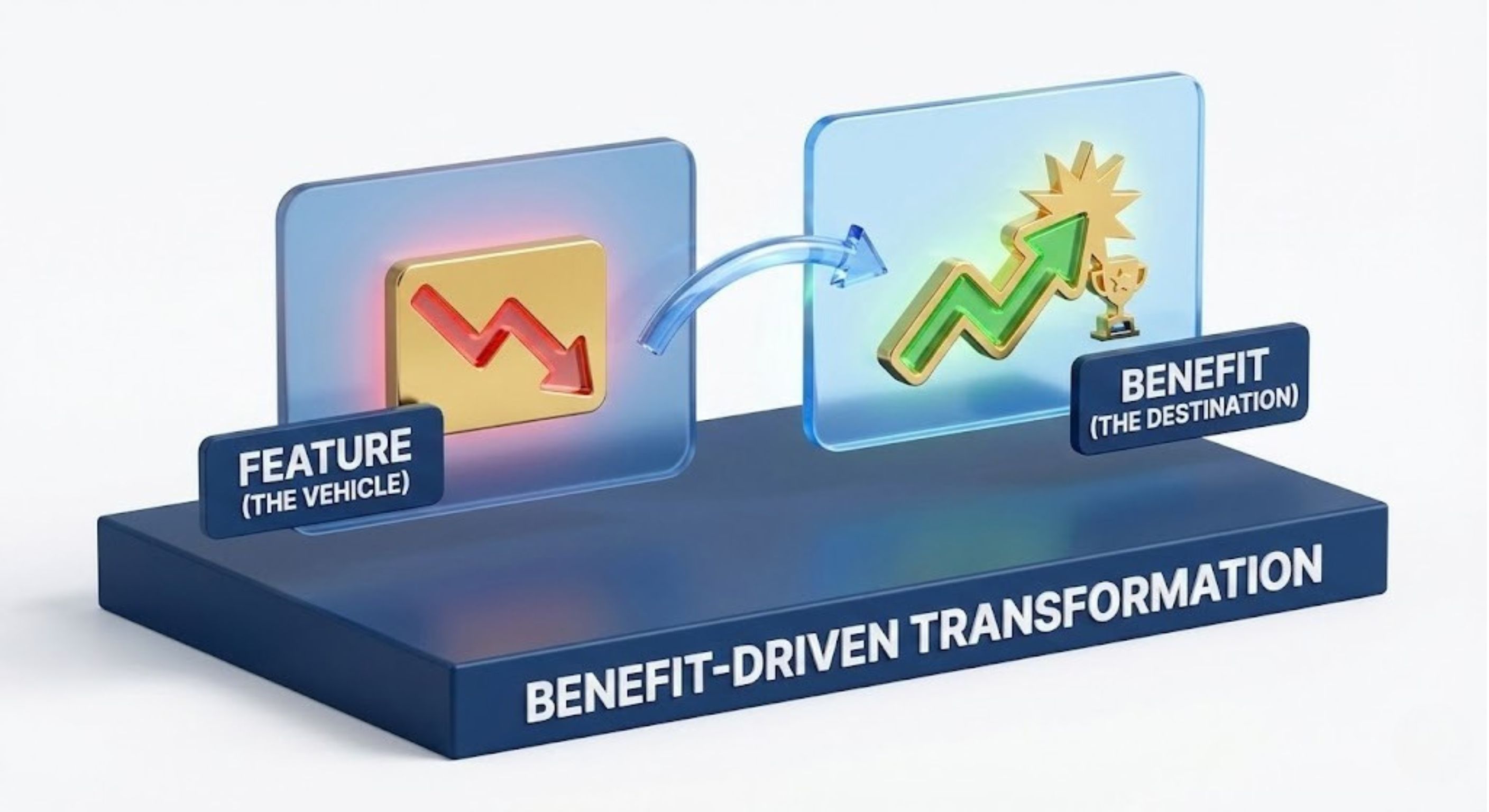
This method is one of the most fundamental and effective ad copy examples because people buy outcomes, not products. They don't want a "stationary bike with a screen"; they want to "transform their body and join a community." By focusing on the transformation, you connect your solution directly to their deepest motivations.
Why it works
Calm: Instead of listing "guided meditations and soundscapes" (features), their copy promises "Sleep better, stress less" (benefits). This focuses on the emotional and physical transformation users crave.
Notion: A feature-focused description is a "database, wiki, and docs tool." The benefit-focused angle is to "Reclaim 3 hours per week," a specific, desirable outcome that resonates with their target audience of busy professionals.
Apple: The legendary "Think Different" campaign wasn't about processors or RAM. It was about a transformation of identity, positioning the user as a creative rebel. This sold an aspirational "why" instead of a functional "what."
How to use it
To shift from features to benefits, you must deeply understand your customer's "before" state of frustration and their desired "after" state of success.
Map the Transformation: For every feature, ask "so what?" until you arrive at a core human benefit. Feature: "10GB of cloud storage." Benefit: "Never worry about losing a family photo again."
Use Transformation Language: Incorporate powerful, evocative words like "finally," "imagine," and "picture yourself." Start headlines with the emotional outcome (e.g., "The End of Spreadsheet Chaos") rather than the product name.
Quantify the 'After': Make the benefit tangible with specific metrics. "Save 10 hours a month," "Double your conversion rate," or "Reduce anxiety by 40%." This adds credibility to the promised transformation.
6. Social Proof and Authority-Based Copy
Social proof is a psychological principle where people assume the actions of others reflect correct behavior for a given situation. In advertising, this translates to leveraging third-party credibility to build trust and reduce friction for potential customers. Instead of saying "trust us," this technique shows prospects that peers, experts, and reputable organizations already do. It’s a powerful method for overcoming skepticism, especially for high-consideration products or new brands.
This method is one of the most foundational ad copy examples because it outsources trust-building to credible external sources. By showcasing user numbers, media mentions, or expert endorsements, you lower the perceived risk for a new user, making the decision to convert feel safer and more validated.
Why it works
Slack: Their headline "Trusted by 750,000+ teams" immediately establishes immense scale and credibility. Pairing this with the logos of well-known companies like Airbnb and Target creates an instant association with success.
Grammarly: The copy "Over 30 million users trust Grammarly" is often combined with logos from Forbes and TechCrunch. This dual-pronged approach combines mass user adoption (social proof) with media validation (authority).
ConvertKit: Using the line "Built for creators, by creators" alongside a specific user count like "100,000+ creators" directly addresses their niche while demonstrating significant market penetration and peer acceptance.
How to use it
To effectively leverage social proof, be specific and layer different types of validation. The goal is to make the choice to join feel like the obvious, low-risk option.
Quantify Everything: Use precise numbers. "Trusted by 2,415,789 users" is more believable and impactful than "Trusted by millions." Update these metrics regularly to show momentum.
Combine Proof Points: Don't rely on one source. Combine user count statistics, customer logos, media mentions, and industry-specific certifications (like SOC 2 compliance) in your ad creative and copy for a compounding effect.
Test Authority Angles: Isolate different types of proof in your tests. Pit an ad featuring customer logos against one highlighting media mentions or another focused on a large user-count statistic to see which form of validation resonates most with your audience.
7. Curiosity Gaps and Open Loops
The curiosity gap technique leverages a psychological principle where people have a strong desire to resolve missing information. By creating an "open loop" or an information gap in the headline or hook, this ad copy strategy compels users to keep watching or click through to find the answer. It teases an outcome or a surprising fact but withholds the "how" or "what," making the audience feel they must know the resolution.
This method is one of the most powerful ad copy examples for driving engagement and click-through rates. It transforms passive viewers into active participants by creating a mental itch that only your ad's full message can scratch, making it ideal for storytelling and reveal-style creatives.
Why it works
BuzzFeed-Style Hooks: Headlines like, "He did WHAT with his productivity app?" create an immediate open loop. The audience's brain automatically wants to fill in the blank, driving them to consume the body copy for the answer.
Outcome-First Teaser: Stating a powerful result upfront, such as "This one app saved me 5 hours per week," immediately establishes value. The curiosity gap is created by the implied follow-up: "...and here's how."
Problem-Awareness Gap: Grammarly's approach, "You're making this common mistake in every email," generates immediate self-doubt and a desire to identify and fix the unknown error, pulling the user deeper into the ad.
How to use it
To effectively use curiosity gaps, you must promise a valuable reveal and deliver on it to avoid feeling like cheap clickbait. The payoff must satisfy the initial intrigue.
Structure Your Reveal: Open with the tantalizing question or statement. Withhold the specific answer until about two-thirds of the way through your video or ad copy to maximize watch time and engagement.
Combine with Social Proof: Pair a curiosity-driven hook with a credibility-builder. For example, "This is the one marketing trick used by 90% of Fortune 500 companies." This adds weight to the promise of the reveal.
Test Engagement Metrics: Don't just look at clicks; monitor video completion rates and hold rates. A successful curiosity gap will keep users engaged past the initial few seconds. If users drop off quickly, your hook may be too weak or your audience may feel it's manipulative.
8. Direct Response Copy with Clear CTAs
Direct response copy is a no-nonsense, action-oriented approach designed to elicit an immediate response from the user. It explicitly states what users should do and what they will get in return, removing friction and ambiguity. This straightforward method works exceptionally well for high-intent audiences who are ready to convert and appreciate a clear, direct path to value.
This style is one of the foundational ad copy examples because it is built for a single purpose: conversion. By minimizing creative fluff and focusing on a single, compelling call to action (CTA), it aligns perfectly with the goals of performance marketing, making it highly effective for driving sign-ups, downloads, and sales. Its clarity is its greatest strength in a crowded ad landscape.
Why it works
Duolingo: The CTA "Download the app and learn a language in 5 minutes today" is a masterclass in direct response. It combines an action verb ("Download"), a tangible outcome ("learn a language"), and a low-commitment timeframe ("in 5 minutes today") to make the decision effortless.
Figma: "Get started for free. Invite your team." This copy removes the primary barrier (cost) and immediately introduces a key collaborative benefit. The CTA is simple, clear, and focused on the first step of user adoption.
Gumroad: The ad copy "Create and monetize your content. Sign up now." speaks directly to the core desire of its target audience. It presents the ultimate benefit upfront and follows with a direct, unambiguous command to get started.
How to use it
Effective direct response copy hinges on a CTA the viewer can understand without thinking. If the ad is video-first, test the CTA as both on-screen text and spoken copy; our CTA overlay vs. verbal CTA guide covers when each version tends to win.
Use Action Verbs: Start your CTA with strong, action-oriented verbs like Get, Claim, Start, or Join. This creates a sense of momentum and tells users exactly what to do.
Handle Micro-Objections: Proactively address small hesitations directly in your copy. Phrases like "No credit card required," "Cancel anytime," or "Takes 30 seconds" dismantle common barriers to conversion.
Pair CTAs with Value: Don't just say "Sign Up." Enhance it with the benefit: "Sign Up for 7 Free Days" or "Get Your Free Guide." This reinforces the value exchange and increases the incentive to act. Learn more about how to apply this to video with our guide to direct response video ads.
9. Emotional Storytelling and Narrative-Driven Copy
Emotional storytelling uses a narrative arc with relatable characters, tension, and a resolution to forge a deep audience connection. This strategy prioritizes building an emotional bond and brand affinity over highlighting product features, making it incredibly effective for brand-building campaigns and products tied to personal identity or values.
This method is one of the most powerful ad copy examples because it transforms a simple advertisement into a memorable experience. By focusing on a character's journey, the brand becomes the guide or tool that facilitates a positive transformation, embedding itself into the consumer's emotional landscape.
Why it works
Apple 'Shot on iPhone': This campaign turns customer photos and videos into mini-narratives. The copy focuses on the story behind the shot, not the camera's megapixels, creating an authentic and emotionally resonant showcase of the product's capability.
Airbnb 'Belong Anywhere': These ads tell the stories of travelers finding community and connection in unfamiliar places. The narrative isn't about booking a room; it's about the feeling of home and belonging, a core human desire that Airbnb facilitates.
Charity: Water: Their documentary-style storytelling follows individuals in communities receiving clean water. The copy details the struggle before and the life-changing impact after, creating a powerful emotional arc that drives donations far more effectively than simple statistics.
How to use it
To implement narrative-driven copy, you must shift your focus from selling a product to telling a compelling story where your product plays a key role.
Build an Emotional Arc: Structure your narrative around a clear journey: a relatable character facing a struggle, the introduction of your product as a solution or guide, and the resulting transformation or resolution.
Focus on Authenticity: Use real customer stories or employee narratives whenever possible. Cast relatable characters and use natural, conversational language rather than polished marketing-speak to build trust.
Test Narrative Angles: Develop different stories that appeal to various audience segments. One group might respond to a story about overcoming a professional challenge, while another connects with a narrative about family connection. Monitor brand lift and engagement metrics alongside direct conversions.
10. Data-Driven and Results-Focused Copy
Data-driven ad copy uses specific metrics, quantified results, and hard data to prove a product's value. This analytical approach moves beyond emotional appeals and provides concrete evidence of effectiveness. It is designed to persuade logical, results-oriented decision-makers, making it exceptionally powerful for B2B SaaS, finance, and productivity tools where ROI is a primary concern.
This method stands out among ad copy examples because it builds immediate credibility and trust. By grounding claims in verifiable numbers, brands can cut through marketing fluff and speak directly to the tangible outcomes their audience desires, such as increased efficiency, revenue growth, or cost savings.
Why it works
Asana: Using a claim like, "Reduce meetings by 25% through better project visibility," directly targets a universal pain point (too many meetings) with a specific, measurable solution. It makes the benefit feel achievable and real.
HubSpot: Their copy, "Marketing teams using HubSpot see 2x faster growth," is compelling because it anchors the platform's value to a high-level business objective. The "2x" is a simple yet powerful multiplier that frames the investment as a clear growth lever.
Figma: A statement such as, "Design teams save 8+ hours per week through collaborative interface," translates a product feature (collaboration) into a quantifiable time-saving benefit, making the value proposition instantly clear to managers and end-users alike.
How to use it
To leverage this strategy, your claims must be specific, credible, and tied to a meaningful outcome. Vague promises won't work; precision is key.
Quantify Everything: Translate features into numbers. Instead of "faster," say "23% faster." Use specific percentages, hours saved, or revenue gained. Ground your metrics in real customer results, not theoretical maximums.
Contextualize Your Data: A number alone is not enough. Pair each metric with the context of how it was achieved ("...through channels and threads") and the time frame ("...within 30 days"). This makes your claim more believable and actionable.
Test Metric Angles: Different audience segments respond to different metrics. Test cost-saving angles for finance-focused personas and efficiency metrics for operational leads. To learn more about structuring these tests, explore these Facebook ad creative testing frameworks.
10 Ad Copy Styles Compared
Strategy | Implementation Complexity 🔄 | Resource Requirements ⚡ | Expected Outcomes ⭐📊 | Ideal Use Cases | Key Advantages 💡 |
|---|---|---|---|---|---|
Hook-Based Ad Copy with Pattern Interrupts | Medium 🔄 — rapid ideation & audience insight | Low–Medium ⚡ — short-form assets, quick A/B tests | High ⭐📊 — improved 1–3s retention, higher CTRs | Meta & TikTok short-form feeds; UA testing | Captures attention quickly; combats creative fatigue |
Problem-Agitate-Solution (PAS) Framework | Medium–High 🔄 — structured scripting & empathy | Medium ⚡ — research + segmented creative cuts | High ⭐📊 — strong conversions via emotional urgency | Conversion-focused campaigns; SaaS/product-led growth | Clear pain→solution flow; repeatable conversion framework |
UGC Testimonial Mashups | High 🔄 — sourcing, permissions & complex editing | High ⚡ — large testimonial library, editing resources | High ⭐📊 — exceptional trust and social proof | Trust-building on social; authenticity-driven ads | Authentic credibility at scale; diverse variations reduce fatigue |
FOMO & Urgency-Driven Copy | Low–Medium 🔄 — messaging + legal/claims checks | Low ⚡ — short copy, timers, simple assets | High ⭐📊 — increases signup velocity & conversions | Launches, limited-time offers, seasonal promos | Drives immediate action; easily measurable impact |
Benefit-Focused (Transformation) Copy | Medium 🔄 — deep customer insight & positioning | Medium ⚡ — interviews, creative storytelling assets | High ⭐📊 — stronger emotional resonance; better LTV | Brand positioning; premium products & crowded markets | Emphasizes outcomes; increases perceived value and willingness to pay |
Social Proof & Authority-Based Copy | Medium 🔄 — curating credible endorsements & compliance | Medium–High ⚡ — partnerships, logos, verified metrics | High ⭐📊 — builds trust for cold/high-consideration users | B2B, enterprise launches, skeptical audiences | Reduces perceived risk via third‑party validation |
Curiosity Gaps & Open Loops | Medium 🔄 — craft tease + ensure satisfying payoff | Low–Medium ⚡ — concise scripting, timeline testing | High ⭐📊 — higher completion and engagement rates | Awareness/traffic campaigns; engagement-first funnels | Keeps viewers engaged; drives clicks to resolve the gap |
Direct Response Copy with Clear CTAs | Low 🔄 — straightforward messaging & testing | Low ⚡ — minimal assets, CTA variations | Very High ⭐📊 — top conversions for high-intent users | Free trials, signup funnels, performance campaigns | Removes friction; easy to test and measure ROI |
Emotional Storytelling & Narrative-Driven Copy | High 🔄 — long-form narrative craft and direction | High ⚡ — higher production value and time | High (long-term) ⭐📊 — brand lift, shareability, loyalty | Brand awareness, premium/lifestyle categories | Deep emotional connection; strong recall and shareability |
Data-Driven & Results-Focused Copy | Medium 🔄 — validate metrics and present context | Medium ⚡ — case studies, research, verification | High ⭐📊 — persuasive to analytical decision-makers | B2B, CRO, enterprise purchasing decisions | Concrete evidence of impact; differentiates on ROI metrics |
From Examples to Execution: How to Systematize Your Creative Strategy
We've explored a comprehensive arsenal of high-performing ad copy examples, from the immediate punch of a Hook-Based pattern interrupt to the persuasive arc of the Problem-Agitate-Solution framework. We’ve seen how user-generated testimonials build authentic trust, how FOMO creates urgency, and how focusing on a user's transformation can vastly outperform a simple list of features.
But the true value of this library isn't just in finding a single template to copy and paste. The ultimate takeaway is that successful advertising in 2024 is not about finding one "perfect" ad. It’s about building a robust, systematic engine for creative testing and iteration.
Shifting from "Perfect Ad" to "Perfect System"
The most sophisticated growth teams don't win because they have a magical creative instinct; they win because they have a superior process. They understand that the path to a winning ad is paved with dozens of controlled experiments. Instead of treating each ad as a monolithic project, they adopt a modular approach to creative development.
This system involves breaking down ads into their core components:
The Hook: The first 1-3 seconds. Test different visual intros, opening lines of text, or surprising questions.
The Core Message: The body of the ad. This could be your PAS sequence, a benefit-driven list, or the main testimonial.
The Social Proof: The trust-building element. Swap different user clips, star ratings, or expert quotes.
The Call to Action (CTA): The final instruction. Test direct commands ("Download Now") against benefit-oriented prompts ("Start Your Free Trial").
By isolating and testing these variables, you move from guessing what works to knowing what works. You’ll discover that a specific hook might triple your click-through rate when paired with a particular testimonial, a finding you'd never uncover by testing completely different ads against each other.
Your Action Plan for Implementing These Ad Copy Examples
Memorizing these ad copy examples is a great start, but turning them into scalable results requires a deliberate workflow. Here are your immediate next steps to translate these insights into a powerful creative strategy.
Build a Modular Asset Library: Start cataloging your creative assets. Create folders for approved UGC clips, top-performing hooks, headline variations, and CTA text. This "creative lego box" is the foundation of rapid iteration.
Define Your Testing Hypothesis: Don't just test for the sake of testing. Before launching a campaign, clearly state your goal. For example: "We hypothesize that a curiosity-gap headline will outperform a direct-benefit headline for our top-of-funnel audience on TikTok."
Launch High-Volume, Low-Budget Tests: Use a small portion of your budget to run dozens of variations simultaneously. The goal isn't immediate ROI; it's learning. Identify the top 5-10% of performers based on leading indicators like hook rate, click-through rate, and cost per install.
Scale the Winners, Analyze the Losers: Once you have statistically significant data, allocate the majority of your budget to the winning combinations. Just as importantly, analyze why the losers failed. Did the hook not resonate? Was the CTA unclear? Every failed ad is a valuable data point.
Mastering this iterative loop is the difference between inconsistent campaign results and predictable, scalable growth. It transforms the art of creative into a science, empowering you to consistently produce high-performing ads by leveraging data, not just intuition. The ad copy examples in this guide are your starting hypotheses; your testing system is the engine that turns them into profit.
Ready to stop manually building ad variations and start scaling your creative strategy? Sovran is an AI-powered creative studio that automates the production of high-volume ad creative, allowing you to launch hundreds of tests from your best-performing concepts in minutes. Turn the principles from these ad copy examples into a systematic growth engine with Sovran.
Frequently asked questions

Manson Chen
Founder, Sovran
Related Articles
How to Turn Link Into Video: Ads That Convert in 2026
Learn how to turn link into video for Meta & TikTok ads. Leverage AI to scale creation, boost ROI, and succeed in 2026.
- ai-video-generation
- link-to-video-ads
- 6 more
Your Ultimate Guide to UGC Style Video Ads
Master UGC style video ads for Meta and TikTok. This guide reveals proven frameworks, scripts, and scaling tactics to boost your ROAS in 2026.
- ugc-video-ads
- social-media-advertising
- 4 more
8 High-Converting Static Ads Examples for 2026
Discover 8 high-performing static ads examples from top apps. Learn to create text-overlays, testimonials, and lifestyle ads that convert.
- static-ads
- performance-marketing
- 5 more