AI Avatar Videos Explained
Picture this: you need a high-quality video ad, and you get it done in minutes. No camera, no crew, no actors. That’s the magic of AI avatar videos. This tech...
Jump to a section
- What Are AI Avatar Videos and Why Do They Matter
- How AI Brings Digital Presenters to Life
- Driving Real Ad Performance with AI Avatars
- A Practical Workflow for Creating Your First Avatar Ad
- How to Scale Your Ad Creative Systematically
- Using AI Avatars Responsibly and Ethically
- Got Questions About AI Avatar Videos?

Picture this: you need a high-quality video ad, and you get it done in minutes. No camera, no crew, no actors. That’s the magic of AI avatar videos. This tech lets you create realistic digital presenters who can say anything you want, in any language, whenever you need them. For advertisers stuck in a rut with creative fatigue and shrinking budgets, it’s a total game-changer.
What Are AI Avatar Videos and Why Do They Matter
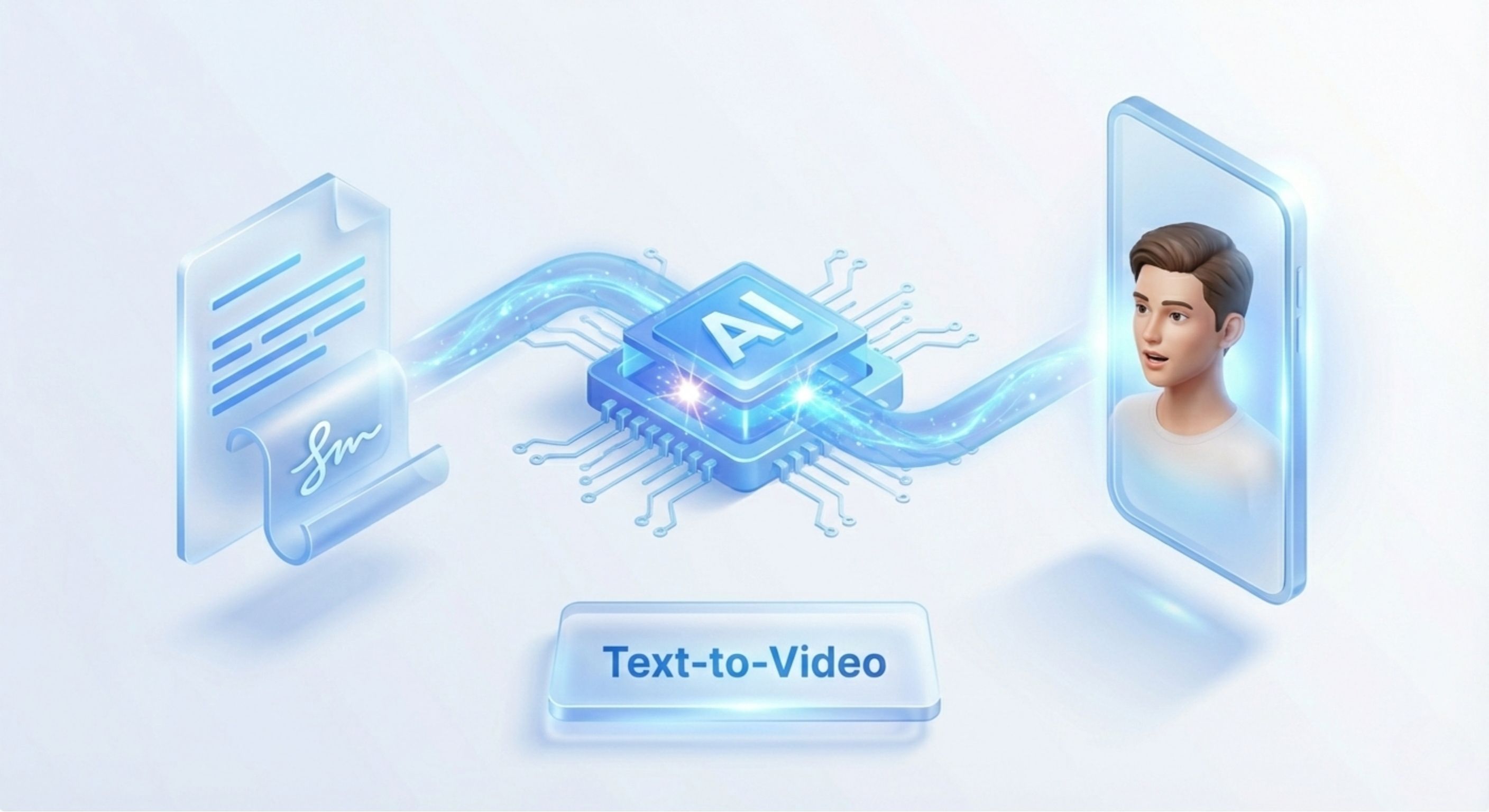
So, what exactly is an AI avatar video? It’s a video that stars a digitally created character—a virtual human—whose speech and movements are generated by artificial intelligence. Instead of filming a real person, you just feed the AI a script. It then animates the avatar to deliver your lines, complete with synchronized lip movements and surprisingly natural expressions.
This whole process smashes through the usual production bottlenecks. It’s like having an actor on standby 24/7, ready to perform at a moment's notice. This is a huge deal for modern marketers who need a constant stream of fresh creative to keep their campaigns alive and kicking on platforms like Meta and TikTok.
The Core Benefits for Advertisers
For performance marketing teams, the payoff is immediate and easy to see. AI avatar videos give you a direct line to producing content way faster and more efficiently than ever before. In a world where audience attention is a fleeting resource and ad creative burns out fast, that speed is everything. The freedom to test dozens of ad variations without having to schedule a single reshoot saves a massive amount of time and money.
Here’s a quick rundown of the benefits:
Unprecedented Speed: Create a finished video in minutes, not weeks. That means you can jump on market trends and launch campaigns with incredible agility.
Massive Scalability: Pump out hundreds of ad variations just by tweaking scripts, changing languages, or swapping out calls-to-action—no extra filming needed.
Cost Efficiency: Say goodbye to the high costs of actors, locations, film crews, and post-production. The price per video drops dramatically, especially when you’re producing in bulk.
Effortless Personalization: Easily tailor your ad’s messaging for different audience segments or locations by simply changing the script.
The real power of AI avatars isn't just in making one video; it's about building an entire system for non-stop creative testing. You shift your focus from the manual grind of production to the high-impact work of strategic optimization.
A New Era for Creative Production
This technology represents a fundamental change in how we make advertising content. If you want to go deeper on this, our guide on using AI for ads breaks down how automation is completely reshaping campaign workflows. By getting rid of the logistical headaches of traditional video shoots, teams can finally focus on what actually moves the needle: messaging, offers, and strategy.
And this impact isn't just limited to marketing. To get a feel for the bigger picture, check out these insights on the future of AI interactive video in training and education. What we're seeing is a shift that allows any business, big or small, to create polished, professional video content that truly connects with a global audience. This isn't just another tool; it’s a whole new way to think about creative velocity and performance.
How AI Brings Digital Presenters to Life
The magic behind AI avatar videos isn't just one piece of tech—it's a trio of specialized systems working together. Think of it like a digital film crew, where each member has a specific job to do. When they nail their parts, a simple script transforms into a surprisingly human performance that can actually hold an audience's attention.
It all starts with generative AI, which acts as the master artist. This system is in charge of creating the avatar's entire look, from facial features and clothing right down to the background. It learns from massive datasets of human images and videos to dream up characters that are not only realistic but can also show emotion.
Next up is the digital choreographer, the tech that teaches the avatar how to move. This is usually built on motion capture data or some pretty advanced animation algorithms. Its job is to make sure every gesture, head tilt, and subtle expression feels natural and lines up with what’s being said. This is what separates modern avatars from the stiff, robotic animations of the past.
The Voice and The Sync
Of course, an avatar is just a digital puppet until it can speak. The tech that gives it a voice is speech synthesis, also known as Text-to-Speech (TTS). This AI component takes your written script and turns it into natural-sounding audio, letting you tweak the tone, speed, and even the emotion in the delivery.
But a great voice is useless if the lips don't match the words. This is where AI lip-sync technology steps in. It carefully analyzes the audio’s phonemes—the smallest units of sound—and perfectly maps them to the right mouth movements. Getting this sync right is what sells the illusion that the avatar is actually talking. Our guide on the best AI video generator for ads dives deeper into tools that nail this critical feature.
The real trick is getting the generative visuals, motion data, and synchronized audio to work together seamlessly. When these systems are in perfect harmony, the line between a digital creation and a real person starts to get blurry.
This tech combo is fueling some serious market growth. The AI video generator market was valued at USD 614.8 million in 2024 and is expected to hit a massive USD 2,562.9 million by 2032, which is a compound annual growth rate of 20.0%. This explosion shows just how much demand there is for automated, scalable video.
Choosing Your Digital Presenter
When you start making AI avatar videos, you’ll run into two main types of presenters. Picking the right one depends entirely on your campaign goals and brand vibe.
1. Stock 2D and Stylized 3D Avatars:
These are the ready-to-go, off-the-shelf characters you’ll find on most platforms.
They often have a more animated or illustrative look, which is great for brands with a modern or playful identity.
Since they aren't as graphically intense, they are incredibly fast to generate—perfect for quickly testing scripts and new ideas without a big production lift.
2. Hyper-Realistic 3D Models:
This is the top-tier stuff. These avatars are designed to look almost identical to a real person on camera.
They’re often built from scans of actual people, complete with lifelike skin textures, micro-expressions, and realistic lighting that reacts to the environment.
Hyper-realistic avatars are fantastic for building trust and authority. Think testimonials, corporate updates, or any educational content where that human connection really matters.
Ultimately, your choice between a stock model and a hyper-realistic one comes down to your brand’s voice, what you want the ad to achieve, and the feeling you want to leave with your audience.
Driving Real Ad Performance with AI Avatars
The real magic of AI avatar videos isn't just the tech itself; it's the tangible results they deliver for your business. By smashing the old barriers of video production, these digital presenters open up a whole new playbook for performance marketers. Creative development shifts from a slow, expensive headache to a fast, data-driven engine for growth. This is how teams start to test, learn, and optimize at a speed that was unthinkable just a few years ago.
The most immediate impact? Hyper-scaled A/B testing. Forget commissioning a handful of ad variations and crossing your fingers. Now, you can generate hundreds. Imagine testing 50 different hooks, 10 unique calls-to-action, and 5 different avatar presenters for a single campaign. This sheer volume of experimentation gives you rich performance data, fast-tracking you to the exact combo of messaging and visuals that your audience actually responds to.
Breaking Down Geographic Barriers
Another game-changer is instant campaign localization. Launching a product around the world used to mean a colossal budget for filming with local actors in every single market. With AI avatar videos, that entire process gets incredibly simple. You can take one winning ad script and instantly render it in dozens of languages, complete with a native-sounding voice and perfectly synced lips.
This capability massively lowers the barrier to entry for going global.
Slash Costs: Forget about flying film crews around the world or hiring actors in every country.
Keep it Consistent: Your visual identity and core message stay the same across all regions, strengthening your brand.
Launch Faster: You can roll out coordinated global campaigns in a fraction of the time it used to take.
This kind of rapid localization makes your message feel authentic and native to each audience, which is a huge factor in boosting engagement and conversions in new markets.
Let's look at how this compares to the old way of doing things.
AI Avatar Ads vs Traditional Video Production
This table breaks down the key advantages of using AI avatar videos for advertising campaigns compared to conventional video production methods.
Metric | Traditional Video Production | AI Avatar Videos |
|---|---|---|
Speed | Weeks or months per project | Hours or days per video |
Cost | High (crew, location, actors) | Low (subscription-based) |
Scalability | Difficult and expensive | Effortless; generate hundreds of variations |
Localization | Requires new shoots for each language | Instant rendering in multiple languages |
A/B Testing | Limited by budget and time | Virtually unlimited testing capabilities |
Updates | Requires reshoots for minor changes | Instant edits to script or visuals |
As you can see, the shift to AI avatars isn't just an incremental improvement—it's a fundamental change in how creative is produced and optimized.
Personalization at an Unprecedented Scale
Beyond just language, AI avatars let you get serious about audience segmentation and personalization. You can create slightly different ads tailored to unique customer personas, their specific pain points, or where they are in your sales funnel. A fintech app, for example, could create one ad for "first-time investors" and another for "seasoned traders," using the same avatar but with a script that speaks directly to each group.
This kind of targeted messaging makes ads feel less like a generic broadcast and more like a one-on-one conversation. When people feel like you're talking directly to them, they're far more likely to click and convert.
This strategic approach has a direct impact on the metrics that matter. By continuously testing and personalizing content, advertisers see real improvements in:
Higher Click-Through Rates (CTR): Relevant ads stop the scroll and earn the click.
Lower Cost-Per-Acquisition (CPA): Find winning creative that converts users for less money, more efficiently.
Increased Audience Engagement: Content that hits on a user's specific needs builds a much stronger connection.
To see these ideas in action, check out some of these powerful video ad examples that show how effective creative strategies are being deployed today.
The growth here is impossible to ignore, reflecting a massive industry shift. The global AI avatar market is projected to explode from USD 7.41 billion in 2024 to USD 118.55 billion by 2034, fueled by the demand for more authentic digital interactions. You can learn more about what's driving this growth in the full Precedence Research report. By bringing AI avatars into your workflow, your team can stop just making ads and start systematically engineering campaigns that deliver a much better return.
A Practical Workflow for Creating Your First Avatar Ad
Alright, let's move from theory to actually making something. This is where you'll see just how powerful AI avatar videos can be. Building your first ad isn’t some complex, technical nightmare; it’s more like a simple, digital assembly line that completely replaces the headaches of a traditional film shoot.
I'll walk you through the core steps to get your idea from a script to a finished video that’s ready for your next campaign. This whole workflow is built for speed and iteration, letting you pump out high-quality ads without the usual friction. Once you get the hang of this sequence, you’ll be able to scale up your creative output in a big way.
Step 1: Script and Voice Generation
Everything starts with the message. Your script is the bedrock of the entire ad, so it needs to be tight, clear, and laser-focused on a single call-to-action. Lots of platforms today even have AI script assistants that can help you spitball compelling hooks and body copy based on your product and who you're talking to.
Once your script is locked in, it's time to give your avatar a voice. You've got two main routes here:
Text-to-Speech (TTS): This is the go-to method for most people. You just paste your script, and an AI voice generator cranks out the audio. Modern TTS is shockingly good, offering a huge range of natural-sounding voices, different accents, and even emotional tones.
Voice Cloning: If you want a truly unique feel, you can clone a specific person's voice from a short audio clip. This is perfect for maintaining a consistent brand voice or creating a digital double of a real person—just make sure you always have their explicit consent.
Step 2: Avatar and Scene Selection
With the audio sorted, you can pick your on-screen presenter. The platform you use will have a library of stock avatars, from ultra-photorealistic models to more animated 2D or 3D characters. Choose an avatar that fits your brand’s vibe and connects with your target audience. For instance, a B2B tech ad might need a professional, buttoned-up avatar, while a DTC lifestyle brand could go for someone more casual and relatable.
Next up, you build the scene. This means picking a background—it could be a solid color, a stock video, or a custom environment with your branding. You'll also drop in other key elements:
Brand Logos: Stick your logo in a corner for consistent branding.
Text Overlays: Add headlines or key points to catch the eye of scrollers.
Product Shots: Weave in images or video clips of your product.
Think of this stage like setting up a virtual studio. You're the director, picking the talent, the backdrop, and the props. The big difference? You can swap out any element in seconds, no reshoots required.
Step 3: Generation and Final Assembly
Now for the final step: putting it all together. You tell the AI to generate the video, and it will combine your script, voice, avatar, and all the scene elements you chose. The AI handles the really tricky part automatically, making sure the avatar's lip movements are perfectly synced with the audio track.
Once it's rendered, you can review the video and make any little adjustments. Maybe the voice-over feels a bit rushed, or a text overlay pops up too soon. Most platforms have simple editors that let you fine-tune these details quickly before you export the final ad. This iterative loop lets you get a polished final product without the high-stakes pressure of a live-action shoot.
This visual flow chart shows how testing, localizing, and engaging with audiences create a cycle of continuous improvement—all powered by AI-driven ad production.
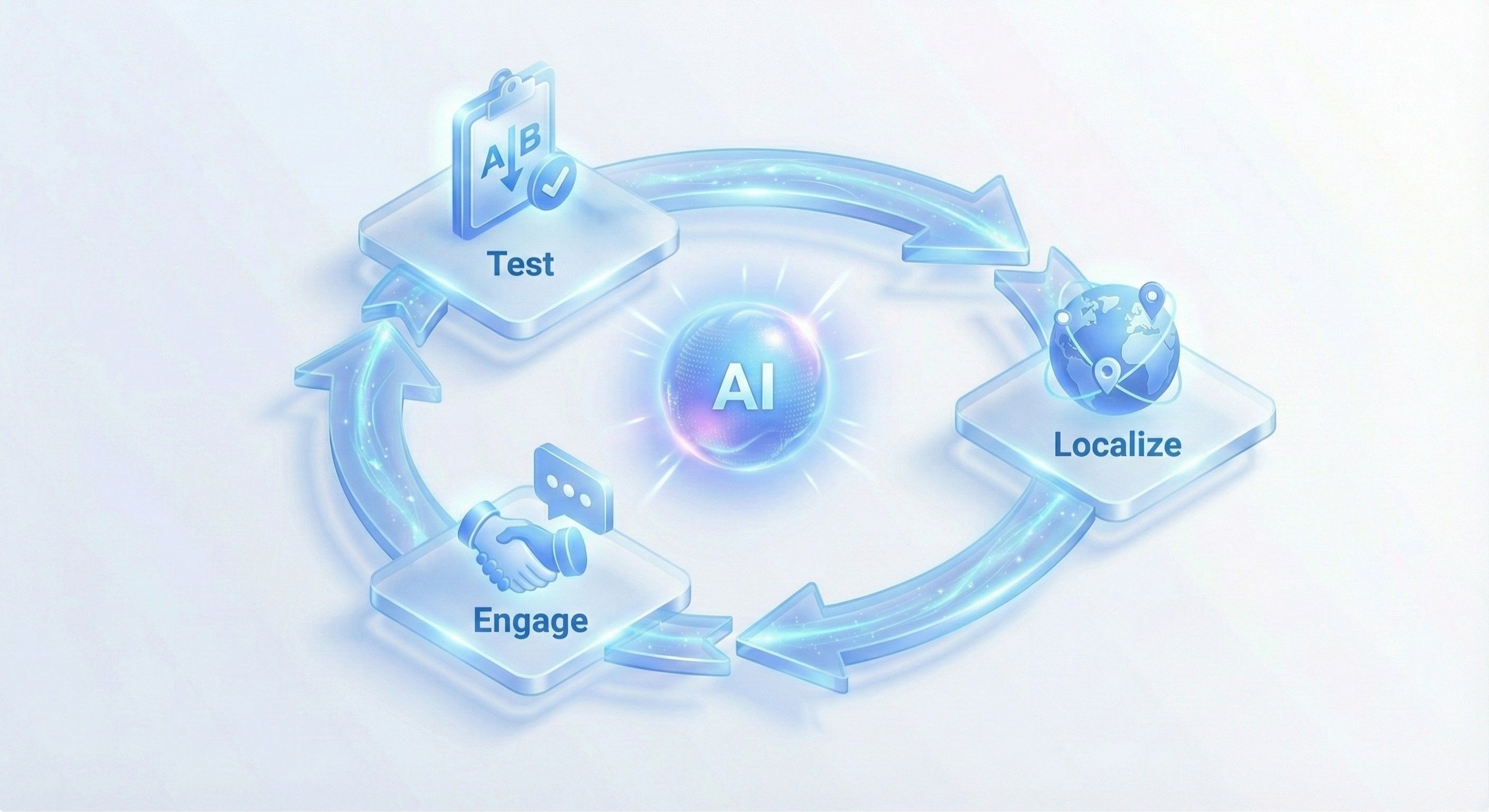
By following this workflow, your team can get from a creative idea to a live campaign faster than ever before. This speed unlocks more dynamic and responsive advertising strategies that can adapt to what's working right now.
How to Scale Your Ad Creative Systematically
Making one great ad is a solid start. But to actually win in performance marketing, you need to churn out hundreds. This is where AI avatar videos really start to shine.
Scaling your creative isn't just about volume. It’s about building an engine that lets you test, learn, and iterate at a speed that traditional workflows just can't keep up with.
The secret is to stop thinking of a video as one big, untouchable project. Instead, you need to adopt a modular mindset. Think of each video ad as a set of Lego bricks—a hook, a product shot, a testimonial, and a call-to-action. AI avatars let you treat each of these parts as a separate, swappable element.
This simple shift changes everything. You can mix and match different scripts, avatars, backgrounds, and voice-overs to generate a massive number of unique ad variations, practically on autopilot. This isn't just a faster way to work; it's a smarter one. It unlocks continuous experimentation so you can find the exact recipe that clicks with your audience.
The Modular Video Design Framework
Modular design is the absolute core strategy for scaling creative with AI. Instead of building one video from start to finish, you create a library of individual assets you can assemble in countless ways. This gives you the agility to tweak your messaging without having to go back to the drawing board every single time.
Here’s how this framework actually breaks down:
Avatars as Presenters: Your library of AI avatars becomes your on-demand talent. You can test how different personas—say, a formal expert versus a casual peer—affect how your message lands, all without scheduling a single new recording session.
Scripts as Variables: A single core message can be spun into dozens of different hooks or calls-to-action. Each script variation becomes another building block you can test against different visuals and presenters.
Scenes as Backdrops: Your backgrounds, branding, and text overlays are also modular pieces. You can instantly spin up versions for different platforms, seasonal promos, or A/B tests just by swapping out the scene.
By treating every component as an independent variable, you turn video production from a linear slog into a dynamic, combinatorial system. This is how you go from making one ad a week to generating fifty overnight.
Building Your Centralized Context Vault
To make this modular system fire on all cylinders, you need a single source of truth for your AI. This is where a context vault comes in. Think of it as a centralized brain for your brand's advertising—a library where you store all the essential information the AI needs to generate on-brand content automatically.
This vault should contain things like:
Brand Guidelines: Logos, color palettes, and rules on your tone of voice.
Approved Messaging: Scripts that have proven to work, customer pain points, and key value propositions.
Asset Library: Product shots, customer testimonials, and any user-generated content you have rights to.
With a well-organized context vault, your AI platform can pull the right elements to assemble new ads that are consistently on-brand and laser-focused on performance. This automation slashes the need for manual oversight and frees up your team to focus on high-level strategy instead of getting bogged down in repetitive production tasks.
This ability to quickly tailor messaging for different audiences is a huge growth driver. For instance, the Asia-Pacific AI avatar market alone hit USD 5.14 billion in 2024 and is projected to explode to USD 64.07 billion by 2032. That massive growth is being fueled by how efficient it is to create localized, multi-language campaigns with digital presenters. To get the full picture, you can find out more about the AI avatar market's expansion.
This systematic approach is exactly how modern marketing teams are turning AI avatar videos into a powerful engine for sustainable growth.
Using AI Avatars Responsibly and Ethically
Let's be real: the power to create a lifelike digital human is incredible, but it comes with an equal amount of responsibility. As you dive into AI avatar videos, you need a solid ethical game plan. This isn't just about checking a legal box; it's about keeping the trust you've built with your audience, protecting your brand's reputation, and just being a good human in this new digital space.
Being responsible starts with being upfront. When someone watches your content, they should know they're looking at an AI, not a real person. A simple disclosure goes a long way. It stops any confusion and shows you're using this tech honestly, not trying to pull a fast one.
The Non-Negotiable Rules of Consent
Here's the most important rule of the road: explicit and informed consent. This is absolutely critical if you're creating a "digital twin" of a real person—whether it’s your CEO, a brand ambassador, or an actor you've hired. You can't just grab someone's picture and voice and spin up an avatar without their direct, enthusiastic permission.
And this can't be a handshake deal. You need a clear, documented agreement that spells out exactly how their digital likeness and voice will be used, what kind of content it'll be in, and for how long.
Think of it this way: a person's digital likeness is part of their identity. Using it without permission isn't just a small mistake—it can blow up into a legal and PR nightmare. Respecting someone's right to control their own image is everything.
This goes for voice cloning, too. To capture and use someone's voice, you need that same level of crystal-clear approval. Any reputable AI platform will have verification and consent management baked into their process to make sure these lines are never, ever crossed.
Keeping Your Brand's Integrity and Authenticity
Beyond the legal stuff, using avatars ethically is all about protecting the brand you've worked so hard to build. Your audience craves authenticity. If you use avatars to mislead people or push deceptive content, that trust can be shattered for good.
Here are a few best practices to keep things on the level:
Disclose Clearly: A small watermark or a quick note in your video description like, "This presentation features a digital presenter," is all it takes to be transparent.
Represent Authentically: Make sure your avatars reflect your brand's values. Avoid falling into tired stereotypes and aim for diverse, respectful digital representation.
Fact-Check Your Scripts: An AI avatar is a mouthpiece for your script. Your team is still 100% on the hook for making sure the information in your videos is accurate and truthful.
Navigating What's Next for Digital Identity
The conversation around digital rights and AI is moving fast. Staying on top of new regulations and best practices is a must for any brand getting into this space. The goal is to use AI avatars to make genuine connections and add real value, not to find a technological shortcut.
By making consent, transparency, and authenticity your top priorities, you can scale your creative output with confidence. You'll be reinforcing your brand's commitment to doing things the right way, building a stronger business for the long haul, and fostering a positive relationship with your customers.
Got Questions About AI Avatar Videos?
As marketers and advertisers start digging into AI avatar videos, a few questions always seem to come up first. Let's tackle them head-on so you can move forward with a clear picture of what this tech can actually do for your campaigns.
This space is moving fast, so it’s smart to get a handle on the current reality versus the hype. We'll break down the most common questions to clear up any confusion and show you where the real value is.
How Realistic Can These Things Actually Look?
The realism can vary quite a bit, but the top-tier platforms are now creating hyper-realistic digital humans that are almost impossible to tell apart from a real person on camera. We're talking natural micro-expressions, subtle movements, and authentic-looking skin textures—the kind of details that build trust with an audience.
But photorealism isn't the only game in town. A lot of brands, especially in tech and D2C, are crushing it with stylized 2D or 3D avatars that fit a more modern or playful vibe. The right choice really just depends on your brand's personality and what you're trying to achieve with your ad.
Can I Make an AI Avatar of a Real Person? Like, Our Founder?
Yep, you absolutely can. Creating a custom "digital twin" of a real person—like a founder, a top salesperson, or a brand ambassador—is one of the most powerful ways to use this tech. It usually involves a single, formal recording session to capture their likeness and voice patterns.
The most important part of this whole process is getting explicit, written legal consent. This isn't a handshake deal. The agreement needs to spell out exactly how the digital likeness will be used, which protects both the individual and your company. Any reputable platform will have consent management baked right into their workflow to keep everything above board.
Are AI Avatar Videos Actually Cheaper Than a Traditional Shoot?
Without a doubt, especially when you start producing content at scale. A custom avatar might have an upfront creation cost, but the cost per video drops through the floor compared to a traditional film shoot. You completely get rid of recurring expenses like hiring actors, renting locations, booking film crews, and endless post-production hours.
This changes the entire economic model of video production. Suddenly, it’s not just possible but practical to create and test hundreds of ad variations. An iterative, high-volume testing approach that would burn through a traditional budget becomes your new standard, letting you find winning ads way faster.
How Do AI Avatars Work for Global Campaigns?
This is where AI avatars really shine. A single avatar can deliver your script in dozens of languages using incredible text-to-speech engines. The AI handles all the heavy lifting, making sure the lip-syncing is perfect for every single language.
This means you can roll out a consistent brand message with a familiar face across completely different markets. You can reach audiences in London, Tokyo, and São Paulo in a fraction of the time and cost it would take to shoot separate campaigns for each region. It makes going global a whole lot more manageable.
Ready to stop the manual grind and start scaling your ad creative? Sovran automates the entire video production workflow, from assembling modular ad concepts to generating hundreds of variants for testing. Find winning ads 10x faster and leave creative fatigue behind. Start your 7-day free trial today.

Manson Chen
Founder, Sovran
Related Articles
Master AI Video Ad Production Workflow
Imagine whipping up a video ad in minutes, without sacrificing quality. That’s the promise of AI video ads—they draft scripts, select visuals, handle...
Your Guide to an AI Video Ad Creator
So, what exactly is an AI video ad creator?Think of it as a platform that uses artificial intelligence to automatically build and test video ads on a massive...
10 High-Impact Marketing Video Examples for Your 2026 Strategy
In performance marketing, scrolling is the enemy. On platforms like Meta and TikTok, you have less than three seconds to stop a potential customer from swiping...