Your Guide To An AI Video Generator for Ads
An AI video generator for ads is a tool that uses artificial intelligence to automate the creation, editing, and scaling of video advertisements. In simple...
Jump to a section
An AI video generator for ads is a tool that uses artificial intelligence to automate the creation, editing, and scaling of video advertisements. In simple terms, these platforms let performance marketers churn out hundreds of high-quality video variations for Meta and TikTok, slashing production costs and turnaround times.
Why AI Video Generators Are a Game Changer for Ads
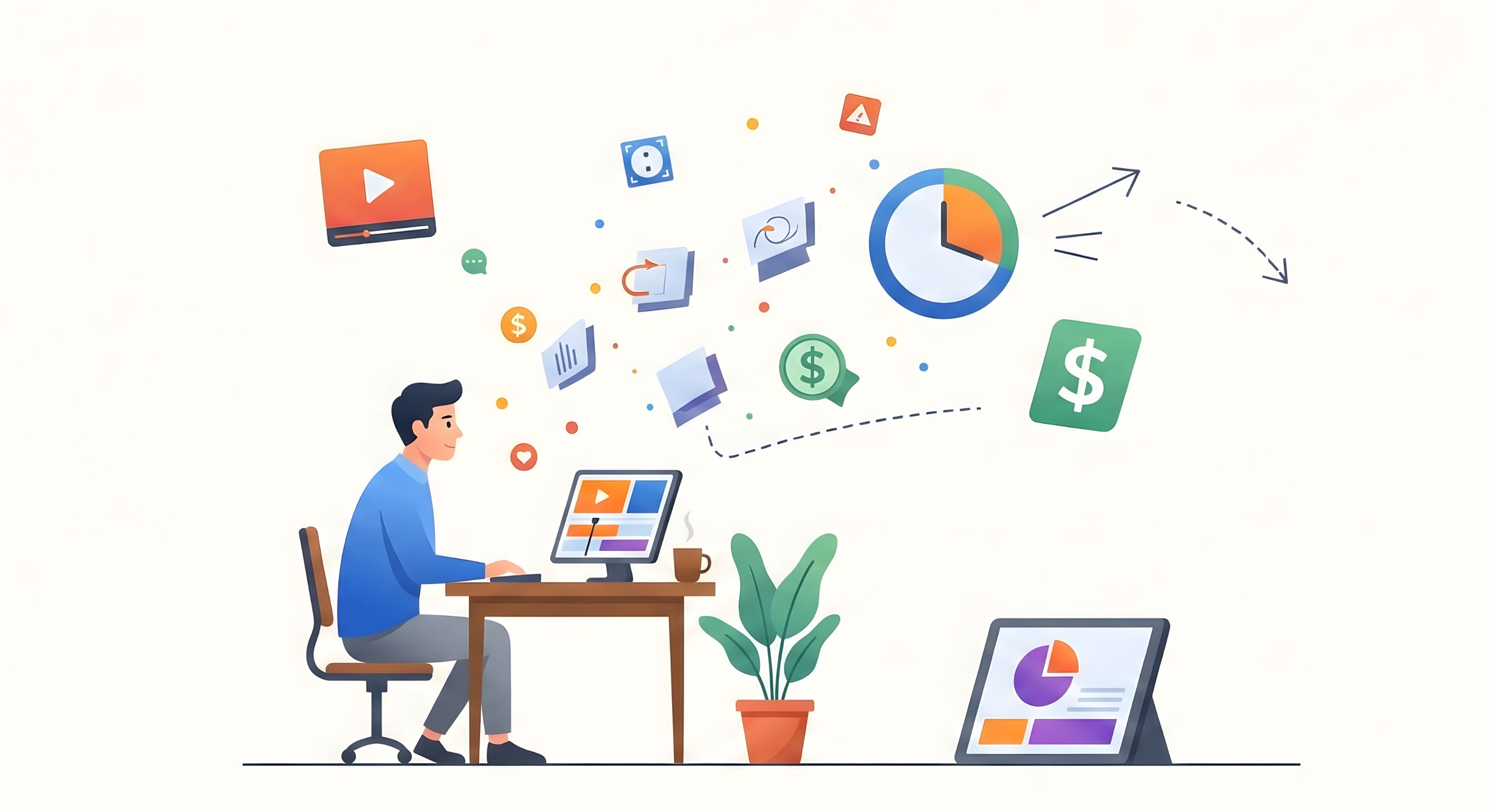
Let's cut right to it. Performance marketers are jumping on AI video generators for one simple reason: they solve massive, expensive problems. The constant demand for fresh creative on Meta and TikTok burns out teams and blows through budgets. Meanwhile, traditional video production is still painfully slow and costly.
This is where an AI video generator flips the script. Instead of pouring weeks into a single video, your team can now generate dozens of variations in minutes. This isn't just about moving faster; it's a strategic advantage that unlocks a whole new level of agility in your campaigns.
The Shift From Cost-Cutter to Strategic Partner
At first, the big draw for AI was just saving money. Now, it's become a strategic partner in building smarter, more data-driven ad campaigns. These tools give marketers creative diversity at a scale that was once impossible, making top-tier video accessible to everyone, from scrappy startups to massive enterprise teams.
To really get why these tools are making such an impact, you have to look at the bigger picture of how AI-powered advertising strategies are fundamentally changing the marketing game.
The data backs this up. Advertisers are going all-in on generative AI. Research shows that nearly 90% of buyers are either already using or plan to use AI tools for their video ad creation by 2025. What's more, half of all advertisers are using these tools right now, with projections suggesting AI will produce a staggering 40% of all video ads by 2026. You can dig into more of this data in the full IAB report.
The real win here is shifting from a "one-and-done" video mindset to a systematic, scalable creative engine. This lets your team test more, learn faster, and ultimately find the winning ad formulas that actually drive business results.
Tangible Benefits for Modern Marketers
So what does this look like in your day-to-day? Using an AI video generator for ads gives you several key advantages that directly boost campaign performance and streamline your workflow:
Lightning-Fast A/B Testing: You can generate dozens of ad variations just by swapping out hooks, calls-to-action (CTAs), or body content. This is how you test hypotheses in real-time and quickly pinpoint your top-performing creative elements.
Creative Diversity at Scale: The best way to fight ad fatigue is to keep feeding the platforms fresh concepts. AI can remix your existing assets into an endless stream of new combinations, keeping your campaigns from getting stale.
Democratized Production: High-quality video is no longer a luxury reserved for teams with huge budgets or fancy in-house studios. AI puts professional-grade video production tools in the hands of any marketer.
Getting Your AI Ready for On-Brand Video Creation
Before you can even think about generating your first ad, you need to teach the AI what your brand is all about. This is easily the most important part of the whole setup. Get this right, and every video the AI spits out will feel authentic and consistent. Get it wrong, and you'll end up with a library of generic, off-brand content.
Think of it like stocking a kitchen for a professional chef. You can't expect a masterpiece if you don't give them the right ingredients. The AI is your chef, and your product shots, user-generated content (UGC), logos, and best-performing ad clips are the raw ingredients. A well-organized asset library is the absolute foundation for a powerful AI video generator for ads.
Once everything is uploaded, the AI gets to work. It starts analyzing and tagging every single asset, breaking down videos into individual scenes, figuring out who is speaking, and sorting clips by theme or format. This intelligent tagging is a game-changer. Suddenly, your entire creative library is searchable, letting you find the perfect clip for any concept in seconds.
Building Out Your Brand Kit and Context Vault
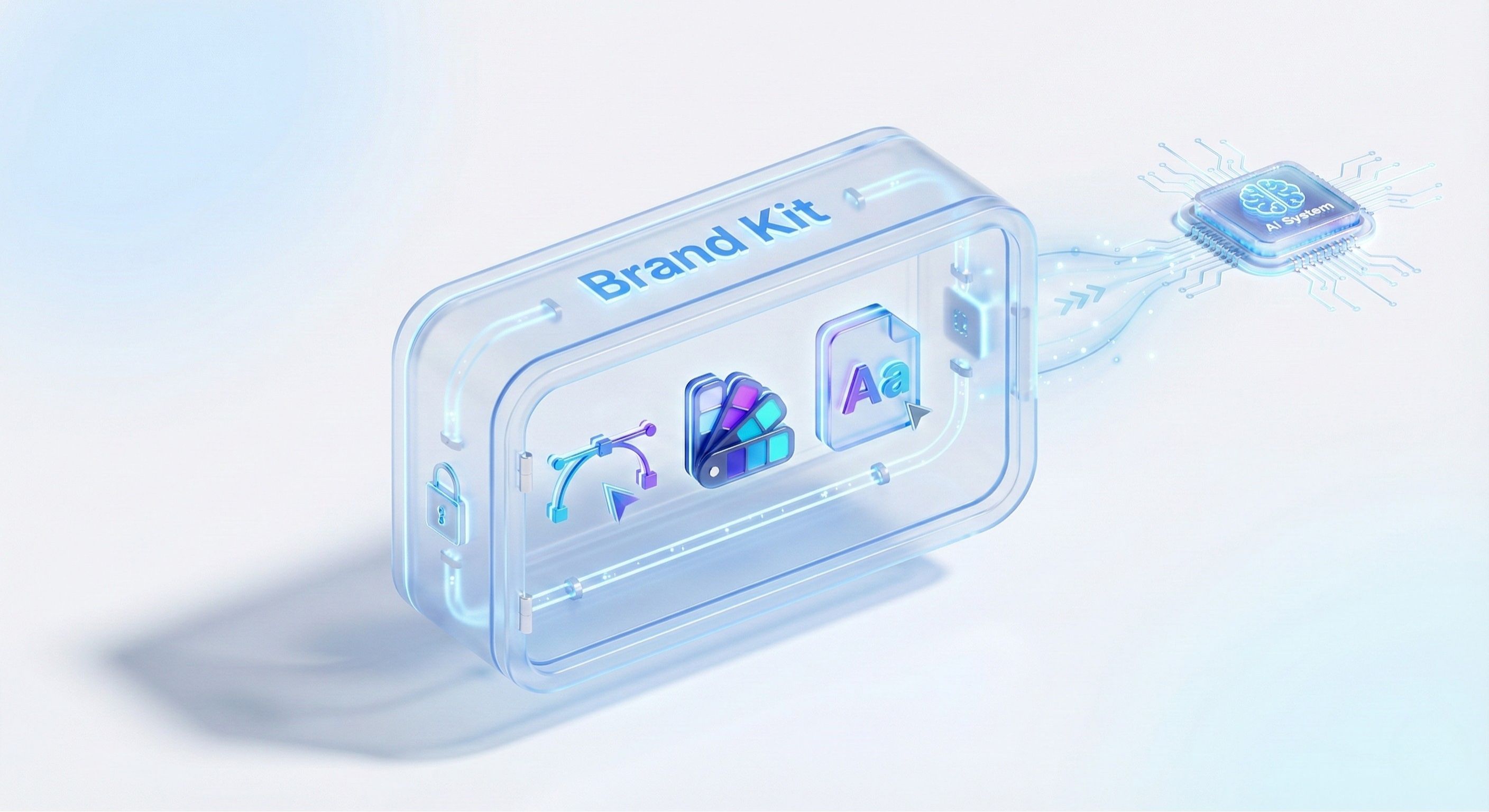
Visuals are only half the battle. You also need to feed the AI the soul of your brand—its voice, its messaging, its personality. This is where your Brand Kit and Context Vault come into play. These features act as a central hub for all your non-visual brand elements, essentially creating the guardrails the AI needs to maintain consistency when you start scaling.
Start with the basics. It’s simple stuff, but it makes a huge difference.
Logos and Watermarks: Get your high-res versions in there for every format you might need.
Color Palettes: Plug in your brand’s exact HEX codes so every text overlay and graphic element is perfectly on-brand.
Brand Fonts: Upload your custom fonts to keep all your text consistent.
This initial setup stops those tiny, off-brand details that can make an otherwise solid ad feel cheap. But the real power comes from teaching the AI your messaging strategy.
Think of your Context Vault as a living document. It's where you dump your best-performing ad scripts, killer customer testimonials, core value props, and detailed customer personas. The AI taps into this "brain" to generate copy and concepts that aren't just on-brand, but are engineered to convert from day one.
Let’s say you’re running a fitness app. Your Context Vault could be loaded with testimonials about weight loss, scripts from your top-performing workout hooks, and messaging that hammers home your community support angle. Then, when you ask the AI to generate a new ad, it won't be guessing. It'll pull from this proven material, making sure the output is built on what you already know works for your audience.
Doing this foundational work transforms the tool from a simple video editor into a strategic creative partner, ready to pump out on-brand video ads that actually perform.
This is where your AI video generator stops being just a tool and becomes a full-blown creative engine. Seriously. Forget staring at a blank timeline, trying to come up with the next big idea from scratch. The real secret to scaling video ad production is leaning on proven marketing frameworks, but in a totally modular, remixable way.
Instead of creating one-off videos, you're building a library of interchangeable "building blocks." Think of it like LEGOs for your ad campaigns.
Your blocks are all your individual assets: killer hooks, slick product demos, authentic user-generated content (UGC), glowing testimonials, and clear calls-to-action (CTAs). By snapping these blocks together within a structured framework, you can systematically pump out dozens—even hundreds—of ad variations. It’s a method that finally brings some data-driven sanity to the creative process. If you want to go deeper on this, we've got a whole guide on how to scale paid growth with modular video ads.
This whole approach taps directly into what customers actually want. Interest in AI-generated ads is exploding—86% of digital-first consumers are asking for personalized video content, and 85% are intrigued by interactive experiences. Yet, only 20% have ever received an AI-generated video. That's a massive gap and a huge opportunity for brands that get this right. You can find more on this in Idomoo’s recent consumer report.
Classic Frameworks for AI Prompts
To get the ball rolling, you can just prompt your AI to build ads using classic, battle-tested marketing formulas. Each one has a specific job and is perfect for different campaign goals.
Hook-Body-CTA: This is your bread and butter—the most direct and versatile framework out there. Start with a punchy 3-second hook to stop the scroll, follow up with your core message in the body, and seal the deal with a clear call-to-action.
Problem-Agitate-Solution (PAS): This one is pure gold for any product that solves a real pain point. First, you introduce the problem. Then, you agitate it a bit to make it feel more urgent. Finally, you ride in on a white horse with your product as the perfect solution.
When you tell your AI to follow these structures, you guarantee every video has a logical flow that’s been proven to persuade and convert. No more guesswork.
Popular Video Ad Frameworks for AI Generation
To make this even more practical, here's a breakdown of some of the most effective frameworks and how you can translate them into specific prompts for your AI video generator. These are the go-to structures we use to create high-performing ads for Meta and TikTok.
Framework | Structure Breakdown | Best For | AI Prompt Example |
|---|---|---|---|
Hook-Body-CTA | Hook: Grab attention in <3s. | General purpose, direct response, product showcases. | "Create a 15-second video ad. Start with a hook showing the product in an unexpected way. Follow with 3 quick clips of its main benefit. End with 'Shop Now' text overlay." |
Problem-Agitate-Solution (PAS) | Problem: Show a relatable struggle. | Solving specific pain points, health & wellness, B2B software. | "Generate a TikTok ad. Scene 1: Show someone frustrated with [problem]. Scene 2: Zoom in on their frustration. Scene 3: Reveal our product as the easy solution, with upbeat music." |
Listicle | Hook: "3 Reasons Why..." | Top-of-funnel content, educating the audience, driving clicks on TikTok. | "Make a fast-paced 'Top 5 Hacks for [Topic]' video. Use my uploaded clips for each hack and add bold text overlays for each number. End with a CTA to read our blog." |
UGC Mashup | Hook: A powerful quote or reaction. | Building social proof, increasing trust and authenticity, retargeting ads. | "Combine my 5 uploaded UGC videos into a single mashup. Start with the most energetic clip. Add captions to each one. Finish with a 5-star review graphic and 'Buy Now' button." |
These frameworks give your AI the guardrails it needs to turn your raw assets into ads that actually work, right out of the gate.
Platform-Specific Ad Formats
Beyond the classic formulas, you need to think about what feels native to each platform. What crushes it on Meta might be a total flop on TikTok. Your AI video generator can easily adapt your assets for each channel's unique vibe.
The goal is to make your ads feel less like ads and more like the organic content people came there to watch. Prompting the AI to create a 'snappy UGC mashup for TikTok' will give you a completely different result than asking for a 'polished product demo for a Meta carousel.'
Here are a couple of platform-native frameworks to try:
UGC Mashups (Meta & TikTok): Stitch together clips from a bunch of different customer testimonials. The result is a single, powerful video that screams social proof.
Listicles (TikTok): Think "Top 5 Reasons Why..." or "3 Hacks For..." style videos. These are super shareable and perform incredibly well in fast-scrolling feeds where users have zero patience.
By using these frameworks, you can turn a handful of core assets into a massive library of testable ad variations, letting you find the winning combinations faster than you ever could manually.
How to Scale Production with Bulk Generation
So, you found a winning ad. Awesome. But that's just the first step. The real trick is to scale that winner before creative fatigue kills its performance. This is where a top-tier ai video generator for ads becomes your secret weapon, letting you ditch the slow, painful manual edits and jump straight into high-volume production.
This whole process is called bulk generation, or bulk rendering. It's about taking one solid ad concept and spinning it into dozens, or even hundreds, of variations. Instead of swapping out a hook here and a CTA there one by one, you tell the AI to remix everything for you. This means you can launch a massive batch of testable creatives in the time it used to take you to make just one.
Think of it like this: you start with a proven framework, break it into modular parts, and then let the AI create all the possible combinations.
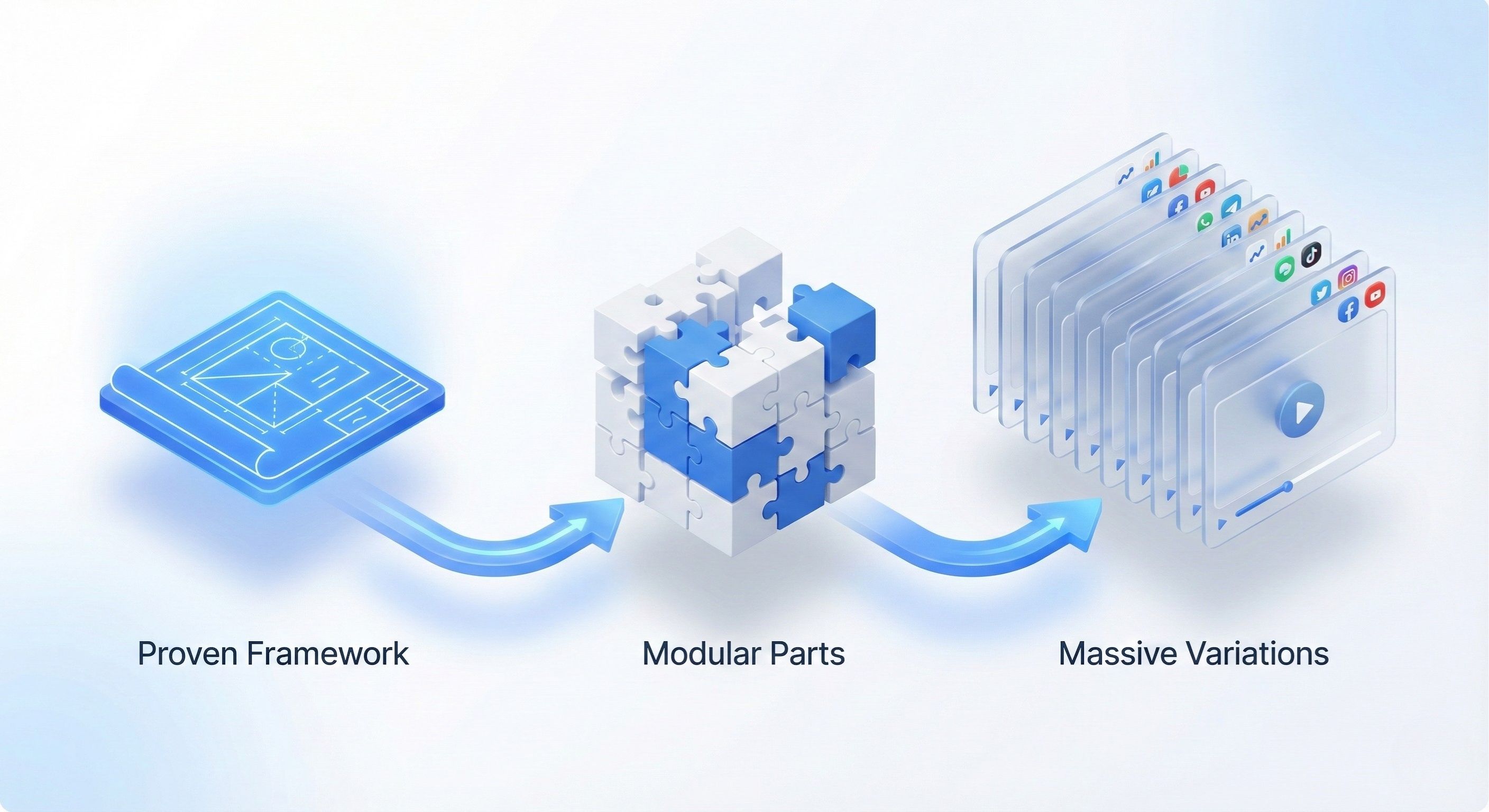
The big shift here is moving from a one-and-done video mindset to building a systematic creative engine that multiplies your ability to test and learn.
Setting Up Your Bulk Renders
Getting started with bulk generation is actually pretty simple. The main goal is to isolate your variables so you can run clean A/B tests. Let's say you already know a specific hook from a past campaign is a killer. You can set up a bulk render to pair that one hook with a bunch of different body sections and CTAs to see what works best with it.
A typical setup might look something like this:
Variable 1 (Hooks): Take your top 3 performing hooks.
Variable 2 (Body): Test 4 different value props or user testimonials.
Variable 3 (CTAs): Mix in 3 distinct calls-to-action (e.g., "Shop Now," "Learn More," "Get Offer").
Just with that simple formula (3 hooks x 4 bodies x 3 CTAs), you've instantly created 36 unique video ads. Trying to make all of those manually would take days. An AI video generator can spit them all out in less than an hour, giving you a massive head start.
If you're focused on Meta, our guide on using a bulk video ad editor for Meta breaks this workflow down even further.
The core idea is simple: test broadly to find your winning elements, then iterate deeply on those winners. Bulk generation is what automates the "deeply" part, turning one successful ad into a dozen potential new champions.
Test Naming and Campaign Organization
With great volume comes great responsibility. You can't just dump dozens of new ads into your campaigns without a plan. A messy setup is a recipe for disaster and will make it impossible to know what's actually working. A structured naming convention is non-negotiable.
Your naming system needs to be readable at a glance, giving you all the key info without having to click into each ad.
Example Naming Structure: [Date]_[CampaignObjective]_[Audience]_[Framework]_[HookID]_[BodyID]_[CTAID]
Here's how that looks in the real world: 20251026_CONV_Lookalike1%_PAS_Hook04_UGC-Review_ShopNow
A name like this tells you everything you need to know right from your ads manager dashboard. You can instantly spot which creative components are driving results, which is exactly what you need to build a powerful feedback loop.
Creating a Data-Driven Feedback Loop
The whole point of scaling production isn't just to make more ads—it's to make smarter ads. Your performance data, like Click-Through Rate (CTR) and Return on Ad Spend (ROAS), should be the fuel for your next round of bulk renders.
If the data clearly shows that Hook04 is crushing it, your next move is to double down. Prompt the AI to pair Hook04 with totally new body concepts or fresh CTAs.
This creates a virtuous cycle. Data from one test directly informs the creative strategy for the next, making sure your campaigns are constantly evolving based on what your audience actually wants to see.
Advanced AI Techniques to Enhance Your Ads
Alright, once you've got the hang of modular frameworks and cranking out ads in bulk, it's time to level up. Think of your **AI video generator for ads** less like an assembly line and more like a true creative partner.
This shift in mindset is key. We're moving beyond just remixing the assets you already have and into using AI to generate completely new creative elements from scratch. This is where you can fill some serious gaps in your content library without breaking the bank.
Let's say your best-performing ad is starting to fatigue, but you don't have any fresh B-roll to give it new life. Instead of scrambling to organize a new (and expensive) shoot, you can just prompt the AI. Something as simple as, "Generate a 5-second, high-energy clip of a person unboxing our product with a surprised expression, shot in a bright, modern living room," can get you exactly what you need to refresh the campaign.
This ability to generate content on the fly goes way beyond just video clips, solving problems that used to be a massive headache for creative teams.
Filling Creative Gaps with Generative AI
Think about all those little things that make an ad feel polished and professional. Advanced AI tools can now whip these up on demand, giving you an insane amount of creative control and speed. This is a huge leap from the early days of automated video editing software and a big reason the market is blowing up.
Speaking of which, the global AI video generator market is seeing some wild growth. It's projected to jump from USD 554.9 million in 2024 to an incredible USD 2,562.9 million by 2032. This explosion is all thanks to AI's power to dramatically cut down production costs and timelines.
Here are a few practical ways I've seen teams use these generative features to their advantage:
Synthetic Voiceovers: Need a quick voiceover for a new ad variation? You can prompt the AI to generate one with a specific vibe—like "upbeat and motivational" or "calm and reassuring"—without ever setting foot in a recording studio.
Dynamic Text Overlays: Forget boring, static text. Ask the AI to create animated text overlays that make your key features pop or flash urgent CTAs. It adds a layer of professional polish that used to require a motion graphics artist.
Generating Endless Hooks: We all know the first three seconds of an ad are everything. Use the AI as a brainstorming partner to generate a ton of different hooks. You can test different emotional angles, visual styles, and opening lines to see what actually stops the scroll.
By generating hundreds of variations, these advanced AI techniques make it incredibly efficient to conduct large-scale testing. This allows you to find the most effective creative combinations and deploy only the top performers.
Being able to generate so many video variations makes it much easier to run proper A/B testing Facebook ads at scale, which means you're only putting budget behind your most effective creative.
This whole approach shifts your creative strategy from being reactive to proactive. You're constantly feeding your campaigns with fresh, AI-enhanced content that’s built to perform from the second it goes live. You can learn more about how to use automated video editing software and other AI tools for marketing in our more detailed guide.
Still Have Questions About AI Video Ad Generators?
As more and more marketers start using AI video generators for their ad campaigns, a bunch of practical questions are bound to come up. It's one thing to see the potential, but it's another thing entirely to get into the nitty-gritty of making it work for you.
Let's clear the air and tackle some of the most common questions and hurdles we hear about all the time. Getting straight answers is the key to using these tools like a pro.
Can AI Videos Actually Look Authentic?
Yes, absolutely. The old idea that AI-generated ads look robotic or have that uncanny valley feel is pretty much dead. Modern tools are fantastic at creating ads that feel native and real, but here's the secret: it all comes down to your source material.
When you feed the AI high-quality, authentic user-generated content (UGC) and your core brand assets, the output feels genuine. The real trick is to guide the AI with specific prompts. For instance, if you ask for a "casual" or "TikTok-style" edit, the AI will assemble your clips with pacing and text overlays that mimic organic social content. It's less about creating something from thin air and more about using AI as a super-fast, intelligent editor to remix your best assets.
The most authentic AI-generated ads aren't built from scratch; they are intelligent remixes of your best-performing, real-world customer content. The AI's job is to find new and compelling ways to tell that story at scale.
How Do I Keep My Branding Consistent?
This is a big one, and it's handled through a feature often called a "Brand Kit." Honestly, this is a non-negotiable first step in the setup process. Before you even think about generating ads, you need to upload your brand's essentials:
Logos and watermarks in all the necessary formats.
Color palettes, making sure to use your exact HEX codes.
Custom brand fonts to keep all your text on-brand.
You also set up guardrails for your brand’s tone of voice and core messaging pillars. Once that's done, the AI automatically applies these rules to every single video it creates. This systematic approach is actually a huge win, as it eliminates the human error that often leads to branding slip-ups in high-volume campaigns.
What's the Best Way to A/B Test Variations?
The most effective method we've found is to isolate and test one variable at a time. The sheer speed of an AI video generator makes this process incredibly efficient compared to the old way of doing things.
For example, start by generating 3-5 different hooks while keeping the body and CTA of the video completely identical. Run these in a controlled A/B test on Meta or TikTok and let the data tell you which hook is the winner based on your main KPIs, like hook rate or CPA.
Once you have a clear winner, lock in that hook. Then, generate 3-5 new versions of the body, maybe testing different testimonials or product feature highlights. This methodical approach lets you pinpoint exactly which parts of your ad are driving performance so you can combine them for maximum impact.
What About Copyright Issues with AI Footage or Audio?
This is a critical point, and you're right to be cautious. Any reputable AI video platform solves this by integrating with fully licensed stock footage libraries and royalty-free music catalogs for any generative features. Any synthetic voiceovers are also cleared for commercial use from the get-go.
That said, it's essential to choose a professional-grade tool that explicitly states its assets are commercially licensed. Before you commit, always take a minute to review the terms of service for whatever platform you're using. It'll save you from any potential copyright headaches down the road.
Ready to stop the manual grind and start scaling your video ads? Sovran gives you the power to produce, test, and find winning creatives up to 10x faster. Start your 7-day free trial today and see the difference for yourself.

Manson Chen
Founder, Sovran
Related Articles
Your Guide to an AI Video Ad Creator
So, what exactly is an AI video ad creator?Think of it as a platform that uses artificial intelligence to automatically build and test video ads on a massive...
Master AI Video Ad Production Workflow
Imagine whipping up a video ad in minutes, without sacrificing quality. That’s the promise of AI video ads—they draft scripts, select visuals, handle...
10 High-Impact Marketing Video Examples for Your 2026 Strategy
In performance marketing, scrolling is the enemy. On platforms like Meta and TikTok, you have less than three seconds to stop a potential customer from swiping...