How to Make TikTok Ads That Actually Convert
Making TikTok ads that actually work starts way before you ever open Ads Manager. The secret sauce is having a crystal-clear strategy, creating video content...
Jump to a section
Making TikTok ads that actually work starts way before you ever open Ads Manager. The secret sauce is having a crystal-clear strategy, creating video content that looks and feels native to the platform, and only then setting up your campaign.
You have to nail your goal, know your audience, and design creative that feels organic before you even think about spending a single dollar.
Building Your Pre-Launch TikTok Ad Strategy
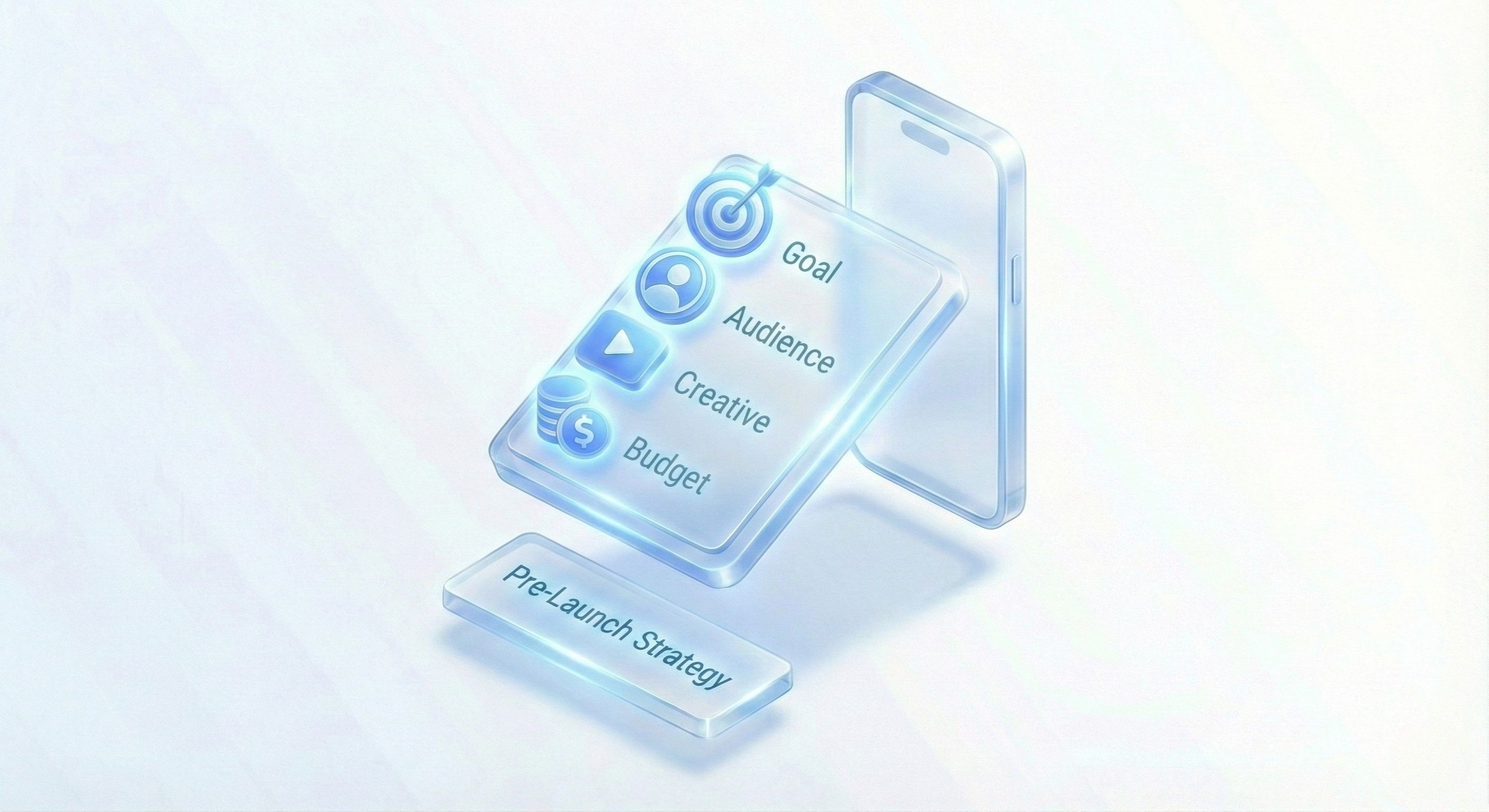
Jumping straight into TikTok Ads Manager without a plan is a surefire way to burn through your budget with nothing to show for it. I've seen it happen too many times. A successful campaign is built on a solid foundation long before you hit that “launch” button.
This pre-launch phase is honestly the most critical part of the whole process. It's where you learn how to make TikTok ads that deliver real results, not just vanity views.
Let's not forget, TikTok is a global advertising powerhouse. Its ad reach is projected to hit a staggering 1.59 billion users by January 2025. That scale means you can connect with almost one out of every five people on Earth, which makes a clear strategy absolutely essential for cutting through the noise. If you want to dive deeper, you can explore more fascinating TikTok statistics and what they mean for us advertisers.
What’s the Goal Here? Define Your Campaign Objective
First things first: what does a “win” actually look like for this campaign? Vague goals like “get more exposure” are useless. You need a specific, measurable objective tied directly to a business outcome. Are you chasing direct sales, app installs, or something else entirely?
Your primary goal will shape every single decision you make from here on out, from creative direction to your budget allocation.
Direct Sales (Conversions): The name of the game is driving immediate purchases. You'll live and die by your Return on Ad Spend (ROAS) and Cost Per Acquisition (CPA).
Lead Generation: You're looking to capture contact info for your sales pipeline. Your key metric will be Cost Per Lead (CPL).
Brand Awareness (Reach): The goal is simply to introduce your brand to a new, broad audience. Success here is measured by reach, impressions, and video view-through rate.
Pro Tip: Don't try to chase multiple goals with a single campaign. A campaign optimized for conversions needs a totally different setup than one built for brand awareness. Give the algorithm one clear target to aim for.
Who Are You Talking To? Pinpoint Your Ideal TikTok Customer
Okay, now that you know what you want, you need to figure out who you're talking to. And I mean really figure it out. Basic demographics like age and gender don't tell you much on TikTok. What really matters is user behavior and their content consumption habits.
You need to ask yourself:
What kind of content are they already watching and engaging with?
Which creators do they follow and, more importantly, trust?
What trends, sounds, or challenges are they jumping on?
What are their actual pain points that my product can solve?
For instance, a skincare brand targeting Gen Z might discover their ideal customer follows creators who do authentic, low-fi "Get Ready With Me" videos—not just the super-polished beauty gurus. That single insight directly tells you what style of ad creative is going to land. Building out a detailed customer persona isn't just busy work; it's the key to effective targeting and messaging that actually connects.
Creating TikTok Ads People Actually Want to Watch
The single biggest mistake I see brands make on TikTok is trying to run polished, corporate-style commercials. It just doesn't work. To get real results, you have to forget everything you know about traditional advertising and start thinking like a creator.
Your goal is to make content that feels right at home on a user's "For You Page." That means getting comfortable with authenticity, keeping up with trends, and building your videos for instant impact. High production value isn't the key here; it's about making genuine, scroll-stopping content that speaks the same language as your audience.
The First Three Seconds Are Everything
You've got a tiny window—maybe just a second or two—before someone swipes away. That initial one to three seconds, what we call the hook, will either make or break your ad's performance. A weak hook is just a fast way to burn through your ad spend.
Here are a few hook strategies I've seen deliver time and time again:
Ask a Question: Kick things off with a relatable question your audience has definitely thought about. A skincare brand might ask, "Still dealing with stubborn hormonal acne?"
Make a Bold Statement: Say something surprising, maybe even a little controversial, to make people pause. A productivity app could lead with, "Your to-do list is actually what's killing your productivity."
Show the "After" First: Instead of explaining what your product does, show the amazing result immediately. An ad for a cleaning product could open with a shot of a sparkling surface before showing the messy "before."
Structuring Your Ad for Impact
Once you've grabbed their attention, you need a simple framework to get your point across fast. One of the most reliable models out there is the Hook, Story, Offer framework. It's simple and effective.
Hook (1-3 seconds): Catch their eye with one of the tactics we just covered.
Story (5-15 seconds): Quickly show the problem and position your product as the clear solution. This is where user-generated content (UGC) is absolute gold. A real person sharing a genuine testimonial builds an incredible amount of trust.
Offer (3-5 seconds): End with a clear and compelling call-to-action (CTA). Don't just say "click the link." Give them a real reason, like "Tap 'Shop Now' to get 20% off before the sale ends tonight!"
People want to buy from people, not faceless companies. An ad that features a creator genuinely explaining why they love a product is a formula that just plain works. This is the core of making compelling video ads. For more ideas, check out these powerful video ads examples that nail this approach.
Using Trends and Native Elements
Making your ad feel native to the platform is about more than just the style of your content. You need to use TikTok's own features to your advantage—think trending sounds and native text overlays.
When an ad uses a popular TikTok sound, it feels instantly familiar and less like a disruptive ad. To get a broader perspective on driving results with video, you should also explore these strategies for creating marketing videos that convert. By blending these native elements with a solid creative framework, you'll create ads that don't just get views, but actually drive action.
A Practical Guide to TikTok Ads Manager
Alright, you've got your killer creative ready to go. Now it's time to roll up our sleeves and get into the nuts and bolts: TikTok Ads Manager.
At first glance, it can feel a little overwhelming, but it's really just the control center for your entire ad operation. Think of it as the cockpit. You'll use it to set your destination (your campaign objective), chart your flight path (your ad groups and targeting), and make sure you've got enough fuel in the tank (your budget).
Selecting the Right Campaign Objective
First things first. The very first decision you make inside Ads Manager is choosing your campaign objective. This is probably the most critical setting in your entire setup. Why? Because you're literally telling the TikTok algorithm what success looks like for you.
If you get this part wrong, the algorithm will go off and optimize for the wrong thing, which is a surefire way to burn through your budget with nothing to show for it.
Here’s a simple way to think about how your business goal translates into the right objective.
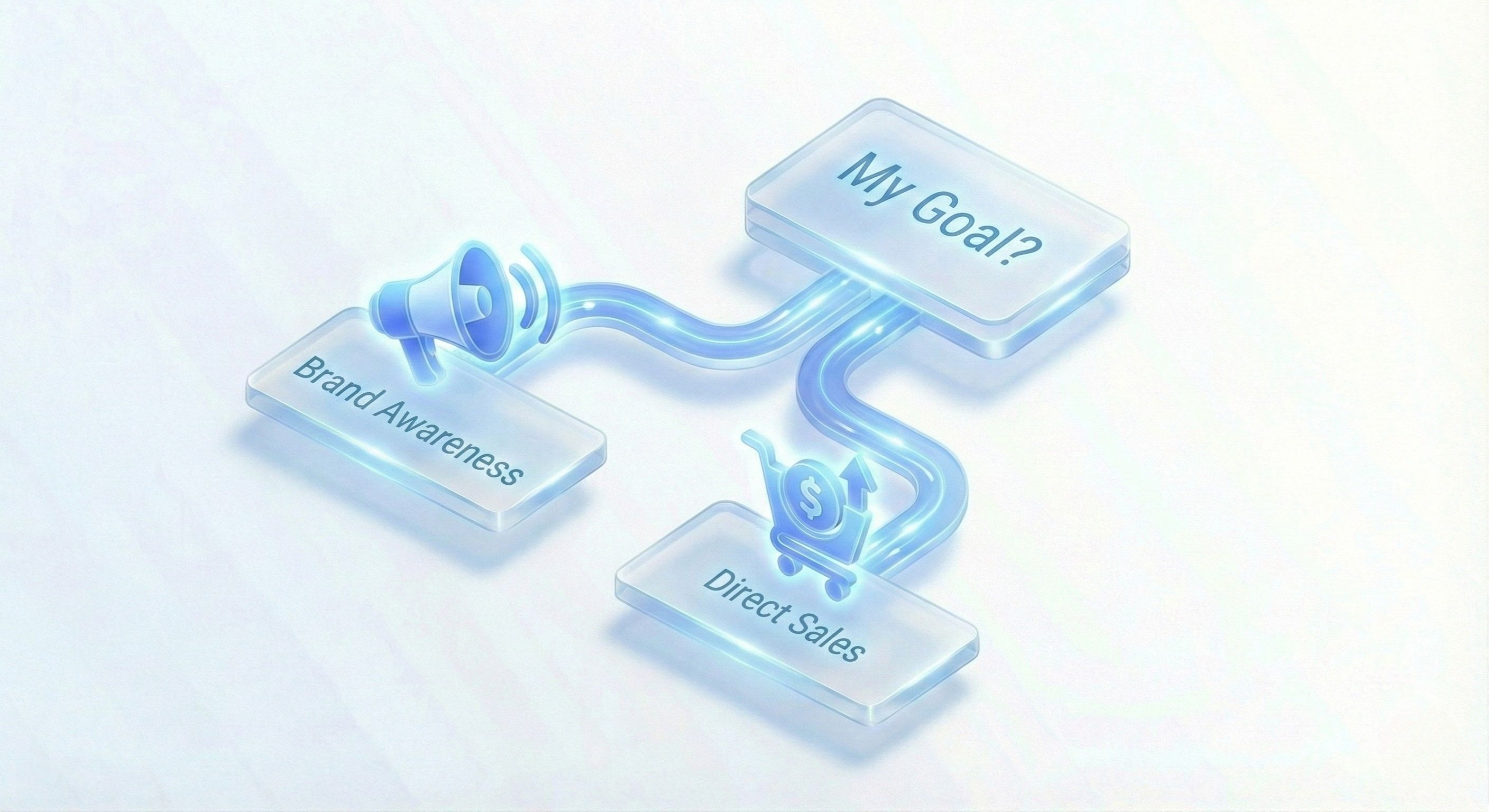
The main takeaway here is to be crystal clear about your goal. If you want to sell a product, the Conversions objective is the only real option. It explicitly tells TikTok's algorithm to hunt down users who are most likely to pull out their credit cards and buy.
To make this even clearer, here's a quick reference table breaking down the different objectives and when you should use them.
TikTok Campaign Objectives Explained
Objective Category | Specific Objective | Best Used For |
|---|---|---|
Awareness | Reach | Showing your ad to the maximum number of people possible within your budget. Great for brand launches or getting a message out broadly. |
Consideration | Traffic | Driving people to a specific URL, like a blog post or landing page, without necessarily expecting a purchase. |
Video Views | Optimizing for people who are most likely to watch your video ad for a longer duration. | |
Community Interaction | Encouraging follows or profile visits to grow your TikTok presence. | |
Conversion | App Promotion | Getting users to download and install your mobile app. |
Lead Generation | Collecting contact information (leads) directly on TikTok using an instant form. | |
Website Conversions | Driving specific actions on your website, like purchases, sign-ups, or add-to-carts. This is the go-to for e-commerce. |
Choosing the right objective from this list aligns your ad spend directly with your business outcome, ensuring the algorithm works for you, not against you.
Configuring Ad Groups and Placements
Once you've locked in your objective, you'll move down to the Ad Group level. This is where you'll define who you're targeting, where your ads will show up, and how much you're going to spend.
Here's what a solid ad group setup looks like:
Ad Placements: You can either let TikTok decide where to show your ads with "Automatic Placements" or pick them yourself. Honestly, for most people starting out, just stick with Automatic. It works well.
Targeting Details: This is where that audience persona you built earlier comes into play. You’ll plug in all the details about their interests, behaviors, and demographics right here.
Budget & Schedule: You need to set a minimum daily budget of $20 for each ad group. You can let it run continuously or set a specific end date for your campaign.
A classic rookie mistake is cramming a bunch of different audiences into a single ad group. For clean, reliable testing, always create separate ad groups for distinct audiences. For instance, put your "Lookalike Audience" in one ad group and your "Interest-Based Audience" in another. This way, you'll know exactly which one is driving results.
Mastering Your TikTok Pixel Setup
The TikTok Pixel is a little piece of code you install on your website, and it's non-negotiable for any campaign focused on conversions. Running ads without it is like flying blind.
This pixel tracks what users do on your site—like adding an item to their cart or making a purchase—and sends that precious data back to Ads Manager.
This feedback loop is what allows TikTok's algorithm to get smarter over time. It learns what your converters look like and then gets better at finding more people just like them. It’s the engine that powers all your optimization and performance tracking.
With the pixel in place, you're ready to upload your video creative. This is where tools that can help you churn out ad variations really shine. For a deeper look at how to do this efficiently, check out how an AI video generator for ads can help you produce and test a ton of video concepts in a fraction of the time, helping you find a winner much, much faster.
Getting Your Ads in Front of the Right People
You can have the most incredible, thumb-stopping ad in the world, but if it never reaches the right eyeballs, it's going to fall completely flat. This is where your targeting and bidding strategy comes in, turning all that creative effort into actual conversions.
Think of targeting as the GPS for your campaign. Without it, you're just launching expensive content into the void and hoping for the best.
On TikTok, effective targeting goes way deeper than just picking an age range and a country. The real magic is in using the platform’s insane amount of data on what people are actually interested in and how they behave. This is how you find users who aren't just in your demographic, but are actively binge-watching content in your niche.
Pinpointing Your Ideal Viewers
The starting point for any killer TikTok ad campaign is knowing exactly who you're trying to talk to. The platform gives you a few really solid tools to zero in on potential customers.
Let's walk through the main options:
Interest Targeting: This is pretty straightforward. It lets you reach people based on the content categories they consistently watch and engage with. If you're a brand selling sustainable activewear, you can target users interested in things like "Fitness & Outdoors" and "Apparel & Accessories."
Behavior Targeting: Now this is where it gets fun. You can target users based on their recent actions, like watching videos to the end, liking, commenting, or sharing content in a specific category. A meal kit service, for example, could target people who've recently been interacting with cooking tutorials.
Creator Targeting: This is a seriously powerful feature. It lets you get in front of users who follow specific creators. If you know for a fact that your ideal customers all follow a certain group of fitness influencers, you can target those followers directly.
A rookie mistake I see all the time is layering way too many interests and behaviors into a single ad group. Start broader. Give the algorithm enough data to learn what works, then you can start narrowing down your focus as you see which segments are actually converting.
Advanced Targeting for Better Returns
Once you've got the basics down, it's time to pull out the big guns: Custom and Lookalike Audiences. These are your secret weapons for driving high-quality conversions and really scaling up your campaigns.
Custom Audiences are built from your own data, which is perfect for re-engaging people who already have a relationship with your brand. You can create these from a few sources:
Customer Files: Just upload an email or phone number list to hit your existing customers with new offers or products.
Website Traffic: By using your TikTok Pixel, you can retarget people who visited your site, looked at a specific product, or even abandoned their cart.
App Activity: If you have an app, you can reach users who've taken specific actions within it.
Lookalike Audiences are where the algorithm really shines. TikTok takes your Custom Audience (the "source"), analyzes all the data points, and then finds a whole new group of users on the platform who share similar traits and behaviors. Seriously, creating a Lookalike Audience from your list of past purchasers is one of the most effective ways to find brand-new, high-intent customers.
For anyone looking to really push performance, diving into the world of AI for ads can give you a massive advantage in fine-tuning these targeting strategies.
Smart Bidding and Budgeting
Alright, the last piece of the puzzle is telling TikTok how to spend your money. Your bidding strategy is what determines how the platform bids for you in the real-time ad auction.
Lowest Cost: This strategy tells the algorithm to get you the most results possible for your budget. It doesn't try to control the cost of any single conversion; it just goes for maximum volume. This is great for letting the algorithm explore and find the cheapest possible conversions.
Cost Cap: This option gives you way more control. You set an average cost per result that you want to stick around. It's great for keeping your CPA stable, but it can limit your ad's delivery if you set your cap too low and price yourself out of the auction.
When you're launching a new campaign, I almost always recommend starting with Lowest Cost. It gives the algorithm the freedom it needs to explore and gather data. Once you have a clear picture of your baseline CPA, you can switch over to a Cost Cap strategy to scale more efficiently and predictably.
How to Optimize and Scale Your Ad Campaigns
Getting your first campaign live is a huge step, but honestly, that's just the starting line. The real money—and the sustainable growth—comes from what you do next: diligent optimization and smart scaling. This is where you turn that initial trickle of data into a powerful, repeatable engine for success.
Think of those first few days of data as raw, unfiltered feedback from your audience. Your only job is to listen to what the numbers are telling you and make decisions based on that, not on gut feelings or which ad you think is the best.

Analyzing Your Core Performance Metrics
To make smart moves, you have to ignore the vanity metrics. Views and likes are nice for the ego, but they don't pay the bills. For any performance-focused team, there are only two metrics that truly matter.
Cost Per Acquisition (CPA): This is simply the average price you’re paying for one conversion, whether that’s a sale, a lead, or an app install. If your CPA is higher than your product's profit margin, you're lighting money on fire.
Return on Ad Spend (ROAS): This shows you the total revenue you're bringing in for every single dollar you put into ads. A 3x ROAS means you made $3 in revenue for every $1 you spent.
These two KPIs are your north stars. Every single thing you do from here on out should be aimed at either crushing your CPA or boosting your ROAS.
Running Effective A/B Tests
Once you have a baseline CPA and ROAS, it's time to see if you can beat them. The golden rule of A/B testing is to change one variable at a time. If you swap out the hook, tweak the audience, and change the headline all at once, you’ll have zero clue which change actually moved the needle.
Here’s a simple testing framework we follow:
Start with the Creative: Your video has the biggest impact on performance, period. Test different hooks in the first three seconds. For instance, run a question-based hook against a bold, declarative statement and see which one grabs more attention.
Move to the Audience: Got a winning creative? Awesome. Now, duplicate that ad group and test it against a completely new audience. Pit a Lookalike Audience built from your best customers against a broad, interest-based audience.
Finally, Refine the Offer: Once you have a winning creative/audience combo, test small tweaks to your offer or call-to-action. See if a direct "Shop Now for 20% Off" pulls better than a simple "Shop Now."
When a specific creative and audience combination starts delivering a strong, stable ROAS, you've officially found a "winner." But don't just set it and forget it. That winner is now your new control, the champion you'll test all future ideas against. Constant testing is the only path to consistent improvement.
Knowing When and How to Scale
So you've got a winning ad set that's been hitting your target CPA for a few days straight. It's go-time. But scaling isn't as simple as dumping more money into the budget. Do that, and you’ll shock the algorithm, likely tanking your performance.
Scaling the right way requires a more tactical approach.
Make Gradual Budget Increases: Don't get greedy. Increase your ad set budget by no more than 20% every 24-48 hours. This slow-and-steady method gives the TikTok algorithm time to find more customers for you without resetting its learning phase.
Expand Your Audience: Duplicate your winning ad set and start targeting a broader—but still relevant—audience. If a Lookalike (1%) audience is crushing it, test a Lookalike (3%) or Lookalike (5%) to see if you can maintain efficiency at a larger scale.
Keep Your Creative Fresh: Ad fatigue is very real on TikTok. Even the best ad will eventually burn out as your audience sees it over and over. You should always have new creative variations in the chamber, ready to swap in the moment performance starts to dip.
Common Questions About Making TikTok Ads
Even with a solid game plan, jumping into TikTok ads for the first time always brings up a few questions. Let's run through some of the most common ones we hear from new advertisers so you can get started with confidence and sidestep any expensive mistakes.
How Much Do TikTok Ads Really Cost?
There’s no simple price tag on a TikTok ad. It's all based on a live auction, so what you pay depends on your industry, who you're trying to reach, and frankly, how good your ad is.
TikTok does have a minimum daily budget requirement of $50 at the campaign level, but your actual spend will be all over the map. If you're going after a super competitive audience—say, fashion lovers in the US—your Cost Per Click (CPC) will definitely be higher than it would be for a smaller, less crowded niche.
The smartest way to start is with a dedicated test budget. Set aside around $1,000 to $3,000 for your first month. This gives you enough runway to see what your actual costs look like before you start pouring serious money into your campaigns.
What Types of Videos Work Best for Ads?
Here's the golden rule: make TikToks, not ads. The goal is to create something that feels like it belongs on the For You Page, not a slick TV commercial shoehorned into the feed. Authenticity is everything.
Time and time again, we see these formats crush it:
User-Generated Content (UGC): Nothing builds trust faster than seeing real customers use and love your product. A genuine creator testimonial is often the single most powerful asset you can run.
Quick "Hacks" or Tutorials: Show, don't just tell. A fast-paced video demonstrating your product solving a real problem is incredibly effective.
Trending Sounds and Formats: Jumping on a popular sound or trend makes your ad feel instantly native. It lowers the viewer's guard because it doesn't immediately scream "AD!"
Overly polished, corporate-style videos are the fastest way to get scrolled past. You want to be genuine and entertaining while still getting your message across.
How Long Should My TikTok Ad Be?
You're aiming for the 15- to 30-second sweet spot. The main goal here is to deliver your entire pitch before the user’s thumb reflexively swipes up.
But honestly, the most crucial part of your ad is what happens in the first one to three seconds. If you don't nail the hook and grab their attention right away, the total length of the video doesn't matter. Always focus on getting your value prop and call-to-action out there clearly and quickly.
If you want to keep up with the latest trends and strategies, a lot of agencies share their findings on their blogs. Visit the Branditok Blog for more insights and updates on TikTok ads.
Ready to stop the manual grind and scale your winning ads? Sovran automates the entire creative process, letting you produce and test hundreds of high-performing video ad variations up to 10x faster. Start your 7-day free trial and find your next winner today.

Manson Chen
Founder, Sovran
Related Articles
TikTok Ad Specs 2026: Video Sizes, Safe Zones, and Creative Checklist
Use this TikTok ad specs guide to export compliant vertical videos, avoid safe-zone mistakes, choose the right format, and turn approved footage into more ad variations.

Master AI Video Ad Production Workflow
Imagine whipping up a video ad in minutes, without sacrificing quality. That’s the promise of AI video ads—they draft scripts, select visuals, handle...
10 High-Impact Marketing Video Examples for Your 2026 Strategy
In performance marketing, scrolling is the enemy. On platforms like Meta and TikTok, you have less than three seconds to stop a potential customer from swiping...