Asset Management Best Practices for Streamlined Video Ad Production
Discover asset management best practices to streamline video ad production, speed testing, and uncover winning creatives faster.
Jump to a section
- 1. Centralized Digital Asset Repository with Intelligent Tagging
- 2. Modular Creative Framework System
- 3. Performance-Tracked Asset Versioning and Genealogy
- 4. Batch Processing and Automated Asset Modification at Scale
- 5. Dynamic Asset Generation with AI Visual Creation Tools
- 6. Platform-Optimized Asset Variants and Naming Conventions
- 7. Collaborative Asset Feedback and Approval Workflows
- 8. Continuous Testing and Learning Cycles with Asset Variants
- 9. Rights Management and Licensing Tracking for Assets
- 10. Analytics Integration and ROI Attribution for Creative Assets
- 10-Point Asset Management Best Practices Comparison
- From Creative Chaos to a High-Velocity Performance Engine
In the fast-paced world of performance marketing, creative fatigue is the silent killer of ROAS. Teams are caught in a manual, repetitive cycle: endless hours spent in editing tools, sifting through disorganized asset folders, and a constant struggle to produce enough content to keep campaigns fresh. This chaos isn't just inefficient; it's a direct drain on profitability, forcing you to spend more for diminishing returns.
The solution lies not in working harder, but in working smarter through a systematic approach to creative operations. A robust strategy for managing your creative assets is no longer a luxury but a core driver of growth. Strong asset management best practices allow you to find what you need instantly, understand what’s working, and scale winning concepts without starting from scratch every single time. This clarity is the key to unlocking better campaign performance.
This article reveals 10 critical asset management best practices specifically designed for video ad workflows on platforms like Meta and TikTok. We will move beyond generic advice and provide actionable, in-depth strategies that address the real-world challenges faced by UA managers, creative strategists, and performance media buyers. You'll learn how to implement:
AI-powered tagging and modular frameworks.
Platform-specific naming conventions.
Performance-tracked versioning.
By following these steps, you will transform your workflow, enabling you to scale creative volume, accelerate testing velocity, and find profitable winning ads significantly faster.
1. Centralized Digital Asset Repository with Intelligent Tagging
Fragmented file storage across personal drives, cloud services, and messaging apps creates chaos for creative teams. A centralized digital asset management (DAM) system establishes a single source of truth for all video ads, raw footage, images, and audio files. This practice isn't just about storage; it's about creating an intelligent, searchable library that accelerates creative production and iteration.
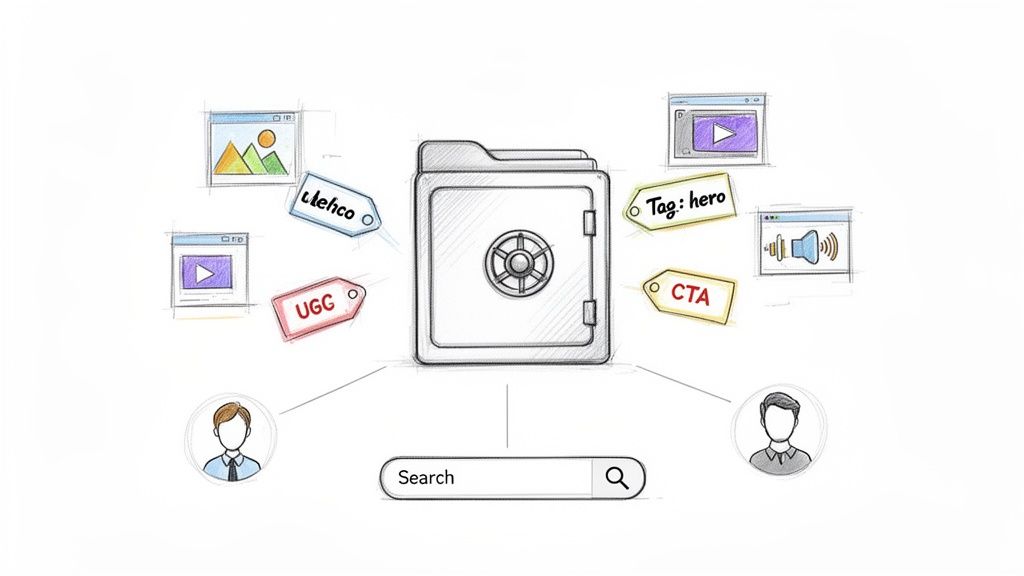
At its core, this approach connects every asset to its context. For example, a platform like Sovran’s Context Vault can store not only video clips but also the scripts, customer testimonials, and brand guidelines that informed their creation. Similarly, major brands like Unilever use a centralized DAM to manage distinct assets for multiple product lines, ensuring brand consistency while enabling rapid campaign deployment. A key element of this is properly managing brand secure media assets within a single, protected environment to prevent misuse or leaks.
How to Implement Intelligent Tagging
To move from a simple file repository to an intelligent asset library, focus on metadata. This is one of the most crucial asset management best practices. By enriching files with descriptive tags, you make them discoverable and useful.
AI-Powered Tagging: Modern systems can automatically analyze video and image content to apply relevant tags. An AI might tag a video with "UGC-style," "unboxing," "female-25-35," and "outdoor-setting" based on its visual and audio elements.
Performance Metadata: Go beyond descriptive tags. Integrate performance data directly into your asset's metadata. Tag a winning creative with its ROAS, platform (e.g., "TikTok-Top-Performer"), and conversion rate. This turns your DAM into a strategic tool for data-driven creative decisions.
Manual & Structured Tagging: Establish a clear taxonomy for manual tags covering campaign names, product SKUs, creative concepts, and usage rights. This structured data complements AI-generated tags for precise searching.
Key Takeaway: An effective repository isn't a digital graveyard for old files. It's a living library where assets are enriched with performance data and context, making them easy to find, reuse, and build upon. Proper brand asset management is the foundation for this strategy.
2. Modular Creative Framework System
Static, one-off video ads are a bottleneck to scaling performance campaigns. A modular creative framework breaks down video ads into reusable component blocks like the Hook (the first 3 seconds), the Body (the core message or demo), and the CTA (the final call to action). This approach lets teams assemble hundreds of ad variations from a smaller, well-managed set of core assets, dramatically increasing creative output and testing velocity.
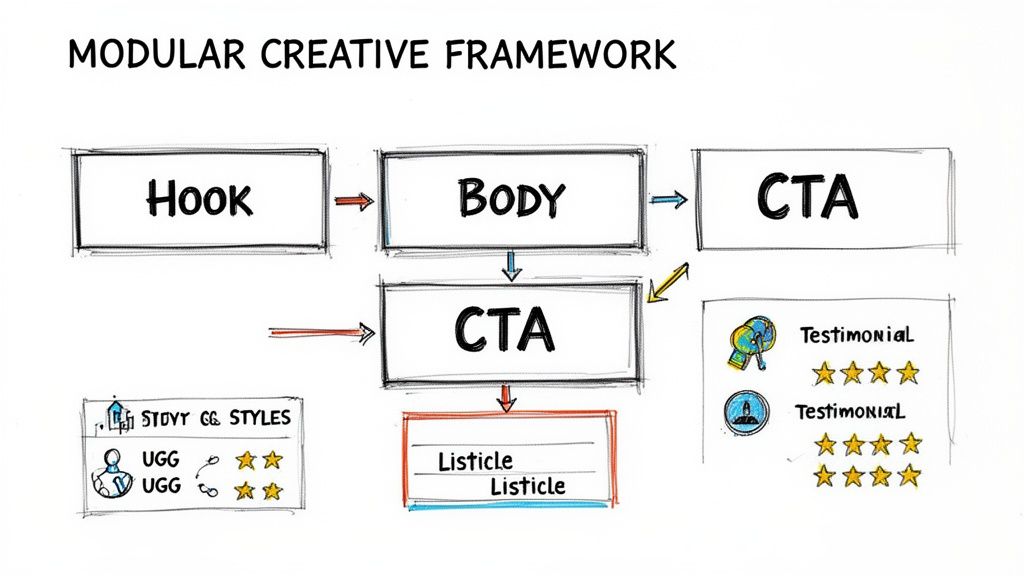
The system works by treating each video part as a distinct asset. For instance, a performance marketer might use a proven UGC testimonial mashup formula as the "Body," then test it against five different "Hooks" to find the winning combination. This is a fundamental shift in creative asset management best practices, moving from producing finished videos to managing a library of high-performing components. App install campaigns frequently use standardized problem-solution structures, swapping out different "problem" hooks to see which resonates most with a target audience.
How to Implement a Modular System
Building a modular framework requires a strategic approach to asset creation and organization. The goal is to create an inventory of interchangeable parts that can be combined with confidence. For more details on this, you can read about how to scale paid growth with modular video ads.
Component Library with Performance Ratings: Create a library of your individual components (Hooks, Bodies, CTAs) within your DAM. Tag each one with its historical performance data, like click-through rate or cost per install, to create an internal rating system.
Independent Component Testing: Before combining components into full ads, test them independently. Isolate your top 3-5 performing hooks and test them with neutral body content to validate their stopping power on their own.
Document Winning Combinations: Keep a record of which component combinations perform best for different audience segments or platforms. For example, a "fast-paced unboxing" hook might work for TikTok, while a "founder story" hook is better for Facebook.
Systematic Component Refresh: To combat creative fatigue, regularly refresh your lowest-performing components while keeping the overall structure intact. This allows you to maintain momentum without starting from scratch.
Key Takeaway: Stop thinking in terms of final ads and start thinking in terms of high-performing components. A modular framework turns your asset library into a creative assembly line, enabling rapid, data-informed iteration at scale.
3. Performance-Tracked Asset Versioning and Genealogy
Without a clear link between creative assets and their performance, marketing teams are flying blind. Performance-tracked asset versioning creates a direct line of sight from a specific video ad variation to its results. This practice moves beyond simple file storage, creating a historical record of what works, what doesn't, and why, which is fundamental to any advanced creative strategy.
This approach builds a "genealogy" for each creative concept. You can trace an asset's lineage from its original "parent" version through various iterations, all while tracking how each change impacted key metrics. For example, a mobile gaming studio can see how changing the first three seconds of a video hook affects install rates across different ad platforms. Similarly, D2C brands can use this method to identify top-performing seasonal creative, understanding precisely which assets to relaunch during the next holiday season.
How to Implement Performance Tracking
Integrating performance data directly with your assets turns your library into a strategic archive. This is one of the most impactful asset management best practices for growth-focused teams.
Integrate Performance Metrics: Connect your asset management system with advertising platforms like Meta Ads Manager. Tag assets not just with descriptive labels but with their actual performance data upon creation or after a campaign flight. Include metrics like CTR, CPA, ROAS, and campaign dates.
Establish Performance Tiers: Create a simple, clear system to classify assets based on KPI achievement. A "Gold/Silver/Bronze" tiering system allows anyone on the team to quickly identify proven winners. "Gold" assets are top performers that can be iterated upon, while "Bronze" assets are retired to prevent budget waste.
Analyze Genealogy for Patterns: When launching a new campaign, review the performance history of similar past assets. By analyzing the "genealogy" of successful creatives, you can identify repeatable patterns, such as effective call-to-action phrasing or visual styles that resonate with specific audience segments.
Key Takeaway: Stop treating creative assets as disposable files. By building a performance-tracked genealogy, you transform your asset library into an intelligence engine that de-risks future creative development and compounds your marketing insights over time.
4. Batch Processing and Automated Asset Modification at Scale
Editing hundreds of video assets one by one is a significant bottleneck for performance marketing teams. Batch processing and automated modifications eliminate this repetitive manual work by applying consistent changes across large volumes of creative files simultaneously. This practice is about achieving scale and brand consistency without sacrificing speed or overwhelming creative resources.
This approach is fundamental to high-volume testing. Instead of manually creating nine 16:9 videos for different headlines, an automation tool can generate all variations in seconds. For instance, Sovran's Bulk Video Renders can produce hundreds of unique video ad variants with different text overlays, calls-to-action, and even color grades from a single template. Similarly, Descript can automatically generate and style subtitles for an entire batch of testimonial clips, ensuring a uniform look and feel. To handle the sheer volume of creative assets needed, consider adopting strategies to efficiently automate AI video creation.
How to Implement Automated Modifications
Integrating automation into your workflow requires setting up templates and rules. This is one of the most impactful asset management best practices for teams needing to produce creative at a high velocity.
Standardize Your Inputs: Create standardized templates for your most common modifications. This could be a subtitle style guide for color and font, a set of approved aspect ratio crops (9:16, 1:1, 4:5), or a library of text overlay animations.
Segment for High-Volume Tasks: Use batch processing for tasks that are high-volume but low in creative complexity. This includes resizing videos for different platforms, applying consistent color grading, or adding localized end cards to a set of campaign assets.
Sample Testing: Before applying a batch operation to hundreds or thousands of assets, always run a test on a small, representative sample (5-10 files). This helps you catch any formatting errors, alignment issues, or unexpected outcomes before committing to a large-scale modification.
Preserve Original Files: Always configure your automation tools to save modified files as new versions rather than overwriting the originals. This non-destructive workflow ensures you can always revert to the source asset for future projects or re-batching with different parameters.
Key Takeaway: Automation isn't about replacing creative strategy; it's about executing it at scale. By batch-processing repetitive edits, your team can focus its energy on high-impact creative ideation and performance analysis instead of manual production tasks.
5. Dynamic Asset Generation with AI Visual Creation Tools
Relying solely on stock footage or expensive shoots can bottleneck creative production. Integrating generative AI tools directly into the workflow allows teams to produce fresh visual content like b-roll, hooks, and backgrounds on demand. This practice eliminates subscription costs and production delays, enabling rapid iteration and testing of new visual concepts without a significant budget.
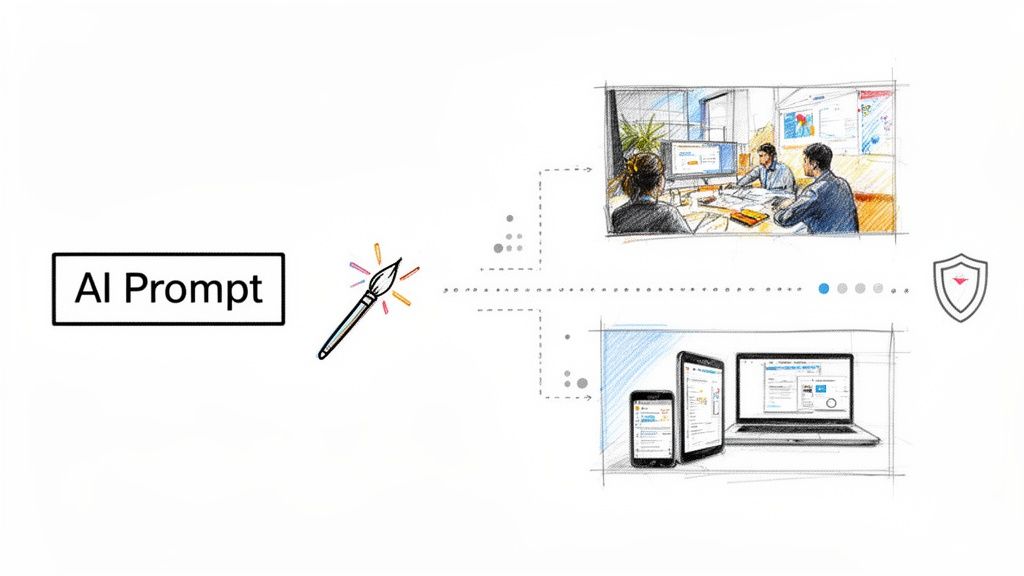
This approach brings asset creation closer to asset management. For example, platforms like Runway ML can generate product mockups and visual effects, while Synthesia produces localized video variations with AI avatars, slashing production time. Similarly, future integrations of tools like OpenAI’s Sora 2 into platforms will allow for the direct generation of high-quality b-roll from a simple text prompt. This is a critical component of modern asset management best practices, as it merges the creation and organization of assets into a single fluid motion.
How to Implement AI Visual Generation
To effectively add AI-generated visuals to your asset library, you need a structured approach that balances speed with quality control. This makes AI a reliable source for creative components rather than a random content generator.
Create Prompt Libraries: Develop and store detailed, effective prompts for consistent AI asset generation. A well-organized prompt library ensures that anyone on the team can create visuals that align with the brand’s style, whether it’s for a "dreamy, ethereal background" or "fast-paced, dynamic transitions."
Focus on Commodity Visuals: Use AI generation for high-volume, low-risk content. This includes abstract backgrounds, simple b-roll, and video transitions. Reserve human-led production for brand-critical content that requires nuanced storytelling or features your actual product or customers.
Blend & Review: Combine AI-generated elements with human-shot footage for a more authentic final product. Always implement a human review stage to ensure AI outputs are on-brand, high-quality, and free of any strange artifacts before they are used in live campaigns.
Key Takeaway: AI visual generation is not about replacing human creativity but augmenting it. By using these tools to create supplementary assets quickly, creative teams can focus their energy on high-impact strategy and storytelling, accelerating the entire production cycle.
6. Platform-Optimized Asset Variants and Naming Conventions
A one-size-fits-all approach to video ads is a recipe for wasted ad spend. What captivates an audience on TikTok (9:16, fast cuts) will fail on Meta's feed (4:5, slower pacing). Creating platform-specific variants of each creative is essential, but it can quickly spiral into organizational chaos. This is where systematic naming conventions become a critical asset management best practice, turning a folder full of confusing files into a structured, searchable system.
This practice links a creative concept to its platform-specific execution. For instance, tools like Sovran can use these structured names to automatically push the correct ad variant to Meta with pre-filled campaign details, eliminating manual errors. Similarly, social media schedulers like Later and Buffer depend on clear versioning to auto-adjust and post the correct format for Instagram, TikTok, or YouTube Shorts. The goal is to make asset organization and deployment a seamless, automated part of your workflow.
How to Implement Naming Conventions and Variants
Developing a robust naming framework prevents confusion and accelerates campaign launches. It makes it easy for anyone on the team to identify a file's purpose, platform, and version at a glance.
Establish a Clear Naming Formula: Create a standardized, documented naming convention. A highly effective structure for performance marketing is:
[Campaign]_[Concept/Hook]_[Format]_[Platform]_[Version]. For example,Q4-Sale_UGC-Testimonial_9x16_TikTok_v02.Create Platform Templates: Instead of starting from scratch each time, build project templates in your editing software for each key platform (e.g., Meta Feed 4:5, TikTok 9:16, YouTube Shorts 9:16). These templates should have the correct resolution, aspect ratio, and safe zones preset.
Automate Format Conversion: Integrate format conversion into your asset finalization process. Many modern DAMs or video tools can automatically generate different aspect ratio exports from a single master file, applying the correct naming convention to each output.
Key Takeaway: A disciplined approach to naming conventions and asset variants isn't just about tidiness; it’s a strategic advantage. It reduces manual work, prevents costly errors in ad setup, and makes performance analysis across different platforms and creative iterations significantly more accurate.
7. Collaborative Asset Feedback and Approval Workflows
Bottlenecks in the review process can kill creative momentum and delay campaign launches. Implementing structured feedback and approval workflows directly within your asset management system eliminates chaotic email threads and scattered feedback. This approach brings creative, brand, and performance marketing stakeholders into a single, accountable environment to review, comment on, and approve assets.
This practice creates a transparent and auditable trail of all changes and decisions. Tools like Frame.io excel at this for video, allowing time-stamped comments directly on the footage. Similarly, project management platforms like Monday.com integrate approval gates into creative timelines, ensuring no asset goes live without proper sign-off. This is vital for maintaining brand safety and legal compliance, especially in regulated industries. The goal is to make feedback actionable and approvals seamless, transforming a historically slow process into a source of agility.
How to Implement Approval Workflows
Building an effective approval process requires clear rules and roles. This is one of the most important asset management best practices for teams seeking to improve quality and speed simultaneously.
Define Clear Approval Gates: Before a workflow is built, define who needs to approve what and at which stage. For example, a legal review may be required for all ad copy, while a brand manager must approve the final visual cut.
Establish Turnaround SLAs: Set explicit service-level agreements (SLAs) for feedback, such as a 24-hour maximum turnaround time. This prevents approvals from becoming a black hole and keeps projects moving.
Use Role-Based Permissions: Assign specific roles (e.g., Commenter, Approver) to team members. This ensures that only designated stakeholders can give final sign-off, while others can provide feedback without holding up the process.
Automate Low-Risk Approvals: Create a fast-track approval path for minor asset variations, such as changing a call-to-action button color or headline text. This frees up senior reviewers to focus on high-impact creative.
Key Takeaway: A structured approval workflow is not about adding bureaucracy; it's about creating clarity and velocity. By centralizing feedback and defining clear responsibilities, teams can iterate faster, reduce errors, and ensure every asset meets quality and compliance standards.
8. Continuous Testing and Learning Cycles with Asset Variants
Effective asset management isn't just about organizing files; it's about improving their performance. Top-tier creative teams build systematic processes for rapidly testing asset variants, capturing performance data, analyzing results, and reinvesting those learnings into the next generation of creative. This creates a virtuous cycle of continuous improvement that compounds over time, turning creative development from a guessing game into a data-informed science.
This approach moves beyond A/B testing a single ad and focuses on generating and evaluating dozens or even hundreds of creative variations. For example, mobile gaming studios often run over 100 variant tests weekly to find winning combinations of gameplay footage, ad copy, and calls to action. Similarly, D2C brands use platforms like Northbeam to get real-time feedback on which creative elements are driving sales, allowing them to double down on what works. An effective ad creative experimentation tool is central to this, helping teams find profitable ad winners up to 10 times faster.
How to Implement a Testing and Learning Cycle
To build a sustainable testing engine, you need structure and discipline. This is one of the most impactful asset management best practices for performance-focused teams.
Define Clear Test Hypotheses: Before creating any variants, articulate what you are trying to learn. A good hypothesis might be: "UGC-style testimonials in the first three seconds will lower cost-per-install compared to animated text intros."
Establish a Documentation System: Document every test, its hypothesis, the assets used, the results, and key takeaways in an accessible format like a shared spreadsheet or a dedicated platform. This creates a searchable "hypothesis library" of past learnings to inform future strategies.
Run Statistically Sound Tests: Don't declare a winner prematurely. Ensure your tests run long enough with a sufficient sample size to account for daily fluctuations and deliver statistically significant results.
Analyze and Iterate: The cycle only works if you analyze the outcomes and apply them. If a certain hook or visual style consistently wins, make that a core part of your next creative brief. Document the patterns that worked and celebrate the wins with your team.
Key Takeaway: Treat every asset as a learning opportunity. By systematically testing variants and meticulously documenting the results, your asset library evolves from a simple storage folder into a strategic playbook for creating high-performing ads.
9. Rights Management and Licensing Tracking for Assets
Ignoring intellectual property rights is a fast track to legal trouble and campaign derailment. A robust system for tracking rights and licenses for every asset is not optional; it’s a fundamental part of responsible asset management. This involves maintaining detailed records for music, stock footage, user-generated content (UGC), and influencer-provided assets to ensure full legal compliance and prevent costly infringement penalties.
This practice is about mitigating risk and maintaining creative velocity. For instance, a brand might secure rights to a UGC clip for a six-month TikTok campaign. Without proper tracking, that same clip could be mistakenly used a year later, triggering a breach of contract. Platforms like Plixi help agencies manage UGC rights at scale, while integrations with music services such as Epidemic Sound or Lickd allow teams to license tracks and tie that data directly to the video files. This proactive management of asset licenses is a cornerstone of modern creative operations.
How to Implement Rights and Licensing Tracking
Integrating rights management into your workflow requires a systematic approach. By embedding license information directly into your asset data, you make compliance an automatic, transparent part of the creative process. This is one of the most critical asset management best practices for teams working with diverse media sources.
Embed Rights in Metadata: The most effective method is to store licensing details in the asset's metadata. Include fields for licensor, start/end dates, permitted channels (e.g., "Meta Ads only"), and geographic restrictions. This makes rights information inseparable from the asset itself.
Establish a License Calendar: Create a shared calendar that tracks all license expiration dates. Set up automated alerts for your team 30, 60, and 90 days before a license expires, providing enough time to either renew the rights or pull the asset from active campaigns.
Standardize Creator Agreements: Don't rely on informal email agreements. Develop standardized contracts for all UGC and influencer content that clearly outline usage rights, duration, and compensation. Store these signed agreements alongside the corresponding assets in your DAM.
Pre-Publication Checklist: Implement a mandatory pre-flight checklist before any ad goes live. This checklist should include a step to verify the rights for every single element in the creative-video, images, music, and voice-over-to catch potential issues before they become public problems.
Key Takeaway: Effective rights management isn't a bureaucratic hurdle; it's a safety net that protects your brand and budget. By systematically tracking every license and restriction within your asset library, you empower your team to create and deploy content confidently and legally.
10. Analytics Integration and ROI Attribution for Creative Assets
Simply knowing a video ad’s click-through rate is no longer enough. True creative intelligence comes from connecting asset performance directly to downstream business outcomes like revenue, customer lifetime value (LTV), and return on ad spend (ROAS). This practice moves creative evaluation from vanity metrics to concrete business impact, establishing clear accountability for creative investment.
This approach creates a feedback loop where financial results directly inform creative strategy. Mobile app studios, for instance, use data warehouses to analyze which creative concepts drive the highest-quality user cohorts, not just the most installs. Similarly, platforms like Singular provide marketing intelligence that ties specific ad creatives to their ROAS, allowing teams to double down on what works and cut what doesn’t. Implementing analytics integration is one of the most impactful asset management best practices for performance-focused teams.
How to Implement Creative ROI Attribution
Connecting your creative assets to bottom-line results requires a deliberate data strategy. The goal is to create a clear line of sight from a specific video or image to the revenue it generates.
Integrate Attribution Platforms: Use mobile measurement partners (MMPs) like AppsFlyer or Adjust. These tools connect ad interactions with post-install events, allowing you to attribute revenue, in-app purchases, and LTV back to the specific creative asset that acquired the user.
Track Downstream Metrics: Move beyond top-of-funnel data (CTR, CPC). Focus your analysis on downstream metrics like Day 7 ROAS, purchase conversion rates, and cohort LTV. This helps distinguish between creatives that drive cheap clicks and those that attract valuable customers.
Build Creative-Centric Dashboards: Create dashboards specifically for creative teams that translate complex attribution data into clear insights. Visualize which hooks, concepts, or visual styles correlate with the highest LTV, and share this information transparently to guide future briefs.
Key Takeaway: Attribution data shouldn't live in a silo, accessible only to UA managers. By integrating ROI and LTV metrics directly with your asset library, you empower creative teams to make data-informed decisions that directly contribute to profitability.
10-Point Asset Management Best Practices Comparison
Item | 🔄 Implementation Complexity | ⚡ Resource Requirements | 📊 Expected Outcomes | 💡 Ideal Use Cases | ⭐ Key Advantages |
|---|---|---|---|---|---|
Centralized Digital Asset Repository with Intelligent Tagging | Medium — establishes DAM + AI tagging | DAM platform, migration effort, AI tagging, governance | Faster asset discovery, reduced duplication, consistent branding | Organizations with many assets or multiple brands | Single source of truth; speeds iteration and reuse |
Modular Creative Framework System | Medium — creative decomposition & templates | Creative planning, template library, tracking tools | Rapid variant assembly, scalable A/B testing, higher output | Teams needing high-volume ad variations | Reuse components to multiply creative velocity |
Performance-Tracked Asset Versioning and Genealogy | High — data pipelines and version tracking | Analytics integration, tagging discipline, storage | Data-driven selection, faster learning, reduced wasted spend | Performance-heavy orgs analyzing cross-platform wins | Historical lineage reveals repeatable winning patterns |
Batch Processing and Automated Asset Modification at Scale | Medium — automation setup and parameterization | Batch-render tools, compute, QA checks | Mass edits in seconds, consistent formats, improved accessibility | High-volume format conversions and localization | Dramatically reduces manual editing time at scale |
Dynamic Asset Generation with AI Visual Creation Tools | High — integrate generative models and prompts | AI subscriptions, compute, prompt libraries, human review | Rapid generation of b-roll/backgrounds, lower shoot costs | Small teams or rapid prototyping of visual concepts | Creates unlimited variations and quicker visual iteration |
Platform-Optimized Asset Variants and Naming Conventions | Medium — standardization + automation config | Format-conversion tools, naming schema, automation | Faster multi-platform launches, fewer format errors | Cross-platform campaigns (Meta, TikTok, etc.) | Ensures platform compliance and simplifies scaling |
Collaborative Asset Feedback and Approval Workflows | Medium — workflow design and role mapping | Review platform, permissions, change-tracking setup | Clear accountability, fewer compliance issues, audit trails | Agencies and brand-sensitive workflows | Reduces rework and enforces brand compliance |
Continuous Testing and Learning Cycles with Asset Variants | High — experiment design and analytics rigor | Testing budget, analytics stack, disciplined processes | Faster identification of winners, compounding ROAS gains | Growth teams running frequent multivariate tests | Systematic learning loop that improves creative over time |
Rights Management and Licensing Tracking for Assets | High — legal metadata & ongoing maintenance | Rights database, contract templates, renewal alerts | Reduced legal risk, confident asset reuse, auditability | Teams using UGC, music, or licensed stock assets | Prevents licensing violations and automates renewals |
Analytics Integration and ROI Attribution for Creative Assets | Very High — advanced attribution and engineering | Attribution tools, data engineering, cross-system integration | ROI-driven optimization, connects creatives to revenue | Enterprise marketers needing LTV/ROAS attribution | Proves creative ROI and directs budget to profitable assets |
From Creative Chaos to a High-Velocity Performance Engine
The journey from a disorganized creative workflow to a data-driven performance engine might seem daunting, but it's a necessary evolution for any modern growth team. We've explored ten critical asset management best practices, each acting as a building block for a more efficient, scalable, and profitable advertising operation. Moving beyond scattered files and manual processes is no longer a luxury; it's a fundamental requirement for competing effectively on platforms like Meta and TikTok.
The core theme connecting these practices is the shift from a reactive to a proactive creative strategy. Instead of scrambling to find assets or manually resizing videos, you build a system that anticipates needs and automates repetitive tasks. This is where the true power of excellent asset management best practices comes to life. It’s about creating a foundation that supports, rather than hinders, your team’s ability to test, learn, and iterate at the speed of the market.
Synthesizing the Blueprint for Creative Excellence
Let's distill the key takeaways from our exploration. The most impactful changes come from establishing a structured, single source of truth and then building intelligent systems around it.
Structure is Freedom: Implementing a centralized repository with smart tagging (Practice 1), a modular creative framework (Practice 2), and clear naming conventions (Practice 6) creates the bedrock. This structure doesn't stifle creativity; it liberates it by removing the friction of disorganization.
Data-Informed Action: Connecting creative to results is paramount. Performance-tracked versioning (Practice 3), continuous testing cycles (Practice 8), and direct analytics integration (Practice 10) transform your assets from mere files into quantifiable business drivers. You stop guessing what works and start knowing.
Automation as an Accelerator: Manual work is the enemy of scale. By embracing batch processing (Practice 4), AI-powered generation (Practice 5), and automated workflows for feedback and approvals (Practice 7), you give your team back their most valuable resource: time. This time can then be reinvested into strategy, analysis, and high-level creative thinking.
Key Insight: Mastering asset management isn't just an organizational exercise. It's a strategic imperative that directly impacts your cost per acquisition (CPA), return on ad spend (ROAS), and overall growth velocity. Each optimized workflow and automated task contributes to a more powerful and predictable marketing engine.
Your Action Plan for Immediate Impact
Confronted with ten distinct practices, the most common question is, "Where do I start?" The answer is simple: start small, but start now. Don't attempt to boil the ocean by implementing everything at once. Choose the one area that represents your biggest bottleneck today.
Is your team constantly searching for the latest approved version of an ad? Focus on building a Centralized Digital Asset Repository (Practice 1). Are you struggling to produce enough creative variants for testing? Implement a Modular Creative Framework (Practice 2). By tackling one pain point at a time, you build momentum and demonstrate clear value, making it easier to gain buy-in for subsequent improvements.
The path to a high-performance creative operation is an incremental one. Each implemented practice layers upon the last, compounding the benefits of efficiency, data clarity, and scalability. You're not just organizing files; you're building a competitive advantage, piece by piece. The future of performance marketing belongs to teams that are not only creative but also systematically efficient. Begin building that system today.
Ready to put these asset management best practices into action without the heavy lifting of building a system from scratch? Sovran is an AI-powered platform designed specifically for performance creative teams, integrating modular creation, asset management, and direct-to-platform launching in one unified workspace. See how you can transform your creative workflow into a high-velocity performance engine by visiting Sovran today.

Manson Chen
Founder, Sovran
Related Articles
How to Turn Link Into Video: Ads That Convert in 2026
Learn how to turn link into video for Meta & TikTok ads. Leverage AI to scale creation, boost ROI, and succeed in 2026.

8 High-Converting Static Ads Examples for 2026
Discover 8 high-performing static ads examples from top apps. Learn to create text-overlays, testimonials, and lifestyle ads that convert.
A Performance Marketer's Guide to Video to Flipbook Conversion
Learn to convert video to flipbook formats that boost engagement. This guide covers actionable methods for ads, content, and scaling creative with AI in 2026.