Hook, Body, CTA: The Video Ad Framework for Meta, TikTok, and YouTube
Learn the hook-body-CTA video ad framework for Meta, TikTok, and YouTube. Includes timing benchmarks, examples, testing tips, and a video walkthrough.
Jump to a section
The hook-body-CTA framework is still one of the clearest ways to structure a high-converting video ad in 2026. If you are searching for a hook-body-CTA video editor, the bigger question is whether your workflow helps you build, swap, and test each section fast enough to keep up with creative fatigue.
At a practical level, the framework is simple: the hook earns attention, the body proves the promise, and the CTA turns interest into a next step. The hard part is matching the timing, proof, and pacing to the channel you are buying on.
This guide gives you the working version: what each section should do, how long it usually gets on Meta, TikTok, and YouTube, what a good example looks like, and how to test hooks, bodies, and CTAs without rebuilding every ad from scratch.
What the Hook-Body-CTA Framework Actually Means
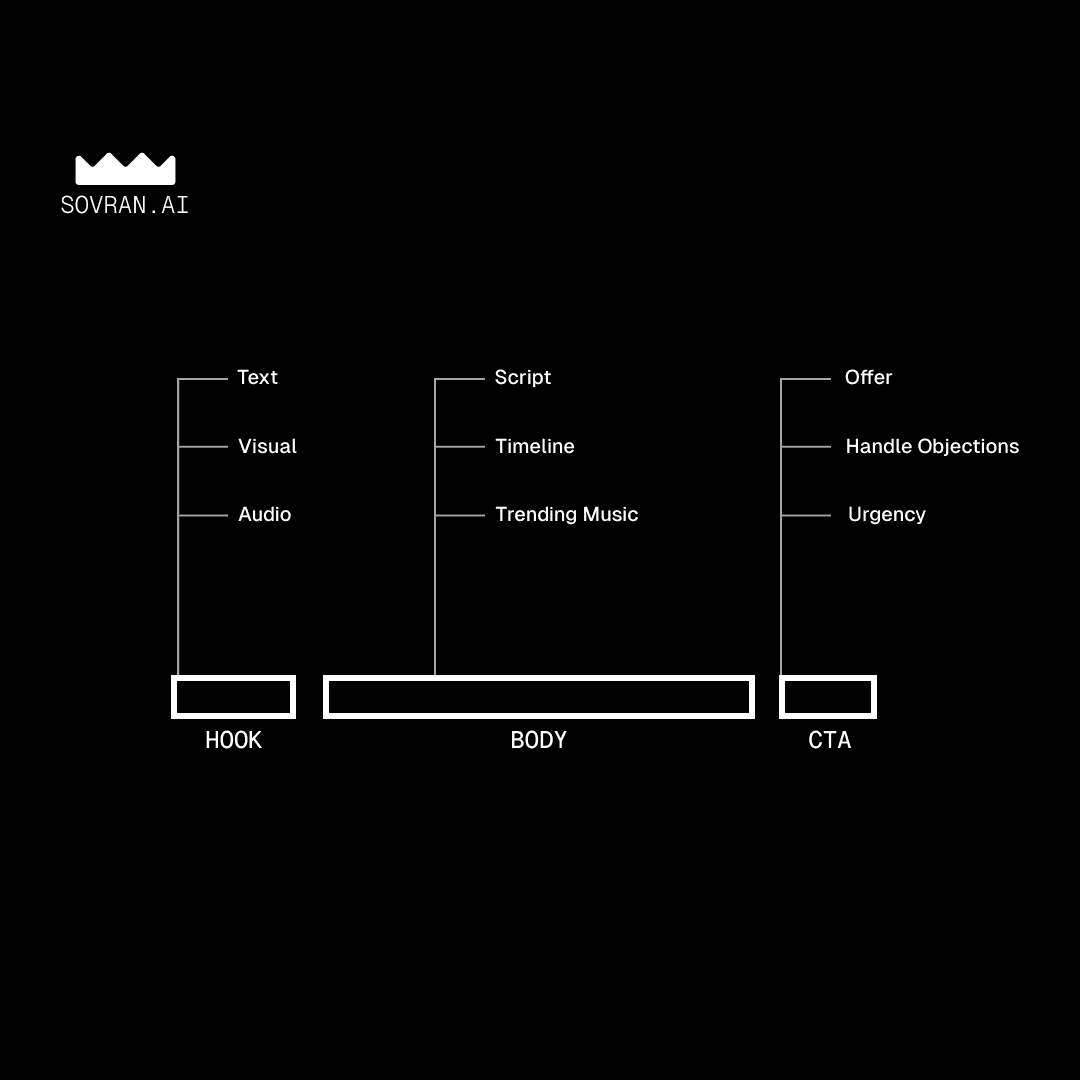
Think of hook-body-CTA as a sequencing rule, not a creative formula. Each section has one job:
Hook: Stop the scroll and create enough tension or relevance to earn the next few seconds.
Body: Deliver the proof - demo footage, social proof, mechanism, transformation, or explanation that pays off the hook.
CTA: Tell the viewer exactly what to do next and why they should do it now.
Best practice: The hook should make a promise, the body should prove it, and the CTA should convert that proof into action.
If the hook is strong but the body resets the story, retention drops. If the body lands but the CTA is vague, click-through drops. And if the CTA asks for too much too early, the ad can feel like a pitch before it has earned attention.
Timing Benchmarks by Platform
These ranges are the best starting point for direct-response video ads. They are not laws, but they keep most teams from over-explaining too early.
Section |
Meta / Instagram |
TikTok |
YouTube |
|---|---|---|---|
Hook |
1-3 seconds |
1-2 seconds |
3-5 seconds |
Body |
7-20 seconds |
6-18 seconds |
15-45 seconds |
CTA |
2-5 seconds |
2-4 seconds |
3-8 seconds |
For Meta specifically, the first few seconds do disproportionate work. If you want a deeper breakdown of what to measure, start with our guide to hook rate for Meta ads.
A Concrete Hook-Body-CTA Example
Imagine you are selling software for performance marketers who are running out of fresh creative.
Hook
"Your best Meta ad is not broken - it is exhausted."
This works because it names a problem sophisticated buyers already feel. It is specific, immediate, and emotionally loaded without needing much setup.
Body
Now prove the claim fast. Show the tired winner, show rising frequency or falling CTR, then show how the team creates new variations by swapping hooks, bodies, and CTAs instead of rebuilding every ad manually.
Use a short demo clip, not abstract explanation.
Add one proof point - a benchmark, a result, or a customer quote.
Keep each visual beat moving every 2-3 seconds so the body feels like momentum, not exposition.
CTA
"Build your next testing matrix before your current winners fade."
The CTA is stronger when it repeats the benefit in operational language. In other words, do not end with a generic "learn more" if the real value is faster testing, better structure, or more variations shipped.
How to Test Hooks, Bodies, and CTAs Without Recutting Every Ad
Most teams lose speed because they test entire ads instead of testing the parts that matter. The faster workflow is modular:
Keep the body and CTA constant. Test 3-5 hook angles first.
Once a hook wins, keep that hook. Test body proof - demo, testimonial, before/after, or founder explanation.
When hook and body are working, test CTA language, CTA timing, and end-card treatment.
This is the same logic behind our video ad structure benchmark and the creative testing matrix: isolate variables so you learn what actually moved performance.
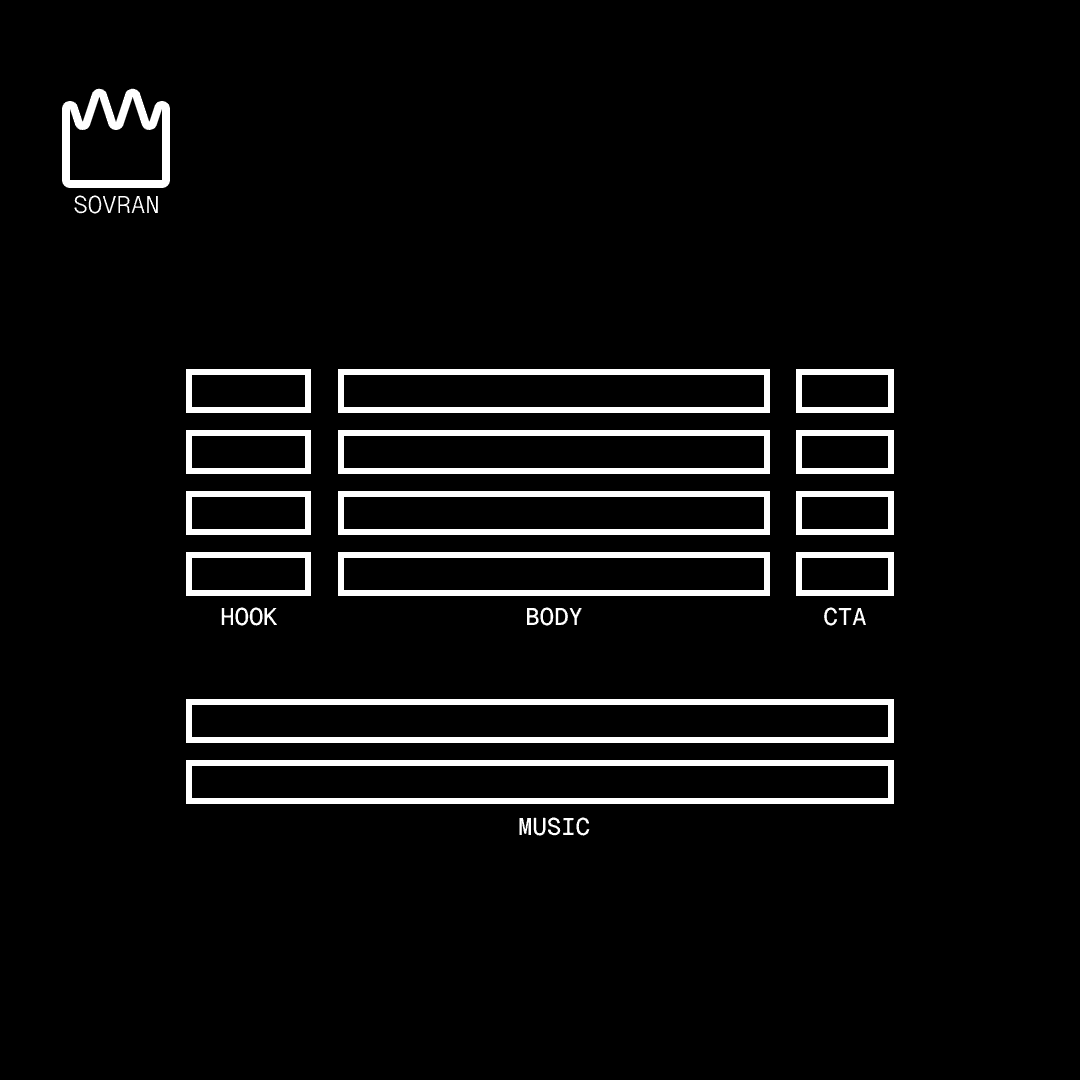
If you need a starting point, the video ad structure builder helps you map sections by platform and objective before production even starts.
What to Look for in a Hook-Body-CTA Video Editor
If the structure matters, your editor should support the structure. A generic timeline alone is not enough.
Fast versioning: You should be able to swap the opening line, footage block, and end card without rebuilding the whole cut.
Multi-ratio output: The same core ad should adapt cleanly to 9:16, 1:1, 4:5, and 16:9.
Text and caption controls: Hooks and CTAs usually need on-screen reinforcement.
Asset organization by role: Hooks, testimonials, demos, and CTAs should be easy to find as modules.
Publishing or export speed: If it takes too long to get variants out the door, the framework never becomes a real testing system.
That is why a purpose-built video ad editor for performance teams often beats a traditional one-ad-at-a-time workflow. The value is not just editing. It is turning one concept into many testable variants before fatigue sets in.
Common Mistakes That Break the Framework
1. The hook is verbal, but not visual
If the first line says something strong but the footage does nothing with it, people keep scrolling. The visual needs to carry the same tension as the copy.
2. The body starts over instead of paying off
A body section should feel like evidence, not a second introduction. If you have already named the pain, move to proof.
3. The CTA is too soft for the buying stage
Retargeting and bottom-funnel buyers usually need a direct action. Awareness audiences may need a lower-friction CTA. Match the CTA to intent.
4. Every placement gets the exact same pacing
TikTok usually needs faster pattern interruption than YouTube. Meta often needs a tighter first three seconds than both.
5. The team tests full rewrites instead of components
If you change the hook, body, offer, CTA, and aspect ratio at the same time, you learn almost nothing from the result.
Final Checklist Before You Ship
Can a cold viewer understand the payoff inside the first 3 seconds?
Does the body prove the hook with a demo, proof point, or transformation?
Is there one clear CTA instead of multiple competing asks?
Have you planned separate hook tests before changing the whole ad?
Does the edit still make sense with sound off?
Do you have enough modular pieces to generate the next round quickly?
If not, fix the system before you fix the single ad. The teams that win with hook-body-CTA are usually the ones that can turn good structure into repeatable production, not the ones chasing one lucky creative.
Related Resources
- Creative Testing Matrix - Turn hook, body, and CTA ideas into an actual testing plan.
- Creative Testing Calculator - Estimate how many new variations you need each month.
- Video Ad Structure Benchmark - See how winning sequences are built.
- Compare Video Ad Tools - Research the alternatives before you commit to a workflow.
Frequently asked questions

Manson Chen
Founder, Sovran
Related Articles
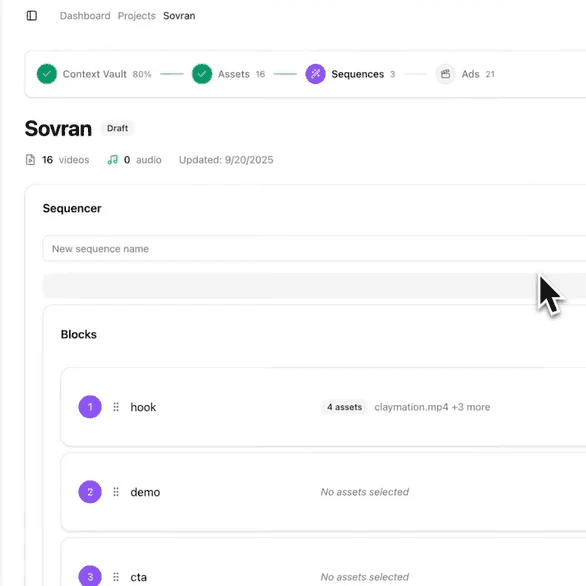
How to Automate Hook, Body, CTA Video Ad Variations: A Sovran.ai Walkthrough
How we built Sovran.ai to help you create, test, and launch modular video ads 10× fasterAds burn out faster than ever. I’ve been there, manually cutting new...
- Modular Ads
- Video Ads
- 2 more
How To Scale Paid Growth with Modular Video Ads
Creating video ads can be tough and expensive, especially when you're trying to scale on Meta (formerly Facebook). If you’re like many advertisers, you’re...
- Modular Ads
- Scaling
- 1 more

How to Make TikTok Ads That Actually Convert
Making TikTok ads that actually work starts way before you ever open Ads Manager. The secret sauce is having a crystal-clear strategy, creating video content...
- TikTok
- Video Ads
- 1 more